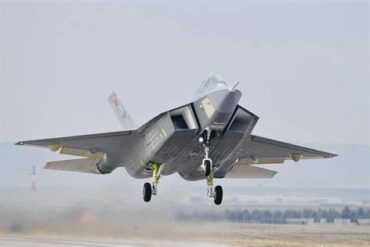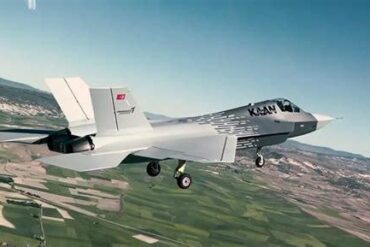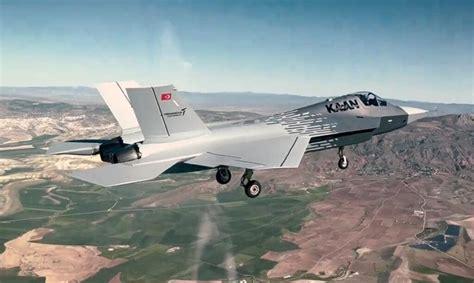
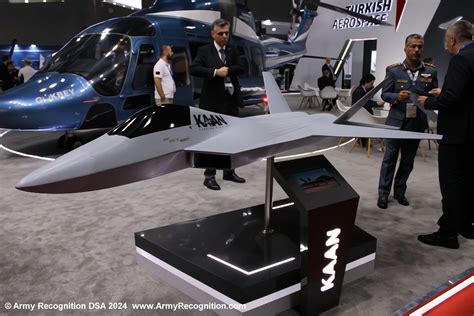
Turkey’s TAI TF Kaan stealth fighter represents one of the country’s most ambitious defense projects to date—a bold attempt to create a fifth-generation fighter jet capable of rivaling the world’s most advanced combat aircraft. Developed by Turkish Aerospace Industries (TAI), this project underscores Turkey’s pursuit of strategic independence in the defense sector, particularly following its removal from the U.S. F-35 program. The TF Kaan blends design elements seen in the F-22 Raptor and F-35 Lightning II, but whether it truly meets the standards of a modern stealth aircraft remains an open question.
The Geopolitical Catalyst: From F-35 Partner to Strategic Autonomy
For decades, Turkey relied heavily on U.S.-made aircraft, from the F-4 Phantom Terminator to the F-16 Fighting Falcon, which currently serves as the backbone of the Turkish Air Force. However, Ankara’s decision to procure the Russian S-400 surface-to-air missile system in 2019 triggered its expulsion from the F-35 Joint Strike Fighter program, a move that fundamentally altered the country’s defense trajectory.
Facing these geopolitical constraints, Turkey turned inward, launching the TF-X program—later renamed TF Kaan—to develop an indigenous next-generation fighter. This pivot reflects President Recep Tayyip Erdoğan’s broader strategy to reduce dependence on foreign defense technology while reinforcing Turkey’s regional power projection capabilities.
Design Philosophy: A Blend of F-22 and F-35 Features
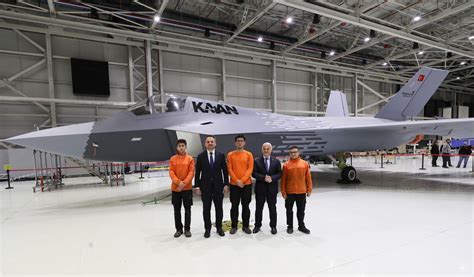
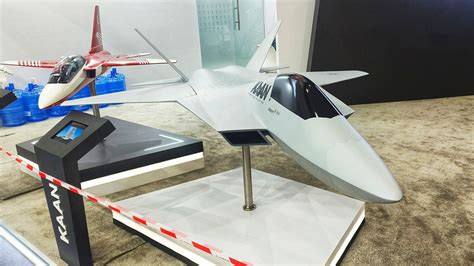
The TAI TF Kaan unmistakably draws inspiration from its American counterparts. At 20.3 meters (66 ft, 7 in) in length with a 13.4-meter (44 ft) wingspan, its dimensions closely mirror those of the F-22 Raptor, while the blended fuselage-wing configuration and curved inlets evoke the F-35’s design language. This hybrid approach aims to combine the maneuverability of the F-22 with the multirole versatility and sensor fusion capabilities of the F-35.
The cockpit canopy and overall fuselage contours appear optimized for reduced radar cross-section (RCS), with internal weapons bays and composite materials further contributing to its stealth profile. However, unlike the F-35, which has undergone extensive RCS validation, the TF Kaan’s stealth credentials remain largely unverified.
Powerplant: The Engine Dilemma
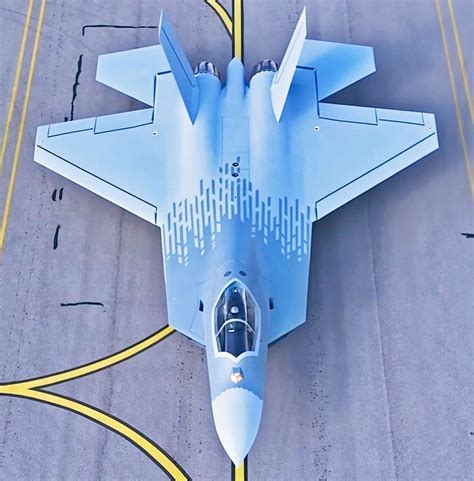
One of the most controversial aspects of the TF Kaan is its engine choice. Initially, Rolls-Royce was slated to provide engines for the program, with discussions centering on adapting the Eurojet EJ200 (used in the Eurofighter Typhoon). However, disagreements over technology transfer and intellectual property rights derailed the deal.
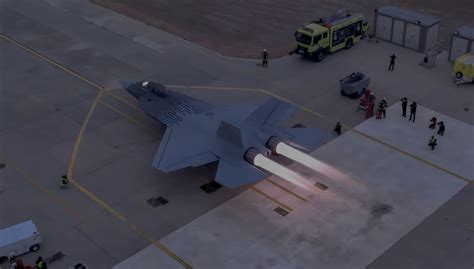
As a stopgap, Turkey opted for the General Electric F110-GE-129—the same engine powering F-16s, F-15EX, and late-model F-14 Tomcats. This engine delivers 131 kN (29,000 lbf) of thrust with afterburner, enabling speeds up to Mach 1.8 and a service ceiling of 16,764 meters (55,000 ft). While adequate for flight testing, the F110 lacks key stealth features such as serrated exhaust nozzles and infrared signature suppression, compromising the aircraft’s overall low-observability profile.
Turkey’s long-term goal is to develop a domestic engine capable of delivering greater thrust while incorporating stealth-friendly technologies—a challenging but critical requirement for a true fifth-generation platform.
Sensor Fusion and Avionics: Emulating the F-35
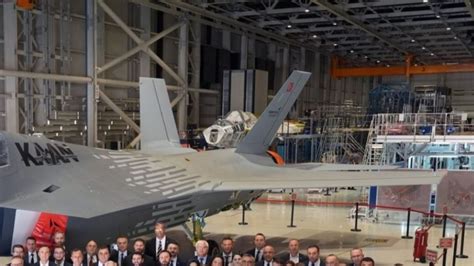
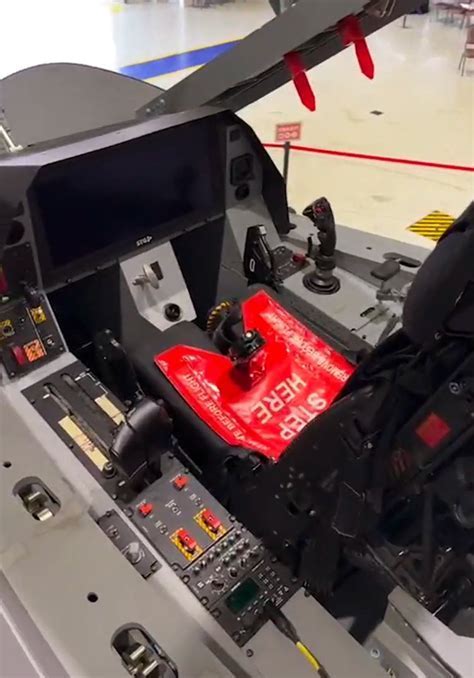
The TF Kaan aims to replicate the F-35’s advanced sensor fusion, integrating data from AESA radar, Infrared Search and Track (IRST), electronic warfare (EW) suites, and Synthetic Aperture Radar (SAR) systems into a single, coherent battlespace picture. This level of information dominance would dramatically enhance situational awareness, enabling pilots to detect, track, and engage threats more effectively.
Furthermore, Turkey is investing in indigenous software development, ensuring that critical avionics and mission systems remain free from foreign restrictions. The Scientific and Technological Research Council of Turkey (TÜBİTAK) is spearheading efforts to create radar-absorbing multilayered coatings and advanced electronic countermeasures, signaling a commitment to achieving full-spectrum stealth capabilities.
Is the TF Kaan Truly a Stealth Fighter?
While the TF Kaan features internal weapons bays, stealth shaping, and radar-absorbing coatings, its true low-observability credentials are under scrutiny. The use of non-stealth engines, coupled with uncertain seam tolerances and unproven coating performance, raises doubts about its ability to rival established fifth-generation fighters like the F-35 or J-20.
Turkish officials maintain that the Kaan incorporates cutting-edge stealth technologies, but without independent verification or operational deployment, these claims remain speculative. Achieving genuine fifth-generation stealth performance requires an intricate interplay of design precision, engine technology, and coating durability—an area where Turkey still faces developmental hurdles.
Export Ambitions: Targeting Key Allies
Turkey envisions the TF Kaan not only as a domestic solution but also as a lucrative export product. Nations such as Pakistan and Azerbaijan, both barred from acquiring the F-35, are seen as potential early adopters. Additionally, Qatar, Saudi Arabia, and the United Arab Emirates could express interest, particularly given their ongoing efforts to modernize their air forces.
This export strategy reflects Ankara’s broader goal of positioning Turkey as a regional defense supplier, leveraging the Kaan to strengthen geopolitical alliances and reduce dependency on Western defense markets.
Performance Specifications
Below is a comparison of TAI TF Kaan specifications against key fifth-generation fighters:
| Specification | TAI TF Kaan | F-35 Lightning II | F-22 Raptor |
|---|---|---|---|
| Length | 20.3 m | 15.7 m | 18.9 m |
| Wingspan | 13.4 m | 10.7 m | 13.6 m |
| Max Speed | Mach 1.8 | Mach 1.6 | Mach 2.25 |
| Service Ceiling | 16,764 m | 15,240 m | 20,000 m |
| Engine | GE F110 (x2) | Pratt & Whitney F135 | Pratt & Whitney F119 |
| Thrust (afterburner) | 131 kN each | 191 kN (single) | 156 kN each |
| Internal Weapons Bay | Yes | Yes | Yes |
| Sensor Fusion | In development | Operational | Advanced |
Conclusion: Turkey’s High-Stakes Leap
The TAI TF Kaan is a bold statement of technological ambition and geopolitical defiance. While its current configuration—particularly the use of non-stealth engines—prevents it from matching the stealth credentials of its American counterparts, the program represents an essential step toward Turkey’s long-term goal of defense self-sufficiency. If TAI successfully integrates indigenous engines, perfects its stealth coatings, and matures its avionics suite, the TF Kaan could evolve into a formidable regional contender in the fifth-generation fighter arena.
Frequently Asked Questions
1. When will the TAI TF Kaan enter service?
The TF Kaan is expected to enter initial operational service by the early 2030s, following extensive testing and integration of indigenous systems.
2. How does the TF Kaan compare to the F-35?
While the TF Kaan aims to emulate the sensor fusion and stealth shaping of the F-35, it currently lacks the engine stealth features and combat-proven avionics of the American jet, making it a work in progress rather than a direct competitor.
3. Which countries are interested in purchasing the TF Kaan?
Potential buyers include Pakistan, Azerbaijan, Qatar, Saudi Arabia, and the UAE, particularly nations unable to procure the F-35 due to export restrictions.