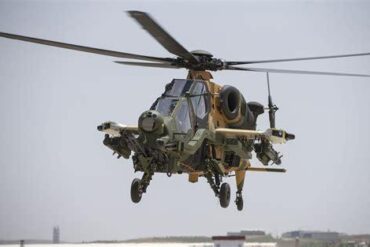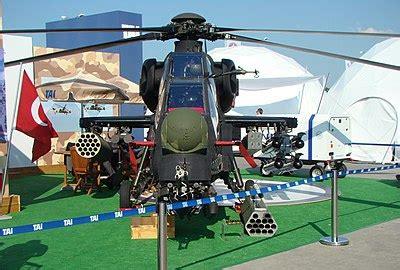
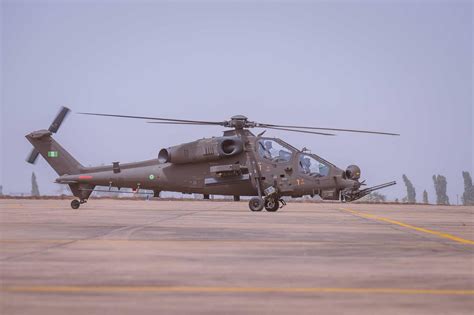
The TAI AgustaWestland T129 ATAK stands as a defining symbol of Turkish aerospace ambition and technological evolution. Developed jointly by Turkish Aerospace Industries (TAI) and Italy’s Leonardo, this twin-engine, tandem-seat attack and reconnaissance helicopter has grown beyond its European roots to become a battle-tested machine tailored for hot, high-altitude, and rugged terrain combat missions. Based on the Italian Agusta A129 Mangusta, the T129 is more than a derivative — it is a reimagined platform that integrates cutting-edge Turkish systems to create a high-performance multirole aircraft.
Originally introduced in 2014 following its maiden flight in September 2009, the T129 ATAK quickly entered active service with the Turkish Armed Forces, including the Land Forces, Gendarmerie, and General Directorate of Security. By 2023, over 100 units had been produced, including seven prototypes, with further interest extending to nations like the Philippines, Nigeria, and Somalia.
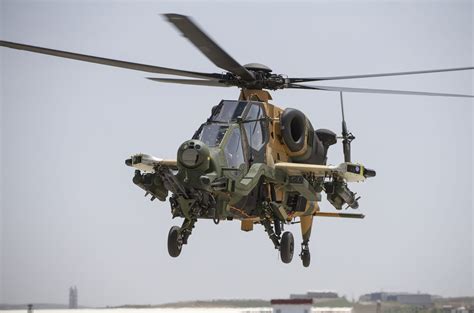
Origins and Collaborative Development with Leonardo
The T129’s foundation was laid in 2007, when Turkey inked a $1.2 billion co-development contract with AgustaWestland. Under the agreement, 51 helicopters were planned with an option for 40 more. The airframes would be built under license, but the critical systems — avionics, weapons integration, mission computers, and self-protection suites — would be developed and assembled by TAI, with engine manufacturing licensed to TEI, a Turkish engine specialist.
This strategic move allowed Turkey to hold full intellectual property rights and export privileges, barring components tied to US export control, like the LHTEC CTS800-4A engines. The frequent friction with US arms export policy eventually encouraged domestic innovation, prompting TEI to develop a new TS1400 indigenous turboshaft engine, thus significantly reducing reliance on foreign technology. Today, approximately 95% of the T129’s components are locally sourced, a major achievement in defense autonomy.
The MILDAR millimetre-wave radar, a high-resolution fire control radar system, reached completion in 2012, further enhancing the platform’s all-weather targeting capabilities.
Flight Testing and Certification Challenges
The T129’s first prototype, P1, took to the skies in Italy in September 2009. However, development turbulence followed when a high-altitude hover test in March 2010 ended in a crash — fortunately without casualties. Undeterred, the team pressed on. By August 2011, the P6 prototype, assembled in Turkey, achieved successful flight, marking a pivotal milestone.
Early production units, however, exceeded weight specifications, requiring the installation of a tail ballast. This led to later initiatives focused on weight reduction and airframe optimization, ensuring that subsequent batches would meet both performance and safety thresholds. The first serial deliveries began in April 2014, and in 2017, the Turkish defense software firm HAVELSAN delivered a dedicated flight simulator, ensuring operational readiness.
Design and Tactical Capabilities
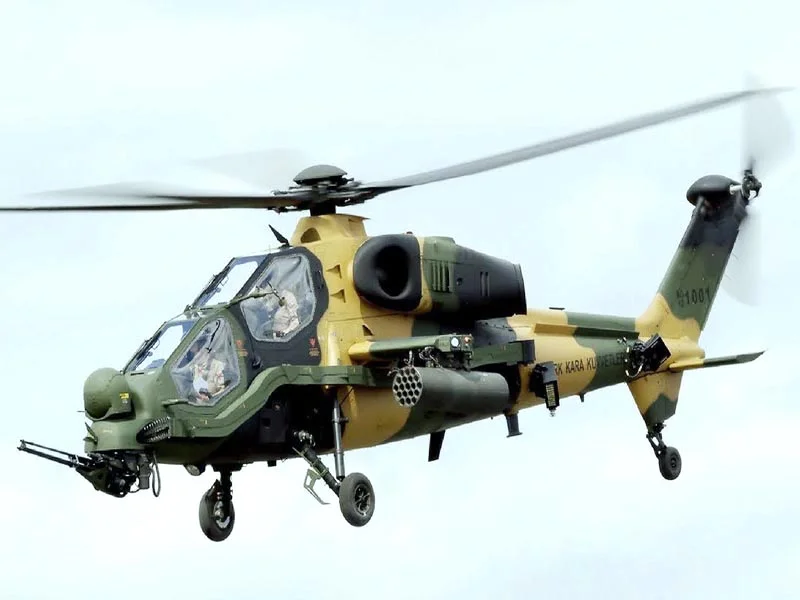
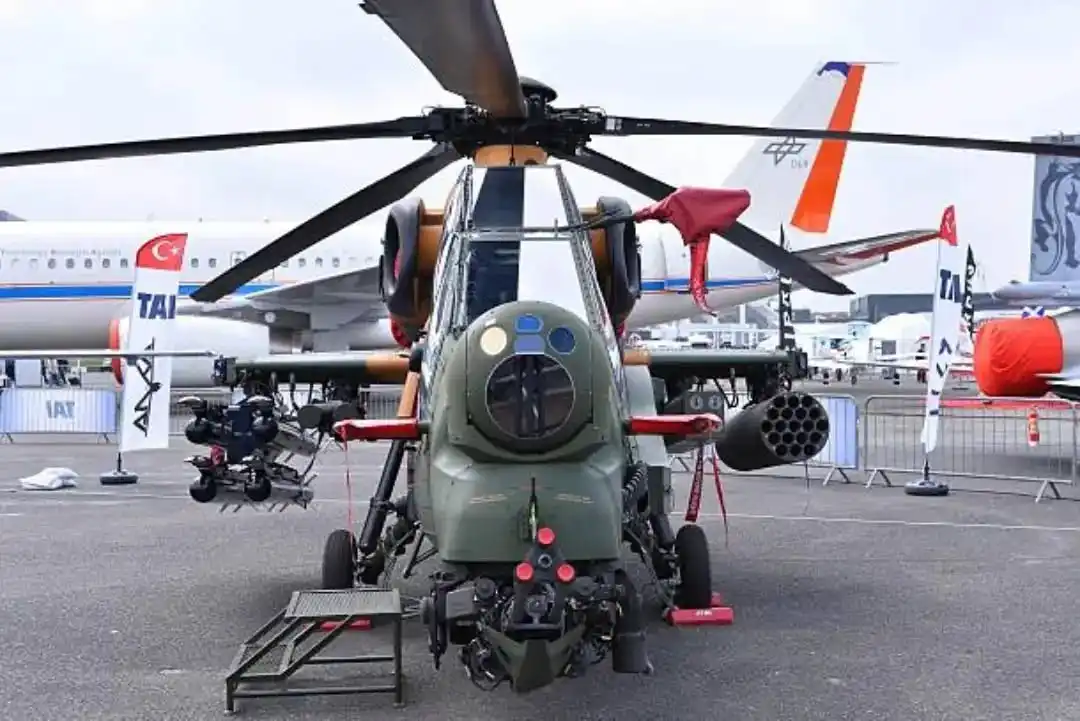
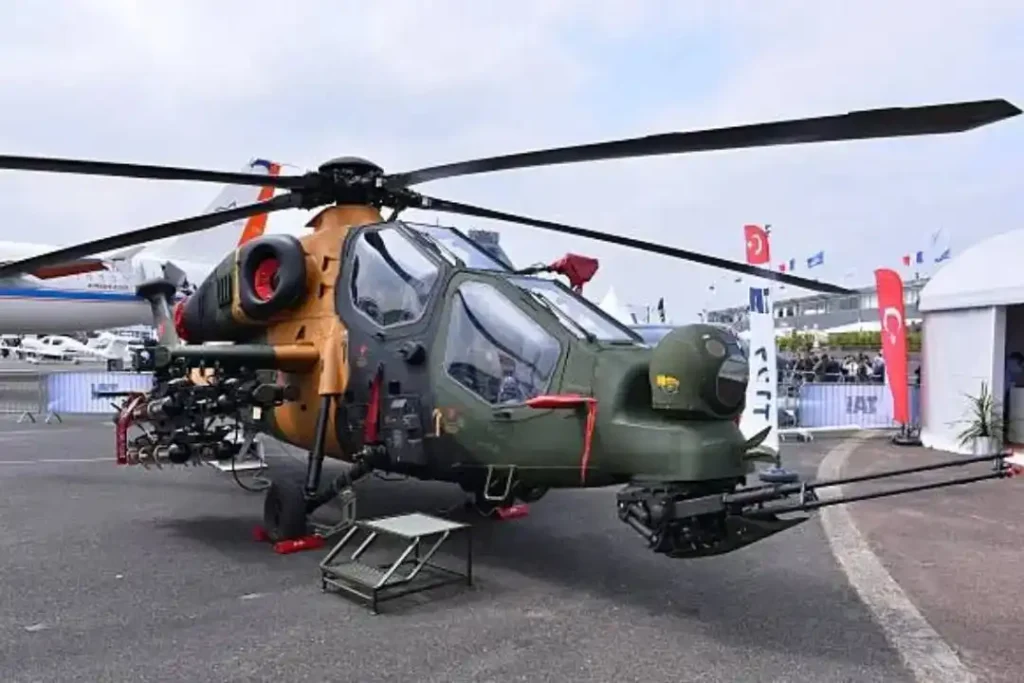
The T129’s structural DNA reflects its battlefield role — aggressive, agile, and adaptable. Its suite of sensors and weapons transforms it into a lethal force multiplier capable of performing in all mission scenarios: anti-armor warfare, close air support, armed reconnaissance, and air escort.
Key systems include:
- Hunter Kaska helmet-mounted cueing and sighting system, enabling high-precision engagement.
- ASELSAN ASELFLIR-300T EO/FLIR, providing day/night and all-weather targeting.
- Electronic Warfare Suite: Comprising Radar and Laser Warning Receivers (RIAS, LIAS), Missile Warning Systems (KTAS), and chaff/flare dispensers.
Weapons Loadout:
- M197 20 mm three-barrel cannon with 500 rounds.
- Up to 8 UMTAS anti-tank guided missiles (ATGMs).
- 16 CIRIT 70 mm laser-guided missiles.
- 76 standard 70 mm unguided rockets.
- 8 Stinger air-to-air missiles (AAMs) for close-in aerial threats.
Operational Deployments and Combat History
Turkey’s Combat Proven Rotary Blade
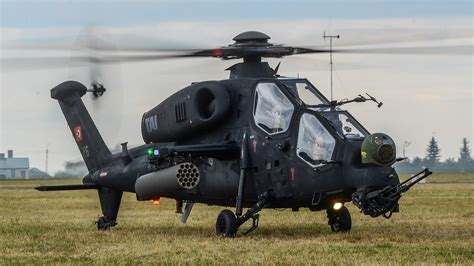
The Turkish Armed Forces took delivery of the first batch of T129A EDH helicopters in May 2014. These early-delivery units were basic variants used for pilot training and light support. By April 2015, the T129 entered combat in Siirt Province, used against Kurdish insurgents in southeastern Turkey.
One T129 was notably shot down over Afrin, Syria in February 2018, highlighting the dangers of anti-air threats in low-intensity conflicts. Yet, its combat usage also validated its resilience and versatility in counter-insurgency operations, especially in mountainous or urban terrain.
Philippines: Strategic Southeast Asian Acquisition
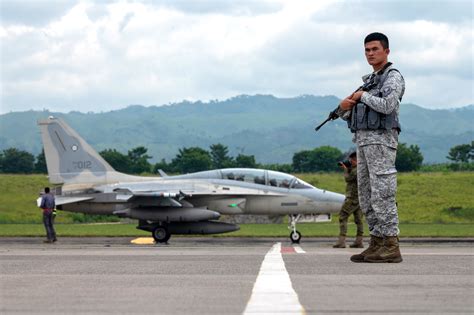
In 2018, the Philippines selected the T129 ATAK over competitors like the Boeing AH-64 Apache and Bell AH-1Z Viper, primarily due to its cost-effectiveness and mission flexibility. A $269 million contract was signed in 2021 for six T129B helicopters. As of May 2024, all units have been delivered to the 15th Strike Wing, significantly enhancing the country’s close air support capabilities amid rising regional tensions.
Nigeria: New Tactical Edge in Counter-Insurgency
Nigeria’s order of six T129s, initiated in January 2023, marked a pivotal step in strengthening its aerial capabilities against Boko Haram and other insurgent groups. The first two helicopters arrived in November 2023, giving Nigerian forces new precision strike options in areas previously inaccessible to ground troops.
Other Prospects and Export Hurdles
Turkey’s export ambitions have not always translated to deliveries. Pakistan, after signing a deal for 30 T129s, faced extended delays due to the U.S. export license block on the CTS800 engines. Though Turkey proposed using its indigenous TS1400 engine, the program remains on hold.
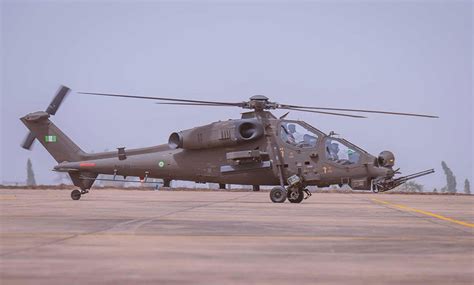
Iraq publicly expressed intent to procure 12 helicopters in 2021, but the deal has yet to materialize. Other nations such as Brazil, Qatar, Morocco, and Saudi Arabia explored potential acquisition but refrained from committing, likely due to geopolitical or logistical concerns. South Korea similarly concluded negotiations without an order.
Variants and Configuration Breakdown
The T129 platform exists in two primary variants:
- T129A EDH (Early Delivery Helicopter): Designed for light attack and training; delivered quickly to address urgent operational requirements. Lacks advanced guided missile systems.
- T129B: The fully equipped production standard, integrating comprehensive electronic warfare, mission computer, and full armament suites. A total of 51 units were initially planned in this configuration.
Operators and Global Footprint
The T129 has entered active service in several military and law enforcement organizations:
- Turkey: 58 with Land Forces, 13 with Gendarmerie, 3 with General Directorate of Security.
- Philippines: 6 with 15th Strike Wing.
- Nigeria: 6 in counterinsurgency role.
- Somalia: Delivery of an undisclosed number occurred in March 2025, marking its entry into African peacekeeping efforts.
Specifications: Power and Performance of the T129
- Crew: 2 (Pilot + Gunner)
- Length: 14.54 m
- Height: 3.4 m
- Maximum Takeoff Weight (MTOW): 5,056 kg
- Engines: 2 × LHTEC CTS800-4A (1,373 hp each)
- Maximum Speed: 281 km/h
- Range: 537 km
- Ferry Range: 1,000 km
- Endurance: 3 hours
- Service Ceiling: 4,572 m
- Climb Rate: 13.26 m/s
Conclusion: The T129’s Rising Strategic Value
The TAI AgustaWestland T129 ATAK is not merely a derivative of an Italian airframe — it is a weaponized symbol of Turkish aerospace independence. With a design deeply tailored for irregular warfare, mountainous operations, and multi-role adaptability, the T129 emerges as a cost-effective, export-ready attack helicopter well-suited for developing air forces seeking high capability without Western political entanglements.
From Turkish mountains to the jungles of Southeast Asia and the savannas of Africa, the T129 ATAK continues to prove its worth as a modern battlefield asset, and as domestic production deepens, its future could see greater autonomy and even wider adoption worldwide.