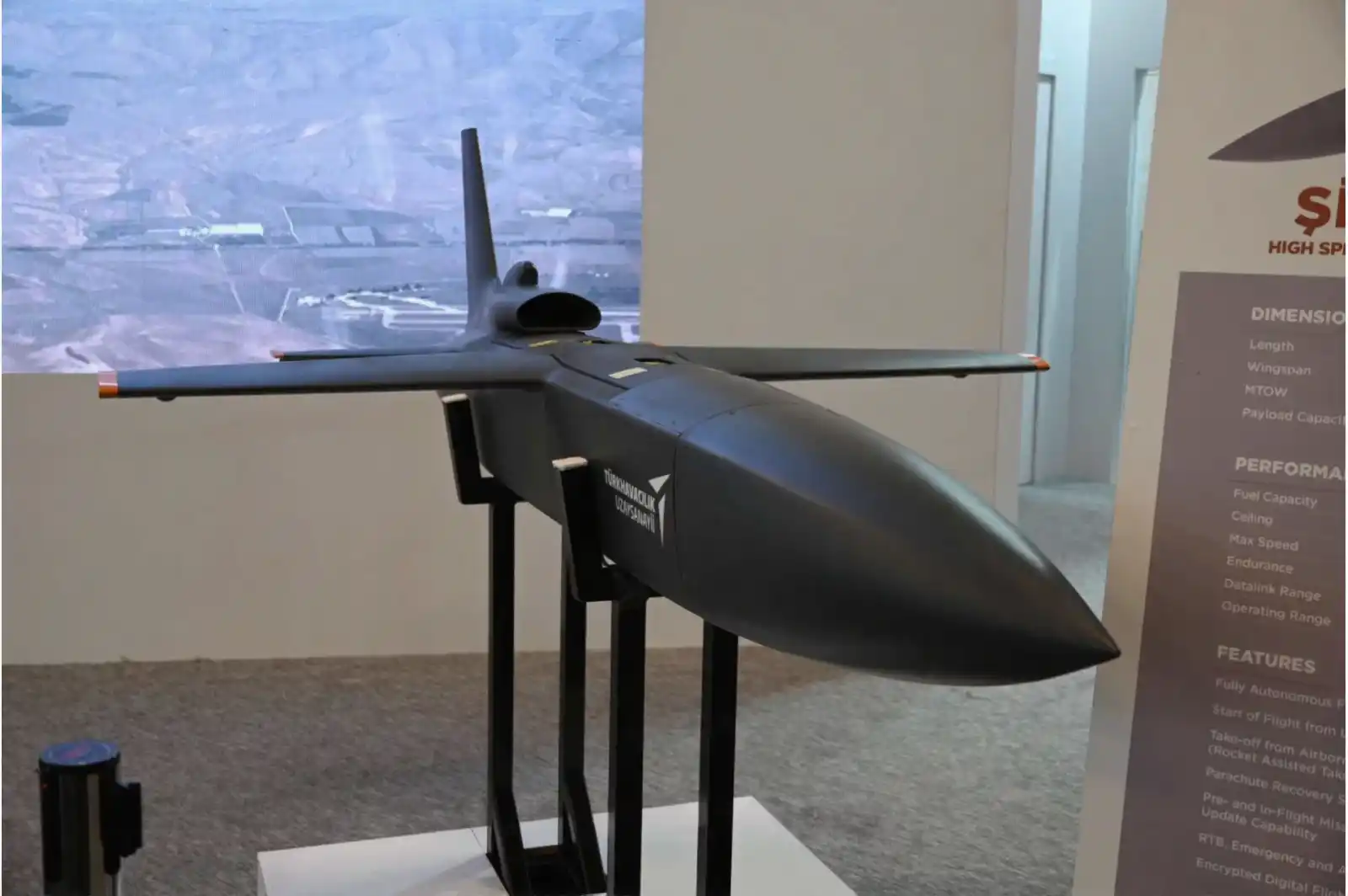
Turkish Aerospace Industries (TAI) has officially debuted the Şimşek-K High-Speed Target Drone System at the IDEF 2025 defense expo in Istanbul, showcasing a compact but power-packed unmanned system that represents Türkiye’s rising capabilities in advanced aerial training technologies. This latest iteration of the Şimşek drone family is designed to replicate high-speed airborne threats with stunning fidelity, enabling armed forces to simulate complex, multi-domain scenarios that reflect modern warfare challenges.
TAI’s announcement comes amid growing geopolitical tensions and rapidly evolving aerial combat threats across regions. The Şimşek-K’s unveiling underscores Türkiye’s growing commitment to self-reliance in defense technologies and its ambition to shape the global market in target drone systems. The platform is strategically crafted not just to support domestic military needs but to appeal to foreign partners seeking sophisticated, cost-effective, and autonomous training solutions.
Şimşek-K Drone: Specifications and Technical Edge
At just 2.4 meters in length with a 1.5-meter wingspan and maximum takeoff weight of 83 kilograms, the Şimşek-K punches far above its size category. Its compact frame hides a sophisticated avionics suite and multi-role payload capacity that elevate it above many similarly sized competitors.
Powered by 35 liters of onboard fuel, the drone can reach speeds up to Mach 0.63 and soar to 25,000 feet, maintaining flight for over 45 minutes. Its total range exceeds 500 kilometers, with a secure, encrypted datalink range of 150 kilometers, making it an ideal tool for extended-range and deep-integrated defense exercises.
Crucially, the Şimşek-K is fully autonomous, offering in-flight mission updates, secure telemetry, and emergency auto-landing capabilities. Operators benefit from multi-platform launch options, including land-based ramps, shipborne launchers, and even airborne deployment via rocket-assisted takeoff. Recovery is managed through a parachute-based system, ensuring reusability and cost-effectiveness across multiple sorties.
Payload-wise, it supports up to 18 kilograms, offering flexibility for IR signature augmenters, radar cross-section enhancers, and situational awareness cameras, among other modular systems. These tools allow Şimşek-K to emulate a wide range of aerial threats, including fast-movers, stealth aircraft signatures, and missile behavior.
From Şimşek to Şimşek-K: A Decade of Iterative Development
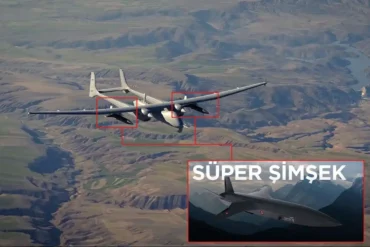
The Şimşek-K is not an isolated innovation but the culmination of more than a decade of refinement. TAI first began testing the original Şimşek system in 2012, gradually iterating through improvements and introducing variants like the Super Şimşek. In 2020, a critical breakthrough occurred when a Şimşek was successfully deployed from an Anka UCAV (Unmanned Combat Aerial Vehicle) — a launch milestone that presaged the multifunctional utility seen in the Şimşek-K today.
Each phase of development was informed by operational feedback, especially from live exercises, where training drones were subjected to real-world simulations. This allowed TAI to enhance the control architecture, optimize for payload efficiency, and adopt stronger data encryption protocols. With each iteration, Şimşek evolved from a basic target drone to a modular, high-speed, threat simulation platform tailored for next-gen training needs.
Training for Modern Air Defense: Why Şimşek-K Matters Now
In an age of hypersonic threats, loitering munitions, and drone swarms, traditional training tools are increasingly obsolete. The arrival of the Şimşek-K introduces a realistic, adaptable, and affordable system that can prepare forces for diverse and unpredictable engagements. Simulating near-peer threats no longer demands costly foreign drones or cumbersome infrastructure.
The Şimşek-K’s encrypted telemetry, autonomous routing, and multi-threat emulation mean operators can plan intricate engagements where one drone mimics multiple behaviors within a single mission. This drastically reduces the need for multiple platforms and cuts down logistics complexity.
For air defense units, naval operators, and air forces, the Şimşek-K brings invaluable realism to training. It can imitate high-speed cruise missiles, stealthy intruders, or swarm attacks depending on the payload, giving defenders a chance to test radar tracking, response timing, and interceptor coordination in evolving threat landscapes.
A Competitive Edge Against Legacy and Foreign Systems
Compared to its foreign counterparts, Şimşek-K stands out for its blend of high-speed flight, secure real-time control, and reuse-friendly architecture — all packed into a portable, versatile frame. Most systems in its class lack autonomy or require complex remote control setups and expensive infrastructure. The Şimşek-K bypasses these constraints.
Older target drones from Western suppliers often use basic radio control, unsecure links, and lack in-flight adaptability. Recovery is typically non-existent or destructive, making each exercise an expensive throwaway event. In contrast, Şimşek-K’s recovery system, autonomy, and encrypted command network push it toward the top tier of training drones globally.
Strategic Impact and Export Potential
Beyond its technical prowess, the Şimşek-K aligns with Türkiye’s broader goal of defense self-sufficiency and UAV export dominance. As nations in Africa, Central Asia, and the Middle East modernize their air defense setups, the demand for high-speed training drones is surging.
By offering a platform that is affordable, versatile, and easily integrated into NATO-aligned or independently operated systems, Türkiye positions itself as a primary vendor in the evolving defense export landscape. Additionally, replacing Western target drones with homegrown alternatives enables regional customers to reduce foreign dependency while maintaining training efficacy.
Şimşek-K’s value lies in its dual function as both a domestic asset for Türkiye’s armed forces and a diplomatic instrument — opening doors to co-production agreements, technology-sharing initiatives, and regional defense alignment. As with the Bayraktar TB2, the Şimşek-K may soon become a symbol of Türkiye’s UAV diplomacy.
Şimşek-K and the Future of Aerial Threat Simulation
TAI’s development of the Şimşek-K reflects a profound understanding of modern warfare’s shifting dynamics. In a world where drones and missiles dominate both battlefield engagements and psychological deterrence, the ability to train against such threats cannot be overstated. The Şimşek-K is not just about testing radar systems or interceptor responses; it is about redefining how air defense is conceptualized and rehearsed.
With increased endurance, enhanced threat modeling, and a scalable architecture, future versions of the Şimşek-K could incorporate swarm simulation, electronic warfare capabilities, and hypersonic behavior emulation, putting it at the frontier of drone training tech.
Türkiye, through TAI, is signaling to the world that it intends not just to keep pace with evolving defense standards but to set them. The Şimşek-K is a clear manifestation of that vision: agile, powerful, and deeply strategic. In today’s era of rising tensions and rapid military tech cycles, owning — and exporting — the tools for high-end simulation offers more than just preparedness. It offers geopolitical leverage.