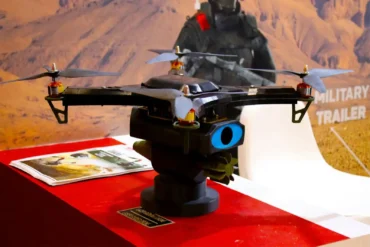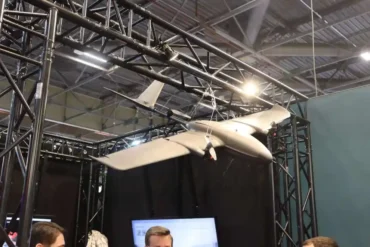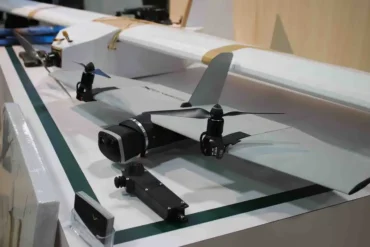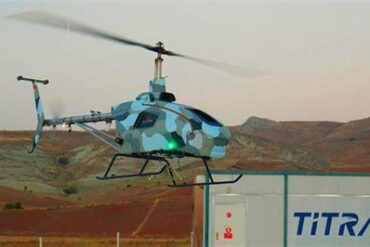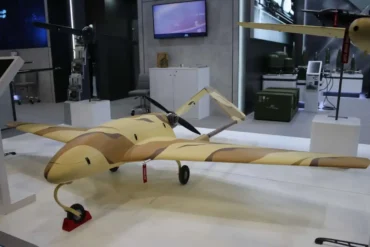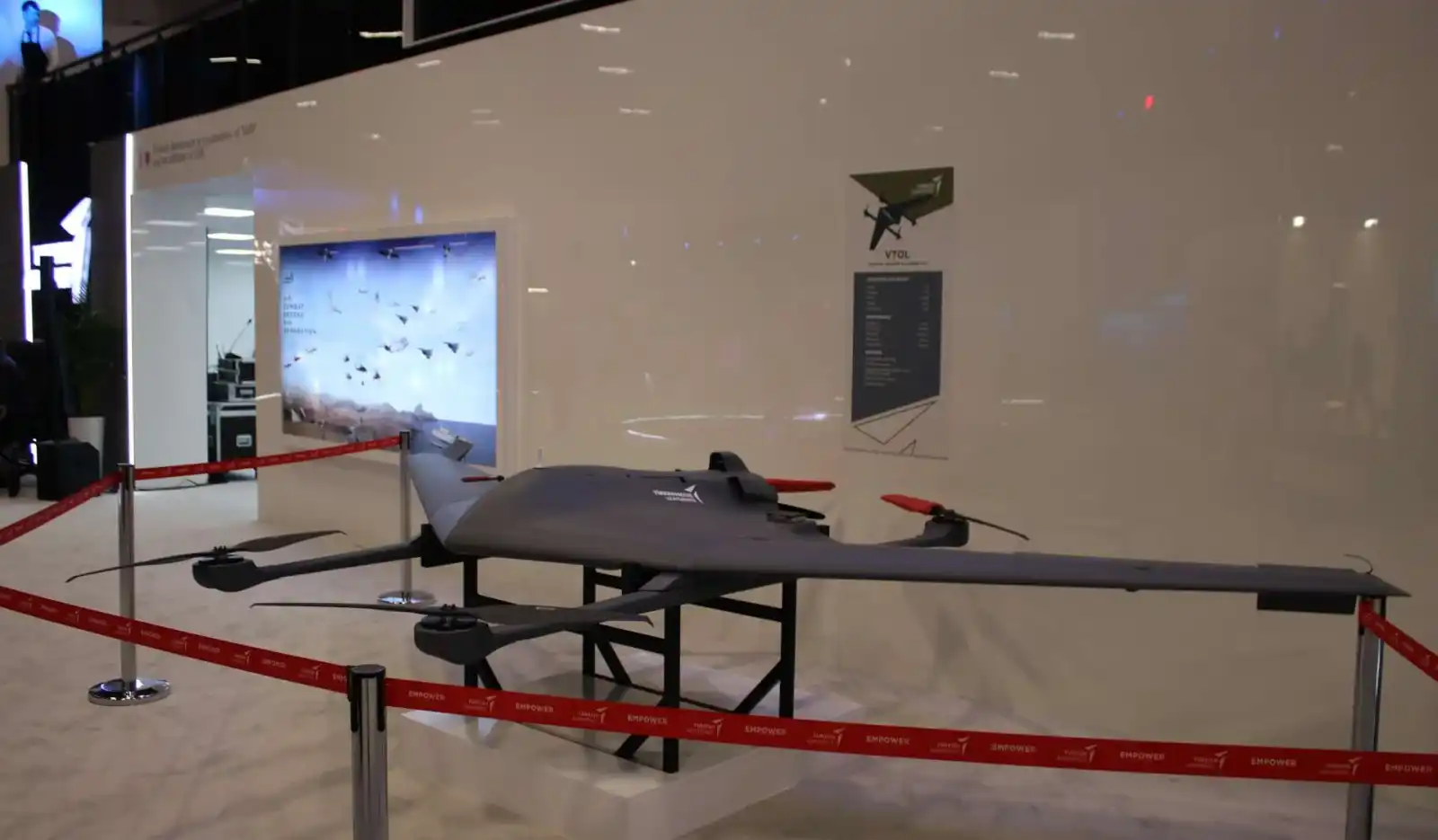
Turkish Aerospace Industries (TAI) made a strategic impact at IDEF 2025 in Istanbul by unveiling a new Vertical Take-Off and Landing (VTOL) UAV tailored for modern intelligence, surveillance, and reconnaissance (ISR) missions. This next-generation drone merges fixed-wing endurance with rotary-wing mobility, offering unparalleled versatility in challenging environments where conventional airfields are unavailable.
VTOL Drone Capabilities Catered for Modern ISR Missions
The newly presented UAV measures 3.1 meters in length and spans 5 meters in wingspan, making it compact yet highly functional. With a maximum take-off weight of 120 kg, it can carry a 2.5 kg payload — sufficient for advanced electro-optical and infrared (EO/IR) sensor packages. Its 60-liter fuel capacity powers an impressive 10-hour flight endurance, while maintaining a 1300 km range and cruising at 70 knots. Operational ceiling is set at 9,000 feet, and control links can be maintained up to 100 km, ensuring vast coverage.
These specifications firmly place the drone in a league of its own, designed to operate where traditional drones face limitations. Its unique lift-cruise design avoids the complex tilt-rotor systems found in Western VTOL UAVs, improving maintenance simplicity and field reliability.
Mobility and Modularity: A Field-Ready ISR Platform
One of the defining features of this TAI VTOL drone is its modular wing design, enabling rapid folding and assembly. This makes it ideal for quick deployment from mobile platforms or in areas with restricted infrastructure. Turkish troops operating in mountainous terrain, coastal patrol zones, or humanitarian missions abroad can now launch and recover the drone with minimal logistical footprint.
TAI’s VTOL UAV reflects feedback from field operators and lessons drawn from earlier platforms such as the Anka and Aksungur. While those drones were geared for medium-altitude, long-endurance operations, this new drone is tailored for tactical missions in volatile environments — without the need for runways or large ground control units.
Fuel-Powered VTOL: A Tactical Edge Over Electric Competitors
Unlike many VTOL platforms that rely on electric propulsion and face endurance limitations, TAI opted for a conventional fuel-based system, enhancing range, loiter time, and resilience. This strategic design decision allows the drone to perform extended overwatch missions, outperforming comparable platforms such as the Martin UAV V-BAT or Urban Aeronautics AirMule.
While electric VTOLs are suitable for short-hop reconnaissance in urban or maritime operations, they fall short in high-altitude or prolonged ISR missions. TAI’s VTOL avoids this bottleneck, delivering a cost-effective yet operationally decisive capability.
Strategic ISR Operations Across Multi-Theater Environments
This UAV addresses Türkiye’s expanding role in asymmetric warfare, cross-border security, and international peacekeeping. Whether conducting border surveillance in rugged southeastern provinces, monitoring naval traffic along the Aegean and Mediterranean seas, or supporting missions in Africa and Central Asia, the VTOL drone offers a multi-domain ISR solution.
Its persistent loiter capability enables commanders to maintain real-time situational awareness in contested environments. With NATO continuing to evolve its drone integration doctrines, this VTOL platform aligns well with interoperability goals, positioning it as a likely candidate for multinational deployments.
Combat-Ready, Export-Oriented, and Scalable
While TAI has yet to confirm any procurement contracts, the UAV is expected to attract interest from both domestic defense agencies and international partners. Türkiye has cultivated strong UAV export relations in Africa, the Middle East, and Central Asia, and this new drone caters directly to their need for cost-effective, infrastructure-independent surveillance systems.
Given TAI’s record of rapid transition from prototype to production — as seen with the Bayraktar TB2, Anka, and Aksungur — the VTOL UAV could be operational within 18–24 months, entering service with Turkish forces or foreign militaries seeking modular ISR tools.
Design Philosophy: Bridging Rotary and Fixed-Wing Gaps
The VTOL UAV fills a critical niche in Türkiye’s drone hierarchy, bridging the operational divide between small rotary drones with limited endurance and larger fixed-wing UAVs requiring runways. This middle-tier solution delivers strategic persistence without logistical burden — ideal for special forces, border patrol, and naval surveillance missions.
Furthermore, the drone’s autonomous control system and terrain-aware navigation enhance survivability in GPS-denied or jamming-prone zones. Its EO/IR payloads support both day and night operations, while its software integration is designed to sync with real-time battlefield networks.
Turkish UAV Ecosystem Expands Further
Türkiye has rapidly emerged as a drone powerhouse, with TAI and private firms like Baykar Technologies pushing boundaries in combat UAVs, strategic surveillance, and export-ready systems. This VTOL drone adds a new dimension to that portfolio — offering ISR capabilities without compromising deployment speed or endurance.
The drone is also poised to integrate with AI-powered target recognition, secure satellite communication, and autonomous mission execution, following Türkiye’s broader push to automate ISR and C4ISR capabilities across all branches of the armed forces.
Implications for Global Drone Markets
As the global UAV demand shifts toward modular, rapidly deployable platforms, TAI’s VTOL system offers a cost-effective, fuel-efficient, and strategically robust option. Militaries in regions with limited runways, dense forests, deserts, or maritime interests will find value in its 10-hour endurance and long-range control.
Its design allows rapid export customization, with TAI likely to offer customer-specific payloads, secure communications suites, and mission software APIs, strengthening Türkiye’s hand in competitive tenders.
Conclusion: A Tactical Asset for Evolving Battlefields
The TAI VTOL UAV unveiled at IDEF 2025 embodies a strategic response to 21st-century warfare demands. Combining compactness, modularity, and endurance, it addresses critical ISR gaps across air, land, and sea operations. With strong prospects for rapid deployment and global adoption, it reinforces Türkiye’s position as a dominant force in UAV innovation and a reliable partner in modular, high-performance drone technologies.