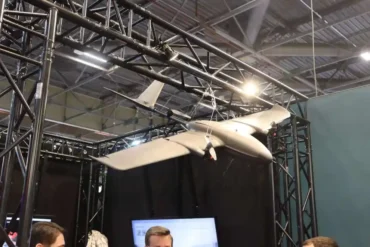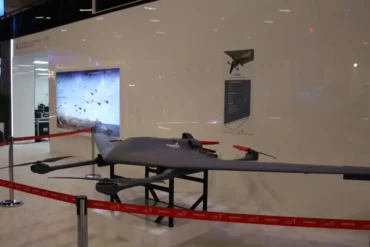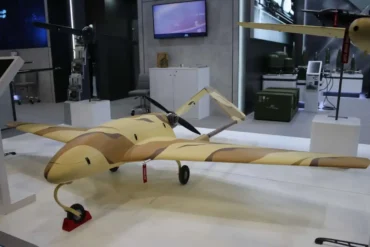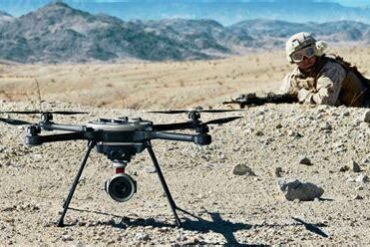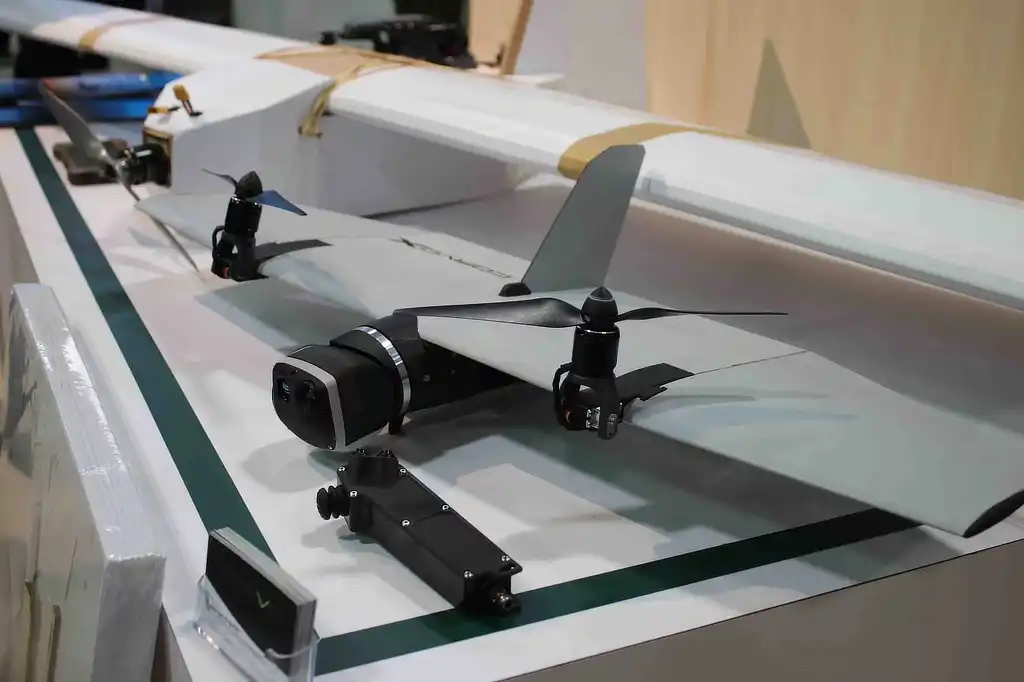
At the AUSA 2025 exhibition in Washington, D.C., Australia’s SYPAQ Systems showcased a groundbreaking development in tactical aerial intelligence — the CorvoX VTOL drone, a sub-2-kilogram vertical take-off and landing (VTOL) small uncrewed aerial system (sUAS) designed to change how small units conduct reconnaissance in complex environments. Built under Australia’s DEF129 small UAS program, this lightweight but powerful drone reflects the country’s growing capability in defense innovation, autonomy, and sovereign production.
Developed by Corvo UAS, a SYPAQ subsidiary, the CorvoX combines autonomy, endurance, and tactical mobility in a form factor small enough to be man-portable by infantry units. It is specifically optimized for GPS-denied or contested environments, enabling front-line troops to scout ahead, transmit encrypted video intelligence, and maintain communication without relying on fixed infrastructure or vulnerable positioning systems.
Revolutionary Design for Runway-Free Operations
The CorvoX’s engineering philosophy is rooted in versatility and survivability. Its thrust-vectored transition system allows seamless switching between vertical hover and forward fixed-wing flight, giving it the runway independence critical to dispersed and expeditionary operations. With a 45-minute endurance, 5-kilometer range, and top speed exceeding 100 km/h, the drone delivers tactical intelligence in areas inaccessible to traditional aircraft or larger UAVs.
Operating in winds up to 30 knots and built with environmentally sealed construction, the CorvoX maintains performance even in harsh weather and dusty terrain — conditions typical of forward deployment zones. These attributes make it ideal for special reconnaissance, forward observation, and communications relay roles, where flexibility and resilience matter as much as stealth.
Encrypted Mesh Network and NATO Interoperability
At the core of the CorvoX’s intelligence system is an encrypted IP mesh network powered by CODAN|DTC’s Sentry 6161 radio, enabling low-latency and secure communications among units. This allows real-time data sharing between multiple drones and operators across dynamic battlefields. The system supports H.264 and H.265 video compression with KLV metadata compliant with MISB 107.5 standards, ensuring compatibility with NATO command architectures.
Fully STANAG 4609 compliant, the CorvoX integrates smoothly with allied ISR (Intelligence, Surveillance, and Reconnaissance) networks, a vital capability for joint operations under frameworks such as AUKUS. Its GNSS and vision-aided navigation systems further guarantee mission continuity even when GPS is jammed, spoofed, or degraded — a scenario increasingly common in electronic warfare environments.
Advanced Dual-Sensor Payload for Day and Night Reconnaissance
The Corvo Guarda 70-DN payload, custom-built for the CorvoX platform, delivers multi-spectral imaging through electro-optical (EO) and long-wave infrared (LWIR) sensors. The EO component, based on the Sony Starvis VC-MIPI JMX412-C, features a 12.3-megapixel 4K CMOS sensor and 40 fps rolling shutter, offering precise visual identification even under low light. The thermal imaging side, using a FLIR Boson 640, provides 640×512 resolution and 60 Hz refresh rate, enabling detection of concealed or camouflaged targets.
This payload sits on a two-axis stabilized gimbal, supported by electronic roll correction and advanced geo-lock algorithms, producing stable, high-clarity imagery even in turbulent flight conditions. Combined, these sensors empower units to detect, track, and assess threats with exceptional precision — whether scanning a dense forest line or observing movements in urban canyons.
Manufacturing Sovereignty and Industrial Growth
Production of the CorvoX takes place in Melbourne, with over 90% Australian content, reinforcing national goals for defense industry sovereignty. Under the DEF129 program, SYPAQ delivers not only the drone fleet but also a multi-year sustainment package covering spares, maintenance, and operator training. The initiative has already created more than 18 skilled jobs, supporting Australia’s ambition to build a self-reliant defense manufacturing base.
SYPAQ’s earlier success with the Corvo Precision Payload Delivery System — a low-cost cardboard drone used for logistics — provided the foundation for the CorvoX’s efficient production and robust design philosophy. Lessons learned from rapid, deployable UAS manufacturing have been applied to create a reliable, modular, and easily serviceable tactical platform suitable for long-term military integration.
A Strategic Step Toward Global Defense Integration
Following its Australian Army debut, SYPAQ confirmed in March 2025 that all domestic deliveries would be completed within the DEF129 framework, paving the way for international export readiness in 2026. The CorvoX’s unveiling at DSEI London 2025 marked its entry onto the global stage, positioning it as one of the most capable sub-2-kilogram VTOL systems worldwide.
This export variant forms part of the Corvo family — alongside the Corvo Nano, Corvo Alto, and Corvo Precision Payload Delivery System — all designed to share common ground control and mission software, reducing training complexity and logistics overhead for defense customers. Engineering and integration are led by the Defence Autonomy Centre of Excellence in Port Melbourne, consolidating SYPAQ’s work in guidance, navigation, control, and sensor fusion.