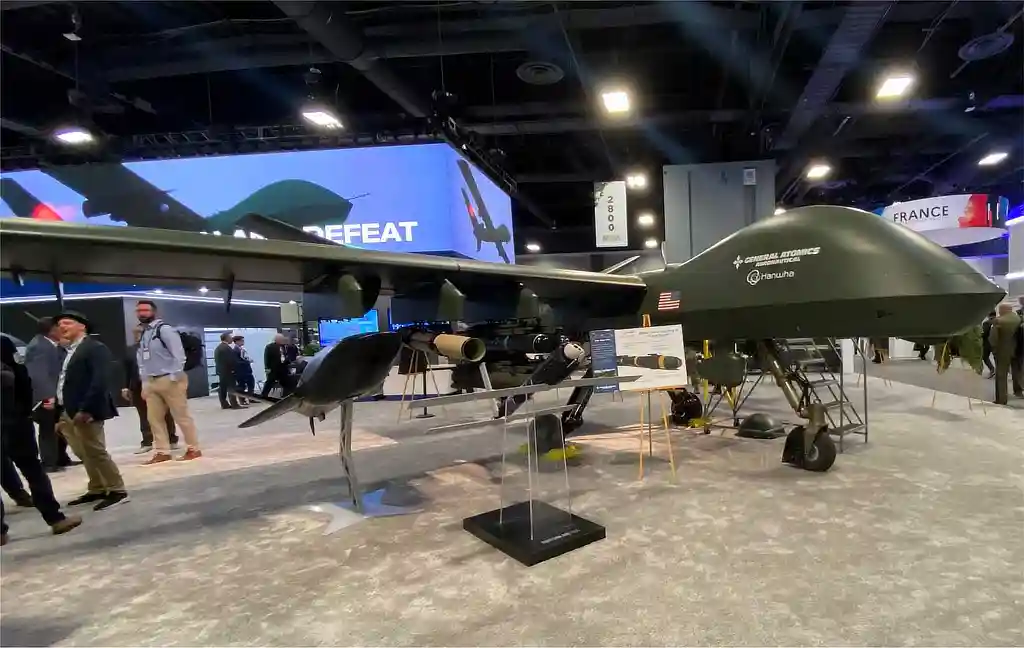
The Association of the United States Army (AUSA) 2025 exposition in Washington, D.C. marked a defining moment in U.S. military aviation. General Atomics Aeronautical Systems, Inc. (GA-ASI) unveiled the Gray Eagle Short Takeoff and Landing (STOL) unmanned aircraft system — a transformative evolution of the Army’s proven MQ-1C platform, reengineered for expeditionary warfare and next-generation operational flexibility.
Redefining Runway Independence
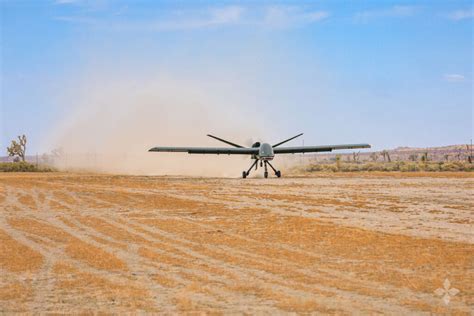
For decades, the Army’s Gray Eagle has been a cornerstone of long-endurance intelligence, surveillance, and reconnaissance (ISR) operations. However, its dependence on traditional runways has limited its deployability in forward, contested environments. The Gray Eagle STOL shatters this limitation, empowering units to operate from improvised strips, unpaved roads, and even warships, dramatically expanding tactical reach.
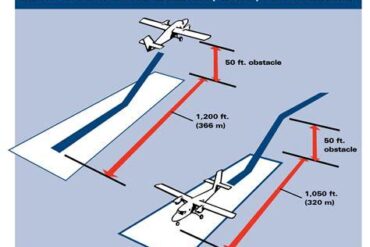
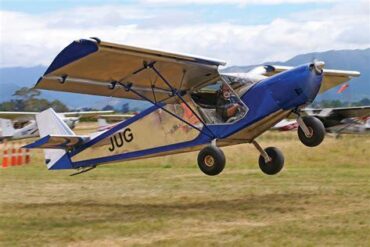
GA-ASI confirmed that the aircraft requires as little as 400 feet (122 meters) for ISR missions and approximately 1,000 feet (305 meters) for armed configurations. This performance enables the platform to launch and recover from dirt fields, remote outposts, and large-deck naval vessels, all without conventional airbase infrastructure.
This capability aligns directly with the U.S. Army’s multi-domain operations (MDO) strategy — ensuring drones can accompany maneuvering forces across land, air, and maritime boundaries while remaining resilient against long-range adversary strikes. By decentralizing launch points, the STOL variant also enhances survivability, denying opponents predictable targeting opportunities.
Engineering a Short-Field Powerhouse
The Gray Eagle STOL is not merely a derivative but an extensive redesign. GA-ASI incorporated a high-lift wing, enlarged control surfaces, and extended flaps to generate superior lift at lower airspeeds. The airframe was reinforced for rough-terrain impacts, and the landing gear strengthened to absorb landings on uneven surfaces or the steel decks of warships.
Propulsion has also been recalibrated for higher thrust during low-speed operations, optimizing acceleration across short takeoff distances. The redesigned tail assembly provides better pitch authority during abrupt climb-outs — critical for ship-based launches and land-based short-field recoveries.
The result is a system that balances agility with endurance, offering an estimated flight duration of 20–25 hours and an operational range between 2,500 and 3,000 kilometers. It maintains a maximum altitude of 29,000 feet (8,840 meters) while supporting payloads exceeding 800 pounds (363 kilograms).
Modular Power and Mission Flexibility
Under the skin, the Gray Eagle STOL is built on a Modular Open Systems Architecture (MOSA) — the backbone of the Army’s modernization effort. This structure supports plug-and-play integration of advanced sensors, communications payloads, and electronic warfare systems. GA-ASI confirmed compliance with CMOSS (C5ISR/EW Modular Open Suite of Standards), enabling seamless upgrades and reducing lifecycle costs.
Key mission payloads include:
- Electro-optical/infrared (EO/IR) sensors for persistent surveillance
- Communications relay modules for network extension
- Precision-guided munitions, such as AGM-114 Hellfire missiles and GBU-44/B Viper Strike bombs
At AUSA 2025, the displayed configuration featured a multi-rail weapons rack, highlighting compatibility with legacy Gray Eagle loadouts while showcasing potential for emerging munitions.
Combat-Ready for Contested Skies
In modern warfare, survivability extends beyond armor or stealth — it’s about mobility, autonomy, and resilience. GA-ASI equipped the STOL variant with GPS-denied navigation, hardened datalinks, and autonomous takeoff and landing protocols, ensuring operational integrity even under electronic warfare (EW) or jamming conditions. Its ability to operate from dispersed, concealed sites drastically reduces exposure time and supports hit-and-move ISR or strike cycles.
This agility transforms the Gray Eagle from a rear-echelon intelligence asset into a frontline battlefield partner, capable of deploying alongside maneuver units and supporting naval task forces in ship-to-shore ISR and strike missions.
From Mojave Prototype to Operational Reality
The Gray Eagle STOL owes much of its DNA to GA-ASI’s Mojave demonstrator, an experimental UAV tested extensively in both land-based and maritime environments. Mojave successfully executed short-field takeoffs and landings on dirt runways and even launched from the ROKS Dokdo, a South Korean amphibious assault ship, in late 2024. These trials validated the flight control algorithms, ruggedized gear, and autonomous recovery software now incorporated into the STOL platform.
GA-ASI’s integration of Mojave’s field data directly into the Gray Eagle STOL development cycle accelerated readiness and reduced technical risk. The result is a combat-proven architecture ready for immediate field deployment.
Strategic Collaboration and Global Outlook
GA-ASI has moved aggressively to globalize production. At AUSA 2025, the company confirmed a strategic partnership with Hanwha Aerospace in South Korea, covering joint production, logistics support, and potential licensed manufacturing. This collaboration not only cements GA-ASI’s presence in the Indo-Pacific region but also positions the STOL drone as a key enabler for regional allies seeking dispersed UAS operations across archipelagic or infrastructure-limited environments.
Early indications point to strong international interest — particularly from nations pursuing expeditionary or island-defense doctrines. Market projections suggest demand for up to 600 airframes over the next decade as militaries pivot toward distributed, resilient unmanned systems.
Integrating with the Future Tactical UAS Vision
The U.S. Army’s Future Tactical Unmanned Aircraft System (FTUAS) initiative aims to transition from runway-bound UAVs to flexible, deployable solutions. While vertical takeoff and landing (VTOL) systems such as V-BAT and ALTIUS are part of the roadmap, the Gray Eagle STOL fills an immediate gap by combining long endurance, high payload capacity, and expeditionary versatility.
This makes the STOL variant an ideal bridge capability — deployable today while VTOL technologies mature. It provides an operationally validated, heavy-payload drone that can sustain the Army’s tactical ISR and precision strike capabilities without the logistical constraints of legacy UAV infrastructure.
Operational Advantages Across Domains
Beyond its technical evolution, the Gray Eagle STOL reshapes tactical doctrine. Its ability to operate from both land and sea platforms introduces a hybrid capability that complements joint force operations. For example:
- Land Forces gain near-instant ISR coverage from forward dirt strips, bypassing airbase bottlenecks.
- Maritime Task Forces can deploy the UAV from amphibious ships, expanding surveillance range without carrier support.
- Expeditionary Units benefit from rapid redeployment and minimal setup requirements, enabling flexible responses in crisis zones.
This adaptability aligns with Pentagon priorities emphasizing distributed lethality and survivable unmanned architectures in peer conflict scenarios. The platform’s capacity to maintain persistent overwatch or precision strike readiness directly supports Indo-Pacific deterrence postures, particularly across contested maritime corridors.
Technical Specifications Overview
| Parameter | Specification |
|---|---|
| Takeoff Distance | ~400 ft (ISR) / ~1,000 ft (Armed) |
| Flight Endurance | 20–25 hours |
| Max Takeoff Weight | 3,600 lbs (1,633 kg) |
| Payload Capacity | 800+ lbs (363 kg) |
| Ceiling | 29,000 ft (8,840 m) |
| Range | 2,500–3,000 km |
| Architecture | MOSA / CMOSS compliant |
| Armament | AGM-114 Hellfire, GBU-44/B Viper Strike |
Strategic Implications for Future Warfare
In the age of distributed and denied environments, the Gray Eagle STOL represents a paradigm shift. It transforms the Army’s unmanned aviation model from centralized, runway-based logistics to agile, survivable, and expeditionary operations. Its blend of endurance, payload, and short-field capability positions it as both a force multiplier and a logistical equalizer, bridging the operational gap between VTOL drones and traditional fixed-wing platforms.
As the U.S. military continues to reorient toward Indo-Pacific and multi-domain competition, the Gray Eagle STOL’s ability to deliver ship-to-shore ISR, strike, and electronic warfare support will make it an indispensable component of joint force integration. It embodies the evolution from the drone as a remote observer to a maneuver asset — one that follows the fight, not the runway.
In sum, the Gray Eagle STOL is not simply an upgrade — it is a redefinition of what unmanned systems can do for ground and maritime forces. Its design, autonomy, and operational adaptability signal the dawn of a new era in U.S. Army drone warfare, one where flexibility and forward presence dictate victory.