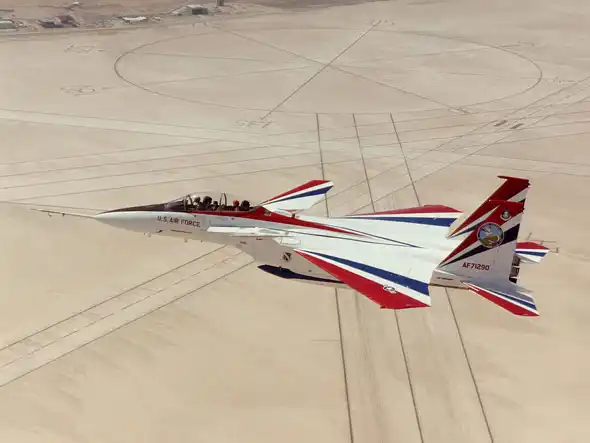
The F-15 STOL/MTD (Short Takeoff and Landing/Maneuver Technology Demonstrator) is one of the most intriguing aircraft in the history of military aviation, blending cutting-edge technologies with the formidable F-15 fighter platform. Developed during the late 1980s by NASA and the U.S. Air Force, the F-15 STOL/MTD was not designed to serve as a combat aircraft but rather as a demonstrator to test a range of advanced technologies aimed at enhancing short-field performance, agility, and overall operational flexibility.
This article takes a detailed look at the F-15 STOL/MTD, exploring its purpose, the groundbreaking technologies tested, its performance achievements, criticisms, and lasting legacy.
Overview and Purpose of the F-15 STOL/MTD
The F-15 STOL/MTD was conceived as a technology demonstrator with the primary goal of testing new approaches to short takeoff and landing (STOL) operations, as well as improving the maneuverability of fighter aircraft. As a modified version of the F-15B, this aircraft explored how advanced systems could make military fighters more versatile, enabling them to operate from makeshift or damaged airfields that lacked the standard runway lengths.
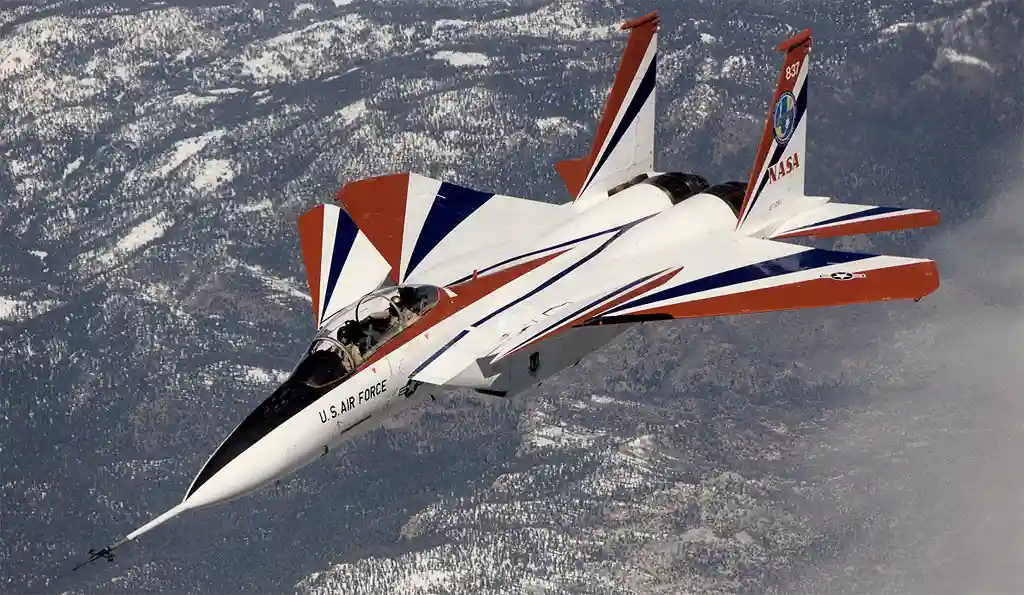
One of the key reasons for this development was the increasing importance of runway survivability in military conflicts. In wartime scenarios, conventional airstrips may be rendered unusable due to enemy attacks or other unforeseen circumstances. The F-15 STOL/MTD was designed to address this by enhancing the aircraft’s ability to operate from shorter, less prepared surfaces without compromising mission capability.
The aircraft was never intended to enter combat but was instead a vehicle to explore the potential of technologies like thrust vectoring, canards, and advanced flight control systems. By focusing on these areas, NASA and the U.S. Air Force sought to revolutionize the capabilities of modern fighter jets.
Key Technologies Tested in the F-15 STOL/MTD
Thrust Vectoring and Reverse Thrust Systems
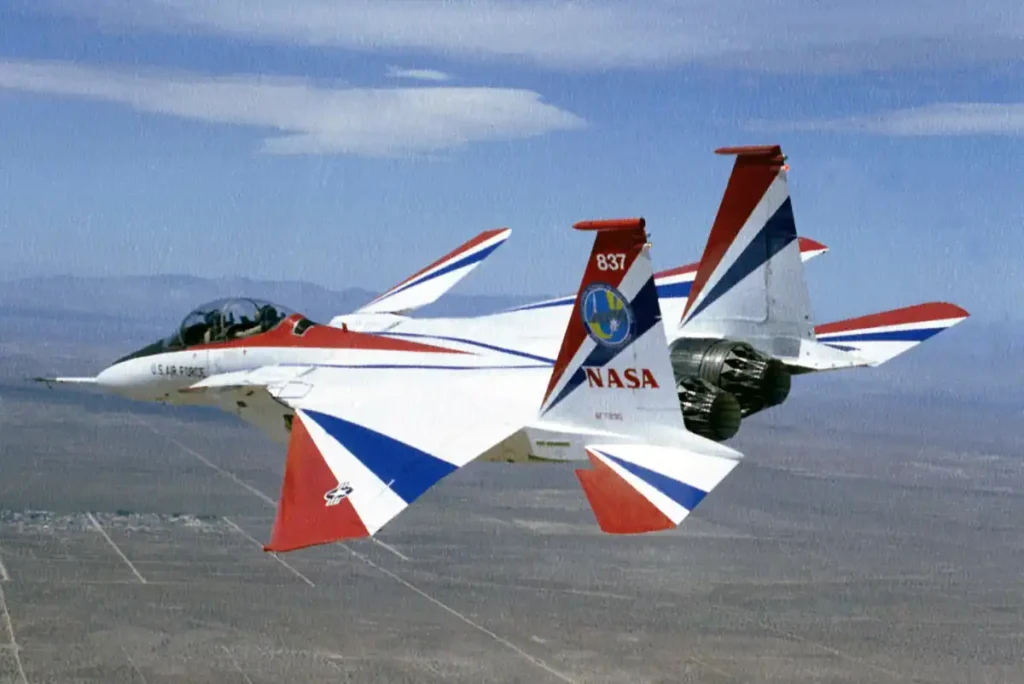
One of the most innovative features of the F-15 STOL/MTD was its integration of thrust vectoring technology. The aircraft was equipped with rectangular, 2D vectoring nozzles developed by Pratt & Whitney, which allowed the engines to pivot vertically by ±20°. This capability directed the engine’s thrust to assist in shortening takeoff and landing distances, significantly improving the aircraft’s STOL capabilities.
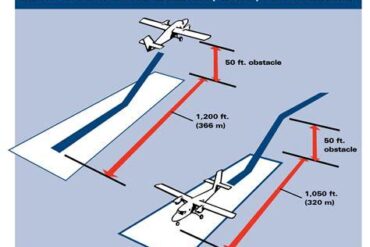
- Shortened Takeoff and Landing: The implementation of thrust vectoring reduced the F-15 STOL/MTD’s takeoff distance by 29% and its landing distance by a remarkable 72% compared to standard F-15s. This was a game-changer for military aviation, demonstrating that fighter aircraft could operate on much shorter runways than previously thought possible.
- Reverse Thrust: In addition to thrust vectoring, the nozzles were also capable of reverse thrust, allowing the aircraft to decelerate rapidly during landing. With reverse thrust, the F-15 STOL/MTD could land on a runway as short as 416 meters—a significant improvement compared to the standard 2,286 meters required for conventional F-15s. This feature demonstrated that fighter aircraft could be highly effective even in makeshift airfields or environments where runway length was severely limited.
Canard Configuration
The F-15 STOL/MTD was also equipped with canards, which are small wings mounted forward of the main wings. These canards contributed to the aircraft’s lift and stability at lower speeds, especially during takeoff and landing. The aircraft’s design incorporated a triple-wing configuration, combining the canards, main wings, and horizontal stabilizers to improve aerodynamic performance.
However, the canards were fixed and not integrated into the aircraft’s fly-by-wire system, meaning that while they contributed to overall stability, they did not actively participate in the maneuverability during high-stress flight conditions. This limitation, while acknowledged, did not detract from the primary goal of demonstrating the potential of STOL operations.
Digital Fly-by-Wire Flight Control System
Another cutting-edge feature of the F-15 STOL/MTD was its digital fly-by-wire system. This fully computerized flight control system managed various aerodynamic surfaces, including the thrust vectoring nozzles and canards. The fly-by-wire system allowed for precise control over these systems, which was particularly crucial during high-angle-of-attack maneuvers, where the aircraft needed to maintain stability and control.
This system played a significant role in enhancing the overall agility of the F-15 STOL/MTD, particularly during complex maneuvers that would otherwise stress a conventional fighter aircraft’s control surfaces. The sophisticated flight control system provided valuable insights into how electronic flight controls could be applied to improve fighter jet performance, a principle later implemented in future generations of aircraft, including the F-22 Raptor.
Performance Achievements of the F-15 STOL/MTD
Shortened Runway Requirements
The most immediate achievement of the F-15 STOL/MTD was its ability to drastically reduce takeoff and landing distances. The ability to operate on short runways—particularly in combat scenarios where airstrips may be destroyed or unavailable—made this aircraft a key player in the study of future military operations.
In total, the F-15 STOL/MTD demonstrated a 29% reduction in takeoff distance and a 72% reduction in landing distance. These performance improvements were critical in the development of aircraft that could operate from non-traditional airstrips and increase the flexibility of military operations.
Enhanced Agility in Combat Scenarios
The integration of thrust vectoring significantly enhanced the agility of the F-15 STOL/MTD. By redirecting thrust, the aircraft was capable of tighter turns and rapid deceleration, both of which are useful features in close-range aerial combat. In particular, the aircraft’s ability to decelerate quickly and alter its flight path made it more unpredictable and harder to target, an advantage in dogfights or air superiority missions.
Influence on Future Fighter Designs
While the F-15 STOL/MTD was a technology demonstrator rather than a combat-ready aircraft, the insights gained from its development would influence the design of future fighter aircraft. The lessons learned from the thrust vectoring systems and advanced flight control mechanisms directly contributed to the design of the F-22 Raptor.
In particular, the F-22’s F119 engines and their 2D stealth-optimized nozzles were heavily influenced by the F-15 STOL/MTD’s thrust vectoring system. This demonstrated how experimental designs, even when not immediately practical, could lead to revolutionary advancements in future fighter aircraft.
Criticisms and Limitations of the F-15 STOL/MTD
While the F-15 STOL/MTD provided valuable insights into the future of military aviation, it was not without its criticisms. Several aspects of the aircraft’s design were considered impractical for widespread use in operational combat fighters.
Practicality Issues
Despite its innovative technologies, some of the components of the F-15 STOL/MTD—particularly the canards and complex thrust reversers—were deemed too heavy and maintenance-intensive for real-world operational use. These features, while impressive from a technological standpoint, added significant weight to the aircraft, reducing its operational efficiency. As a result, later fighters, such as the F-22 Raptor, opted to prioritize stealth and simplicity over some of the experimental features seen on the F-15 STOL/MTD.
Limited Tactical Application
Another limitation was the fact that the F-15 STOL/MTD was not a fully combat-ready aircraft. Although it demonstrated advanced technologies in a controlled environment, it lacked many of the tactical capabilities required in real-world combat scenarios. Critics argued that the project focused too much on testing cutting-edge technologies, which they felt did not have immediate tactical value in terms of fighter aircraft combat roles.
Legacy and Impact of the F-15 STOL/MTD
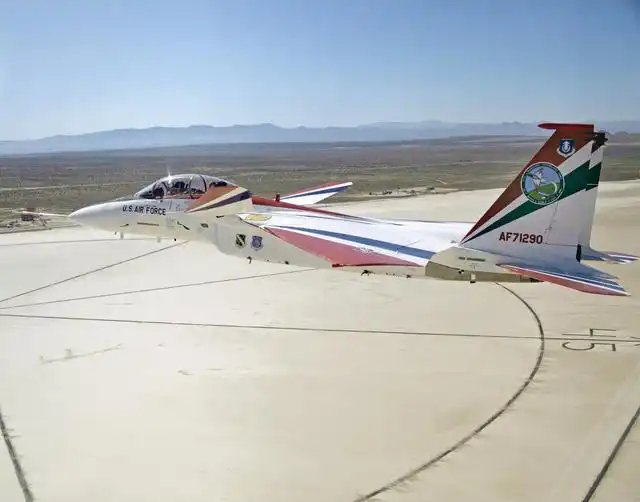
Despite its practical limitations, the F-15 STOL/MTD left a lasting legacy in the field of aviation. Several of the technologies tested on the STOL/MTD were directly applied to future military aircraft, particularly in the development of the F-22 Raptor and F-35 variants.
Thrust Vectoring Technology
Perhaps the most significant legacy of the F-15 STOL/MTD was its demonstration of thrust vectoring as a viable technology. The success of this system in the STOL/MTD played a pivotal role in the subsequent development of the F-22 Raptor and other advanced fighters that relied on similar thrust-vectoring mechanisms to enhance agility and maneuverability.
Influence on Global Aviation
The success of the F-15 STOL/MTD also had global implications. Countries like Russia and China studied the aircraft closely, using its technological advancements as a basis for their own aircraft development. China, for example, used insights gained from the F-15 STOL/MTD to develop 3D thrust vectoring technology for the J-10B and J-20 fighters.
STOL Doctrine and Modern Fighter Designs
Lastly, the F-15 STOL/MTD helped influence the STOL doctrine, which emphasizes the ability to operate from short, damaged, or makeshift runways. This philosophy can be
seen in modern aircraft like the F-35B, which can perform vertical/short takeoff operations and increase the flexibility of military forces in various combat situations.
Conclusion: A Monumental Step in Fighter Jet Evolution
The F-15 STOL/MTD, though never intended for combat, was a monumental step in the evolution of military fighter aircraft. Its test of thrust vectoring, canard configurations, and digital flight control systems provided essential insights into the future of high-performance aviation. While not all of its innovations were immediately practical, the aircraft’s technological contributions continue to resonate in modern fighter designs, such as the F-22 and F-35. The legacy of the F-15 STOL/MTD endures, influencing fighter jet design well into the 21st century.