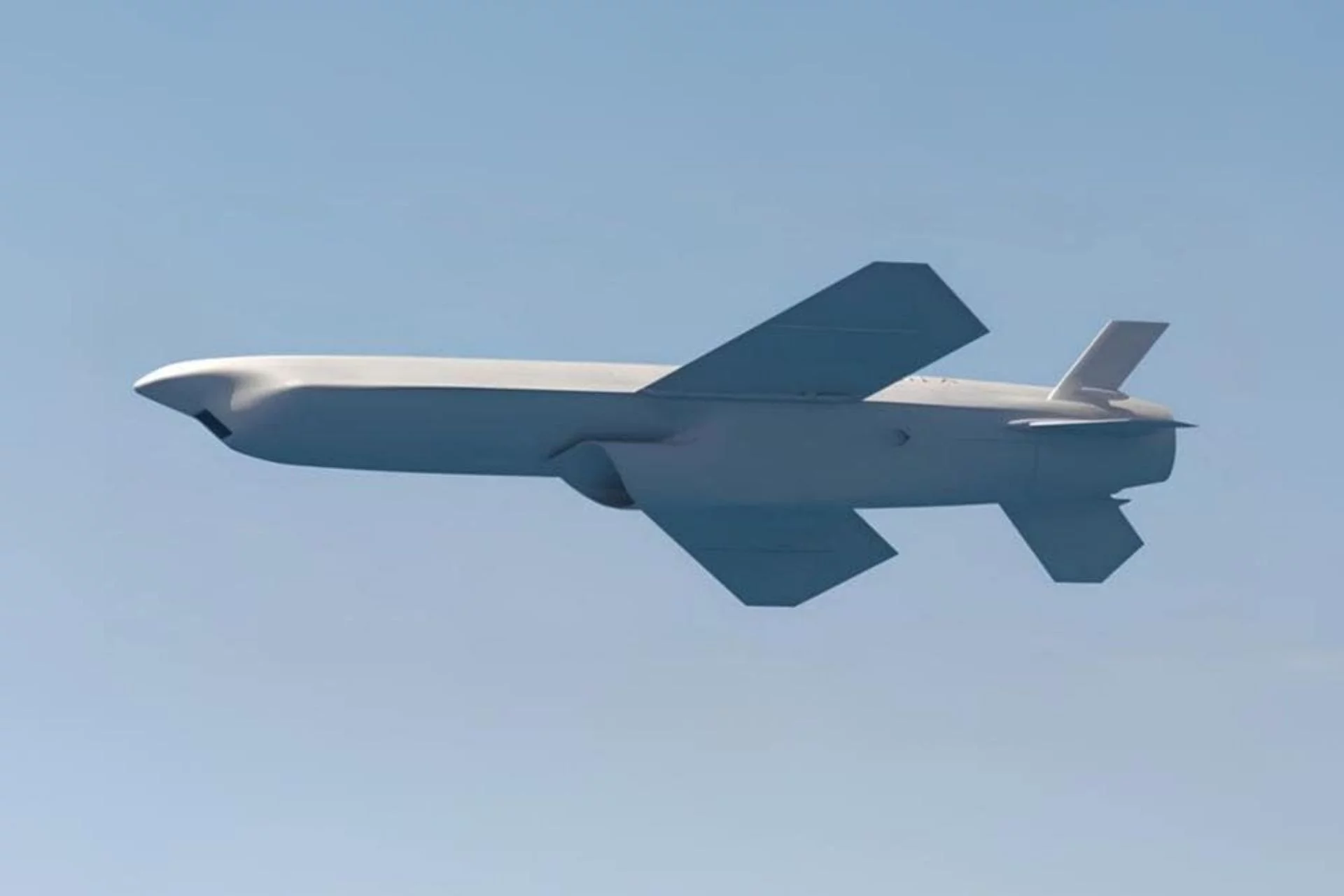
Japan’s quiet but deliberate transformation of its defense posture took a decisive step forward in January 2026, when the Acquisition Technology and Logistics Agency disclosed new details from an advanced long-range cruise missile technology demonstrator led by Kawasaki Heavy Industries. The release offered the clearest public view yet into a program that has been progressing largely out of the spotlight, one focused less on immediate fielding and more on mastering the technologies required for sovereign, long-range precision strike.
At its core, the demonstrator reflects Japan’s shift from a narrowly defensive missile doctrine toward a broader concept of standoff deterrence. Rather than responding to threats only at the point of impact, Tokyo is investing in systems designed to hold adversary assets at risk from significant distances, particularly across the maritime approaches and island chains that define Japan’s strategic geography. The missile revealed by Kawasaki is not a finished weapon, but a carefully engineered proving ground for propulsion, guidance, survivability, and payload flexibility.
The decision to publicly detail the program also carries strategic signaling value. By releasing imagery, architectural concepts, and technical objectives, Japan is demonstrating both intent and capability: intent to pursue nationally controlled long-range strike systems, and capability to design them without relying entirely on foreign suppliers. This balance between transparency and restraint is characteristic of Japan’s modern defense industrial strategy, where credibility is built through demonstrators rather than rhetoric.
The demonstrator’s origins trace back to material first presented during ATLA’s Technology Symposium in November 2025, an event that brought together government planners, industry engineers, and academic researchers. What emerged then as an abstract research effort has now been framed as a coherent missile architecture with clear relevance to future operational requirements.
Strategic Context Behind Japan’s Cruise Missile Push
Japan’s evolving security environment provides the backdrop for this program. The increasing range, accuracy, and volume of missile forces deployed by regional actors have reshaped deterrence dynamics across the Indo-Pacific. For Japan, whose southwestern islands stretch deep into contested maritime zones, the ability to engage threats at range is no longer a theoretical requirement but a practical necessity.
The demonstrator is explicitly tied to island defense scenarios, where launch platforms may need to strike naval formations, logistics hubs, or command infrastructure without exposing themselves to direct retaliation. In such environments, long-range cruise missiles offer flexibility that ballistic systems lack, particularly when integrated into networked intelligence, surveillance, and reconnaissance frameworks.
Unlike imported solutions, an indigenous missile allows Japan to tailor range profiles, payload options, and launch compatibility to its own operational doctrine. This autonomy is increasingly viewed as essential, especially as long-range strike becomes a core component of national defense planning rather than an auxiliary capability.
A Technology Demonstrator, Not a Deployed Weapon
ATLA has been careful to emphasize that the Kawasaki system is a technology demonstrator, not a near-term acquisition for the Japan Self-Defense Forces. Its purpose is validation rather than deployment, allowing engineers to test subsystems under realistic conditions while keeping options open for future configurations.
This distinction matters. By avoiding premature commitment to a fixed design, ATLA reduces program risk and preserves adaptability. The demonstrator functions as a modular testbed, enabling iterative refinement of propulsion, guidance algorithms, and survivability features without locking the Ministry of Defense into a single performance envelope.
Such an approach mirrors best practices seen in other advanced missile programs globally, where early demonstrators absorb technical uncertainty before transitioning into operational development. In Japan’s case, the method also aligns with budgetary discipline and long-term force planning horizons that extend into the early 2030s.
Modular Payload Architecture and Multi-Domain Utility
One of the most consequential aspects of the demonstrator is its modular payload philosophy. Open-source analysis of ATLA-linked material suggests that the missile is designed to accommodate a diverse range of payloads, from conventional high-explosive warheads optimized for maritime and land targets to specialized penetrators intended for hardened or underground facilities.
Beyond kinetic effects, the architecture reportedly supports non-kinetic payloads, including electronic warfare and electronic countermeasure modules. These could enable missions focused on degrading sensors, communications, or air defense networks ahead of or alongside kinetic strikes. Reconnaissance and sensor payloads are also part of the conceptual design, underscoring the missile’s potential role within a broader information-centric battlespace.
This emphasis on payload flexibility reflects Japan’s increasing focus on multi-domain operations, where strike systems are not isolated assets but nodes within a connected kill chain linking sensors, shooters, and decision-makers across land, sea, air, space, and cyberspace.
Propulsion as the Cornerstone of Extended Reach
Propulsion sits at the heart of the demonstrator program. Kawasaki has confirmed work on a compact air-breathing turbofan engine specifically optimized for cruise missile applications, balancing fuel efficiency with a form factor suitable for multiple launch platforms.
While official performance figures remain undisclosed, Japanese defense officials have indicated that the long-term goal is to exceed the reach of the extended-range Type 12 surface-to-ship missile variants. In analytical circles, this objective is often interpreted as a notional range of 1,500 to 2,500 kilometers, placing the system firmly within the category of strategic standoff weapons.
Sustained high-subsonic flight over such distances demands careful thermal management, efficient inlet design, and robust engine control systems. The demonstrator allows engineers to validate these parameters in an integrated platform, ensuring that future operational missiles can achieve extended reach without sacrificing reliability or launch flexibility.
Survivability in the Face of Modern Air Defenses
Equally critical is the missile’s approach to terminal survivability. Kawasaki has highlighted a dedicated maneuvering system integrated into the flight control architecture, designed to execute complex terminal trajectories during the final phase of engagement.
These maneuvers are intended to defeat close-in weapon systems commonly deployed on surface combatants, which rely on rapid fire control solutions during the last seconds of an incoming missile’s flight. By introducing unpredictable lateral and vertical movements, the missile complicates interception attempts, reducing the probability of successful engagement by naval air defense artillery.
Such survivability measures are no longer optional. Modern air defense environments are dense, layered, and increasingly automated. A credible long-range cruise missile must be able not only to reach its target but to survive the final kilometers where interception probability is highest.
Vertical Launch Compatibility and Platform Flexibility
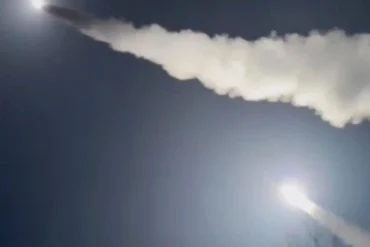
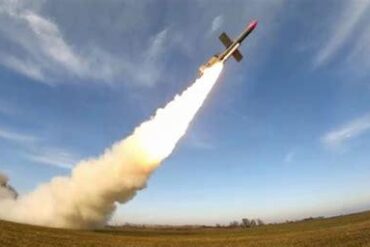
Imagery released alongside ATLA material shows the demonstrator fitted with a booster stage, strongly suggesting compatibility with vertical launch system configurations. This design choice opens the door to deployment from surface combatants, land-based launchers, and potentially other platforms using standardized vertical interfaces.
Such flexibility aligns with Japan’s objective of fielding common strike assets across multiple branches of the Self-Defense Forces. A missile that can be launched from destroyers, mobile ground units, or future platforms reduces logistical complexity while enhancing operational versatility.
The emphasis on platform-agnostic design also reflects lessons learned from allied missile programs, where commonality has proven to be a force multiplier in both peacetime integration and wartime sustainment.
Toward Sovereign Long-Range Strike Capability
The demonstrator must be viewed within the broader context of Japan’s decision to pursue an indigenous alternative to foreign long-range cruise missiles. While imported systems such as the U.S. Tomahawk provide proven capability, reliance on external suppliers carries strategic and operational constraints.
By developing its own cruise missile technologies, Japan gains greater control over software updates, payload options, and integration timelines. The Kawasaki demonstrator forms a critical industrial pillar in this effort, anchoring domestic expertise in propulsion, guidance, and survivability.
ATLA has not positioned the system as a direct replacement for any existing missile. Instead, it represents a foundation upon which future operational designs can be built, tailored precisely to Japan’s geography, doctrine, and threat assessments.
Development Timeline and Long-Term Outlook
Although no official timeline has been released, Japanese defense planning documents and public statements suggest that an operational system derived from current research could emerge between 2030 and 2033. This timeframe aligns with parallel investments in extended-range Type 12 upgrades, hypersonic weapons, and advanced sensor networks.
Rather than rushing to field a single solution, Japan is assembling a layered strike portfolio, where cruise missiles, hypersonic systems, and networked intelligence assets reinforce one another. The Kawasaki demonstrator fits neatly into this architecture, providing the technological groundwork for sustained long-range precision engagement.
In strategic terms, the program illustrates Japan’s methodical approach to capability development. By prioritizing incremental validation over rapid acquisition, ATLA and domestic industry are reducing risk while building a resilient, sovereign strike capability suited to the evolving security environment of the Indo-Pacific.