South Korea has taken a major leap forward in its indigenous defense capabilities with the successful flight test of its air-launched cruise missile (KALCM), conducted on June 23, 2025. This test marks the first time the missile has been released in-flight from a combat aircraft, signaling tangible progress in the Republic of Korea’s (ROK) multi-year project to develop its own long-range precision strike capabilities.
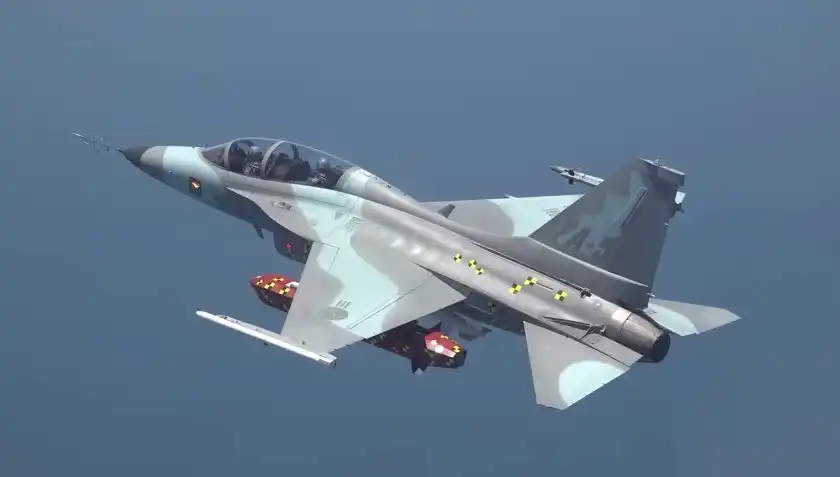
The Defence Acquisition Programme Administration (DAPA) announced the test on June 25, confirming that the prototype KALCM was launched from a KAI FA-50 Fighting Eagle light combat aircraft. The test was primarily designed to validate the missile’s separation mechanism, ensuring a safe and stable release from the aircraft under dynamic flight conditions.
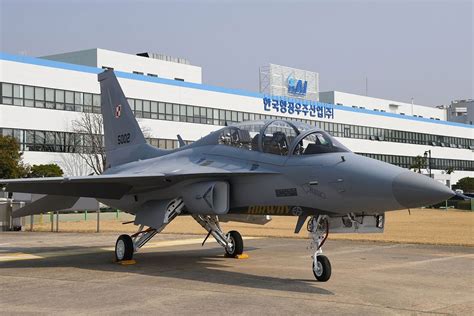
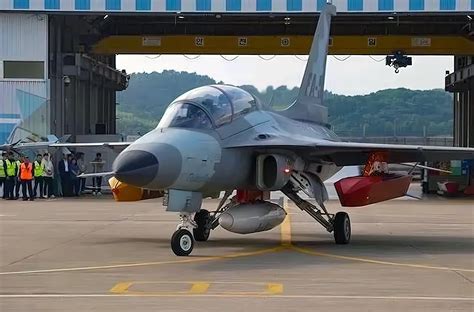
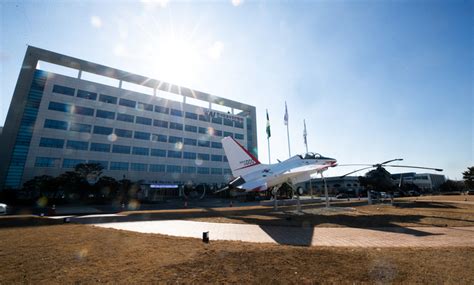
The FA-50’s use as a test platform highlights South Korea’s flexibility and strategic planning. Originally, the KF-21 Boramae multirole fighter, still in its test phase, was to be the primary platform for such evaluations. However, due to scheduling constraints and limited availability, the FA-50 stepped in, emphasizing its growing role beyond training and light attack duties.
A Precision-Engineered Test with Strategic Implications
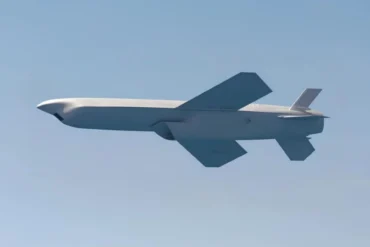
The flight test consisted of a brief but critical mission profile. Once released from the FA-50, the KALCM remained airborne for approximately 37 seconds, covering a straight-line distance of 9 kilometers before landing within a designated military test range. While the missile was not equipped with an operational warhead and did not demonstrate its full flight range, this initial sortie served to establish the foundational aerodynamic integrity and flight stability of the missile platform.
The KALCM program, which began in 2018, represents South Korea’s ambition to reduce dependence on foreign defense technologies while cultivating a capable deterrent against regional threats, particularly from North Korea. The test, while preliminary, demonstrated that domestic missile technology can now support the rigors of real-world operational conditions—a milestone for Korean aerospace engineering.
Long-Term Vision and Expanding Strike Reach
According to DAPA, full operational deployment of the KALCM is scheduled post-2027, pending a complete battery of flight and combat-readiness trials. When fully operational, the KALCM will feature variable range capabilities, with projections suggesting distances from 350 km to over 500 km, contingent on the carrier aircraft. This flexibility allows the missile to adapt to different mission envelopes and aircraft configurations.
The integration with both FA-50 and KF-21 platforms is particularly significant. The FA-50 has already proven itself as a cost-effective export platform with multiple buyers across Southeast Asia and Latin America, while the KF-21 is poised to become South Korea’s flagship 5th-generation multirole combat aircraft. By designing the missile to work with both aircraft, Seoul is opening new avenues for defense exports and tactical interoperability.
Replacing Imported Systems: Strategic Autonomy in Focus
Currently, the Republic of Korea Air Force (ROKAF) utilizes the KEPD 350K Taurus air-launched cruise missile system, developed in Europe and integrated into the F-15K Slam Eagle, a U.S.-made fighter. While the KEPD 350K is a proven platform with precision strike capabilities, it is expensive and subject to supply chain constraints and foreign policy limitations.
The KALCM offers a homegrown alternative—one that can be produced in-country, maintained locally, and upgraded independently. It provides South Korea with a tool for strategic autonomy while simultaneously reducing procurement costs. In an era of increasing geopolitical volatility, this control over critical strike capabilities enhances the nation’s defensive and offensive posture.
Technological Design and Performance Metrics
Though detailed specifications of the KALCM remain classified, defense analysts speculate it leverages terrain-hugging flight profiles, low radar cross-section (RCS), and possibly electronic counter-countermeasures (ECCM). The missile’s airframe is likely optimized for stealth and aerodynamic efficiency, designed to penetrate hostile airspace and strike high-value targets deep behind enemy lines.
The variable range—350 to over 500 kilometers—suggests different propulsion configurations or fuel capacity, potentially adjusted per mission or aircraft. If deployed with mid-course guidance and terminal homing technologies, such as GPS/INS and active radar seekers, the KALCM could rival Western analogues like the U.S. AGM-158 JASSM or France’s SCALP-EG.
Strategic Deterrence in the Korean Peninsula and Beyond
With tensions on the Korean Peninsula never far from the surface, South Korea’s acquisition of long-range precision-guided standoff weapons becomes not just a technical achievement but a strategic necessity. North Korea continues to test ballistic and cruise missile systems at an accelerated pace, many with ranges capable of striking anywhere in the South.
The KALCM, once deployed, offers South Korea a responsive, high-accuracy strike option that can be launched from beyond enemy air defense coverage. This standoff capability complements existing deterrent frameworks and reinforces counter-strike and preemptive doctrines that the South has quietly developed in the face of evolving threats.
Moreover, by integrating the KALCM into both the FA-50 and KF-21, South Korea effectively multiplies the number of airframes capable of strategic missions. This redundancy and flexibility serve as a deterrent by complicating enemy defense planning and providing multiple vectors of engagement.
Export Potential: A Strategic Play for the Global Market
One of the most significant implications of the KALCM project lies in its export potential. The FA-50 platform has already seen success in markets such as the Philippines, Thailand, Iraq, and Malaysia, where air forces are looking for versatile yet affordable aircraft. With the KALCM integrated, the FA-50 becomes a more attractive package for countries seeking force-multiplier technologies without full-scale fighter acquisition costs.
Similarly, the upcoming KF-21 is expected to challenge Western and Chinese offerings in the mid-tier fighter segment. If Seoul can demonstrate a fully indigenous weapon ecosystem, including advanced air-to-surface missiles, it enhances the KF-21’s appeal in defense tenders. For partner nations, this means lower logistical complexity, sovereign capability upgrades, and reduced dependency on Western arms restrictions.
Operational Path Forward: Incremental But Decisive Steps
The June 23 test is merely the first chapter in what will be a multi-year campaign to bring the KALCM to full operational readiness. Over the coming months, South Korean defense officials and engineers will conduct a series of expanded flight tests, gradually increasing altitude, launch speed, maneuvering complexity, and range.
Once missile aerodynamics and avionics are fully validated, the focus will shift to live warhead integration, target tracking accuracy, and system reliability under combat simulation conditions. Only after surviving this stringent testing regime will the KALCM be declared operational by the ROK military.
Notably, integration with the KF-21 will also require specific avionics and software interface development to enable seamless fire-control system compatibility. Given the KF-21’s advanced sensor fusion capabilities, pairing it with the KALCM will unlock next-generation strike options, potentially enabling multi-platform coordinated targeting and battlefield networking.
A New Era in Korean Defense Industry
The successful testing of the KALCM underscores a broader transformation within South Korea’s defense sector—from a buyer and integrator of foreign systems to a creator and exporter of cutting-edge military technologies. Backed by heavy investment in R&D, domestic manufacturing, and strategic partnerships, the nation is rapidly climbing the ladder of global defense producers.
The KALCM is more than just a missile—it is a symbol of sovereign capability, a tool of national resilience, and a statement of South Korea’s intent to define its own defense future. As the program evolves and export prospects crystallize, Seoul stands poised to not only secure its borders but also reshape the landscape of precision strike weaponry in Asia and beyond.