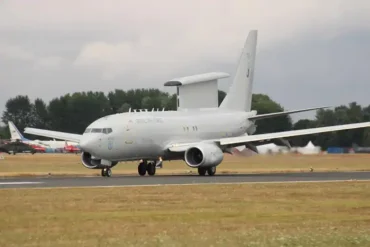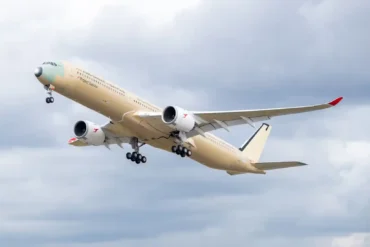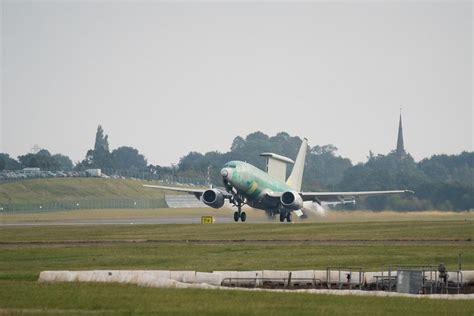
The Royal Air Force (RAF) has marked a critical milestone in its airborne early warning and control (AEW&C) capability with the successful system validation flight of its first E-7 Wedgetail aircraft, designated WT001. As confirmed through an official RAF statement, the test flight served to validate onboard systems, signaling substantial progress in operational readiness for a platform poised to become a cornerstone of the UK’s defense architecture.
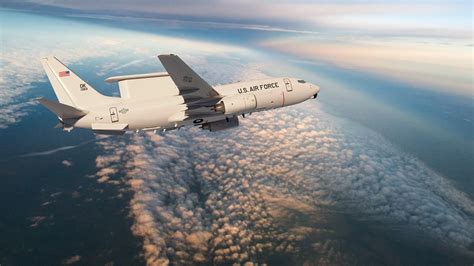
A New Chapter in AEW&C: The Rise of the Wedgetail
The E-7 Wedgetail, built on the reliable Boeing 737-700 airframe, is outfitted with Northrop Grumman’s MESA (Multi-role Electronically Scanned Array) radar, a cutting-edge radar system that enables 360-degree coverage and real-time situational awareness. Already in operation with air forces in Australia, South Korea, and Turkey, the Wedgetail brings a transformative leap in surveillance and battle management capabilities to the RAF.
This recent system validation flight by WT001 is more than a routine test. It signifies the approaching operational deployment of a platform that will replace the now-retired E-3D Sentry fleet, which was phased out in 2021. The retirement of the Sentry created a gap in airborne surveillance—a void the Wedgetail is now primed to fill with superior range, responsiveness, and resilience.
Strategic Value and Global Interoperability
RAF officials have described the Wedgetail as “the most capable and effective AEW&C platform in operation today,” underscoring its strategic importance. Its successful integration into the RAF will strengthen not only national defense postures but also collaborative frameworks under NATO. The aircraft’s ability to track both aerial and maritime threats in real time significantly enhances the UK’s command and control capabilities across multiple theaters.
A Scaled-Down Fleet: Cost vs. Capability
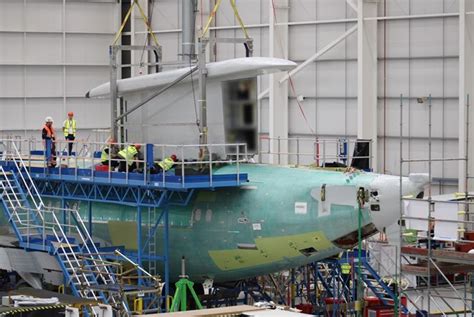
The UK originally intended to procure five E-7 aircraft, a number that was reduced to three units under a 2021 defense budget realignment. This decision has raised eyebrows among defense analysts and senior NATO figures, many of whom have questioned the sufficiency of a three-aircraft fleet to meet continuous operational demands, particularly when factoring in maintenance cycles and overseas deployments.
While smaller than anticipated, the fleet will nonetheless be supported by close operational ties with allied forces, notably the United States and Australia, both of whom operate the Wedgetail in frontline roles. This multinational adoption ensures interoperability, cross-training opportunities, and the potential for shared logistics and intelligence infrastructure.
Ministerial Assurance and Parliamentary Discourse
Defence Minister Maria Eagle addressed Parliament on June 26, reaffirming the UK’s commitment to the E-7 programme and revealing ongoing trilateral coordination efforts. “The Ministry of Defence have continual engagement with the US regarding the E-7 programme,” she stated, referencing trilateral working groups established in 2022 and a Joint Vision Statement signed in 2023.
Eagle emphasized that the Wedgetail is a “strategic asset identified in the UK’s Strategic Defence Review,” adding that its growth “was identified as advantageous to the UK and NATO.” These remarks indicate not only the government’s long-term vision for AEW&C capabilities but also its recognition of the aircraft’s importance in multinational joint operations and deterrence missions.
Capabilities That Redefine Battlefield Awareness
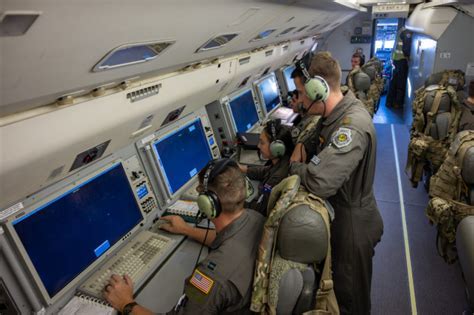
The E-7 Wedgetail is built to execute real-time surveillance, airborne command and control, and battle management across expansive operational environments. The aircraft’s MESA radar can detect and track multiple airborne and maritime threats simultaneously while maintaining communications across air, land, and naval assets. Its advanced suite of systems enables:
- Real-time threat detection and tracking
- Wide-area surveillance with 360° radar coverage
- Simultaneous multi-theater command and control
- Data sharing with coalition and NATO assets
These capabilities ensure that the RAF can maintain air superiority, conduct precision targeting, and support ground forces with unparalleled agility.
From Ground Test to Airborne Assurance: WT001’s Journey
The aircraft designated WT001 has undergone extensive ground and taxi trials since arriving in the UK. With each successful test flight, the E-7 moves closer to Initial Operational Capability (IOC), expected in the mid-to-late 2020s. The WT001’s latest system validation confirmed that all major subsystems—including avionics, radar, communication arrays, and mission software—are functioning within expected parameters.
This success not only reflects the technical maturity of the aircraft but also the coordinated effort between the RAF, Defence Equipment & Support (DE&S), and industry partners including Boeing and Northrop Grumman. It demonstrates the UK’s ability to rapidly integrate high-value platforms into its force structure under rigorous safety and performance benchmarks.
Oversight, Accountability, and Forward Strategy
The E-7 Wedgetail programme is listed under the Government Major Project Portfolio, a designation that ensures top-level scrutiny, transparency, and structured progress evaluation. According to Minister Eagle, the programme undergoes regular internal reviews and reports are submitted at defined intervals to evaluate risks, milestones, and budget adherence.
This approach reflects a clear lesson learned from previous acquisition programs: strategic systems demand strategic governance. In light of shifting global threats—from near-peer adversaries to asymmetric warfare—the UK is laying down an infrastructure of accountability that ensures the E-7 not only enters service but does so as a fully capable and resilient AEW&C platform.
Rebuilding Readiness After the Sentry Era
When the E-3D Sentry fleet was retired in 2021, the UK found itself without a sovereign airborne early warning system for the first time in decades. In the interim, RAF operations have relied heavily on allied support, intelligence-sharing agreements, and temporary backfilling from NATO assets.
With the arrival of the E-7, the RAF is not just plugging a capability gap—it is installing a superior replacement that enhances both offensive and defensive readiness. The platform’s low lifecycle costs, modularity, and proven track record among allied forces make it an ideal fit for the UK’s Integrated Operating Concept, which emphasizes agility, adaptability, and data-driven warfare.
Looking Ahead: Futureproofing RAF Surveillance Capabilities
While only three units are currently funded, discussions persist regarding the potential for future fleet expansion, particularly if threat levels rise or NATO commitments increase. Given the aircraft’s pivotal role in multi-domain operations, additional procurement may become a strategic necessity, particularly in scenarios requiring 24/7 global situational awareness.
Already, defense analysts are urging Parliament to revisit the procurement cap, arguing that a larger fleet would provide the UK with operational resilience during concurrent crises or long-duration deployments. However, any such expansion would depend on budgetary reallocations, international partnerships, and a broader reassessment of UK defense priorities post-2025.
Conclusion: A New Era of Strategic Airborne Command
The RAF’s successful system validation flight of WT001 ushers in a new era for the UK’s air command infrastructure. More than just a replacement for the E-3D, the E-7 Wedgetail represents a paradigm shift in how the UK defends its skies, supports its allies, and positions itself within a volatile global security environment.
With its advanced sensor systems, multinational integration, and strategic backing from both Parliament and NATO, the E-7 stands as a critical enabler of future warfare readiness. As the aircraft approaches operational status, all eyes will be on the RAF as it transitions from legacy systems to this formidable platform—an aircraft not just tested, but proven.