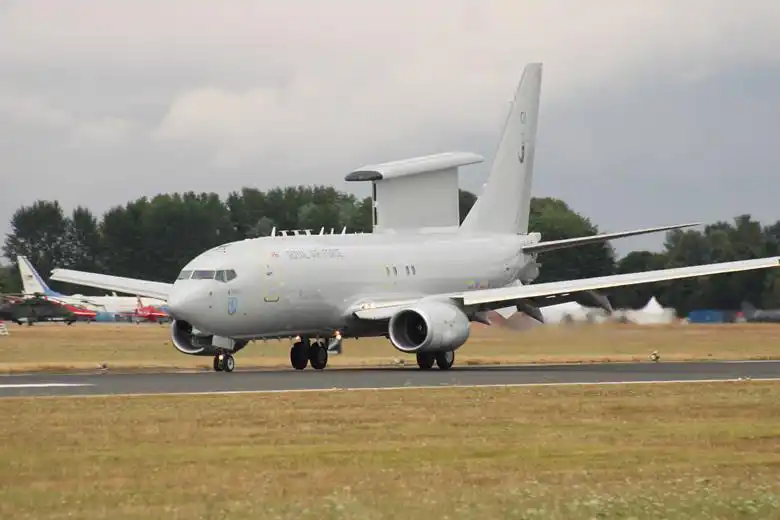
The UK Royal Air Force (RAF) has taken a major leap forward in its airborne early warning and control capabilities with the public debut of the Boeing E-7A Wedgetail at the Royal International Air Tattoo (RIAT) on 19 July 2025. This milestone event marks the first time the British public has seen the advanced surveillance platform, heralding a new era of airborne situational awareness and network-centric warfare for the United Kingdom.
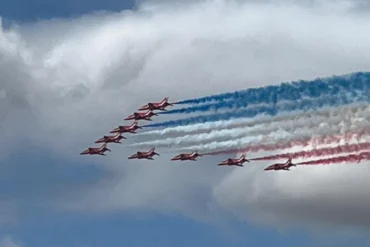
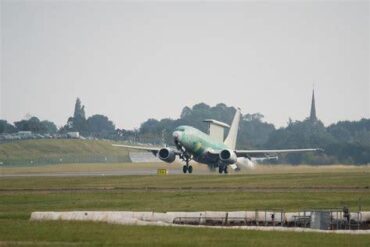
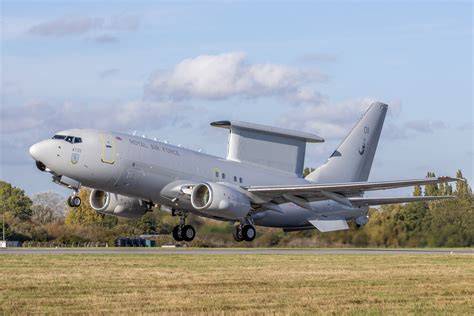
The aircraft, registered WT001, made a dramatic entrance at RAF Fairford in Gloucestershire, performing a flypast alongside the Red Arrows, the RAF’s iconic aerobatic display team. After the initial pass, the Wedgetail circled back for a solo run before executing a precision touch-and-go landing, demonstrating both its agility and operational readiness.
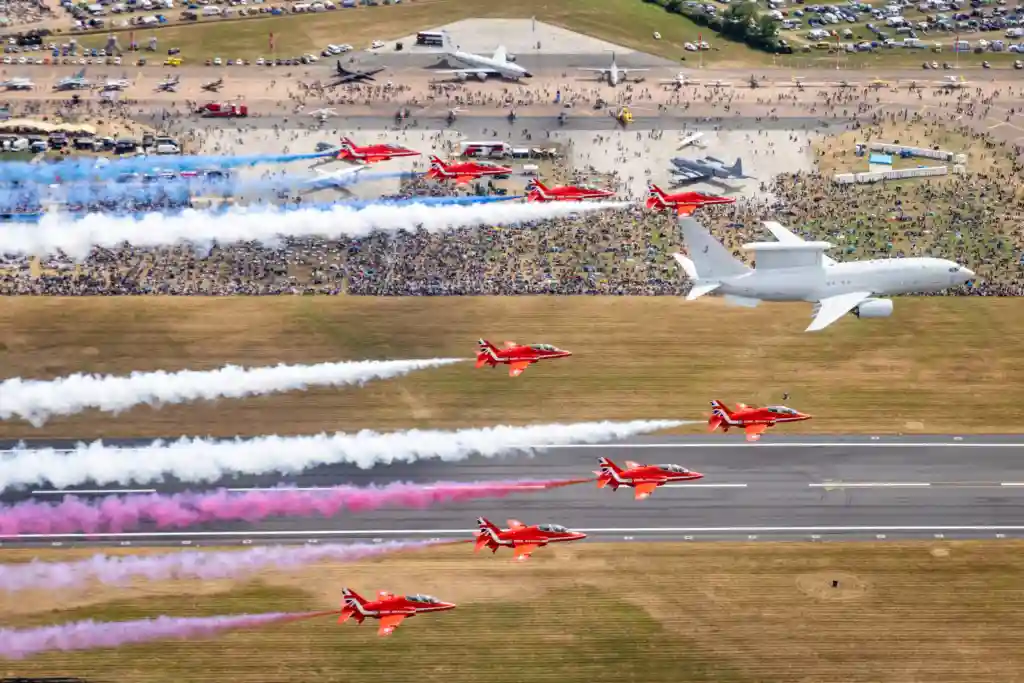
The appearance was especially notable given that the aircraft was originally slated to perform on the first day of the event, but had been sidelined due to a technical issue. Its eventual arrival on 19 July was only its fifth flight since its first modified sortie in September 2024, a remarkable feat given the complexity of its development. Pilots from both Boeing and the RAF were in control during the flight, underlining the collaborative nature of this platform’s test and evaluation phase.
The Transformation of a 737NG: Inside the E-7A Wedgetail
At its core, the E-7A Wedgetail is a heavily modified Boeing 737 Next Generation (737NG) aircraft, transformed into a state-of-the-art airborne early warning and control system (AEW&C). The aircraft is equipped with the Northrop Grumman MESA (Multi-role Electronically Scanned Array) radar, mounted on a dorsal fin atop the fuselage, capable of 360-degree coverage and real-time tracking of air and maritime threats.
The RAF’s first operational Wedgetail is currently undergoing rigorous test and evaluation procedures at STS Aviation Services’ site at Birmingham Airport, where conversion and integration tasks are being conducted. Of the three aircraft ordered, two already have their MESA radars installed, a critical component in enabling over-the-horizon detection and battlefield management.

A Leaner Yet Smarter Fleet: From Five to Three, with NATO in Sight
The UK had originally planned to acquire five Wedgetail aircraft to replace its retired Boeing E-3D Sentry fleet. However, due to evolving budget constraints and defense procurement priorities, the order was reduced to only three units. Despite the reduced number, the UK government emphasized that the capability remains uncompromised. In fact, the recently released Strategic Defence Review hints at the possibility of acquiring additional aircraft in partnership with NATO allies, opening the door to cost-sharing models that preserve the platform’s full potential.
According to Armed Forces Minister Luke Pollard, the E-7A Wedgetail delivers superior performance in speed, range, endurance, and crew capacity when compared to its predecessor. Speaking at the Global Air & Space Chiefs’ Conference in London, Pollard affirmed that the aircraft is capable of identifying more complex threats at greater distances, giving UK forces the critical edge of early decision-making and enhanced survivability.
Bridging the Gap Between Surveillance and Action
The introduction of the E-7A Wedgetail is far more than a fleet update—it represents a doctrinal shift in the way the RAF approaches intelligence, surveillance, and reconnaissance (ISR) missions. With its ability to monitor hundreds of targets simultaneously, the Wedgetail serves as a force multiplier that enhances the command and control architecture of NATO operations.
The aircraft’s onboard systems are integrated with secure datalink capabilities, allowing it to communicate and coordinate with fighters, drones, naval assets, and ground forces. This network-centric approach ensures a real-time, synchronized battlespace picture, drastically reducing the decision-making timeline and improving mission effectiveness.
From Australian Roots to British Skies: A Proven Platform
The UK’s selection of the Wedgetail followed Australia’s successful implementation of the platform, where it has been in active service since 2009 with the Royal Australian Air Force (RAAF). Australia’s operational feedback played a key role in convincing the UK Ministry of Defence of the aircraft’s reliability and versatility. Countries like Turkey and South Korea have also adopted variants of the platform, further validating its global utility.
Unlike its American cousin, the E-3 Sentry, the E-7A offers a smaller logistical footprint, faster deployment times, and lower operating costs—all while maintaining or exceeding the same level of sensor fidelity. This combination of proven pedigree and next-generation upgrades makes it a compelling choice for modern air forces navigating complex security landscapes.
Building Toward Full Operational Capability in 2026
Though still in its testing phase, the RAF is set to achieve Initial Operational Capability (IOC) with the E-7A Wedgetail in 2026. Until then, the remaining aircraft will continue systems testing, crew training, and mission scenario rehearsals. The focus is not just on flight hours but on refining the complex human-machine interfaces that define AEW&C effectiveness.
This ramp-up phase is essential to ensure the robustness of the entire AEW&C ecosystem, which includes not only airborne assets but also ground-based support elements and integration with allied forces. By the time full operational capability is declared, the RAF expects to field a fully interoperable AEW&C solution ready for real-world missions.
Strategic Implications: A Pivot Toward Indo-Pacific and Arctic Interests
The deployment of the Wedgetail comes at a time when the UK is redefining its defense posture, particularly with an eye toward the Indo-Pacific region and the High North. The platform’s endurance and reach are ideally suited to cover vast maritime zones, identify low-observable threats, and support joint operations with NATO and Five Eyes partners.
With growing concerns about peer and near-peer adversaries, the Wedgetail’s strategic value becomes even clearer. It offers not just a radar picture, but a command node in the sky, enabling multi-domain operations across air, sea, cyber, and space domains.
Final Thoughts: From Air Tattoo to Frontline
What began as a dramatic flypast at RIAT 2025 is actually the public unveiling of one of the RAF’s most pivotal assets of the next two decades. The Wedgetail program represents technological evolution, allied cooperation, and doctrinal modernization. While only three aircraft are confirmed, their operational importance far outweighs the numbers.
As the world witnesses increasing complexity in aerial and maritime threats, platforms like the E-7A Wedgetail will define the edge between preparation and reaction, visibility and blindness, dominance and uncertainty. For the UK, the aircraft is more than a replacement—it’s a strategic leap into the future of warfare.
The sky at RIAT wasn’t just filled with airshow smoke trails and formation flying; it was punctuated by a bold statement of readiness and innovation, as the UK’s first Wedgetail soared into the public eye.