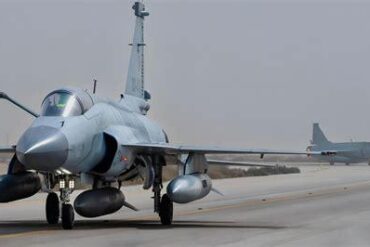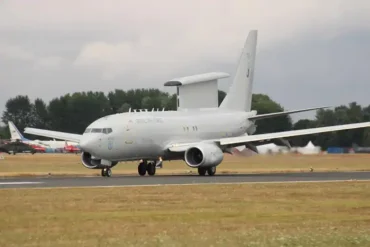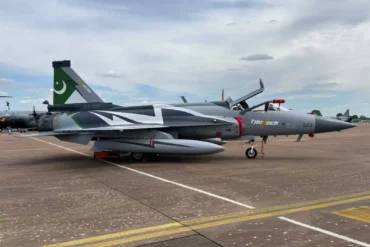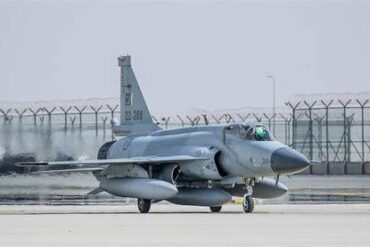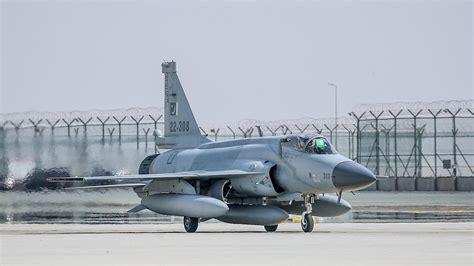
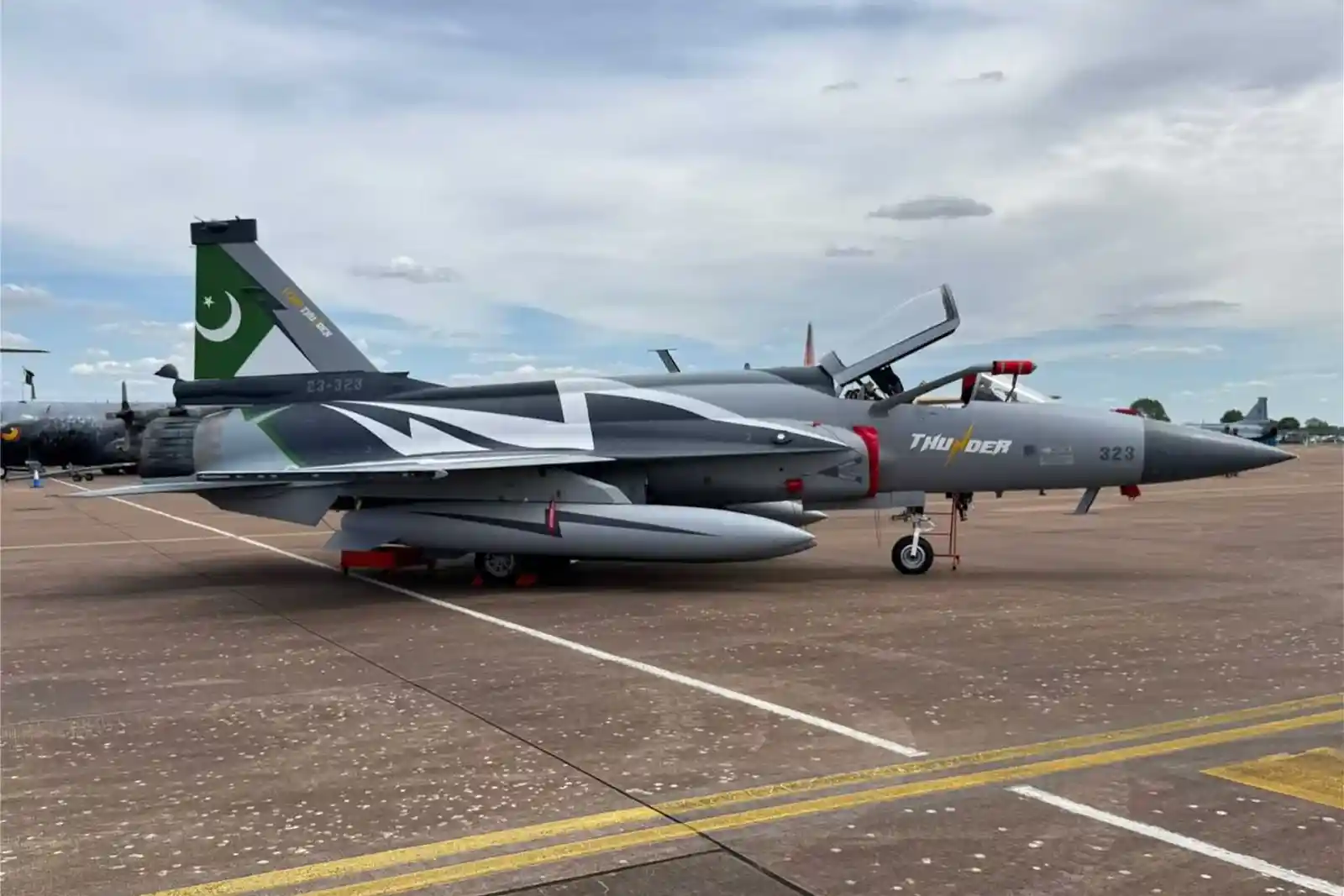
Pakistan’s defense aerospace sector took a major step forward at the Royal International Air Tattoo (RIAT) 2025, where the JF‑17 Block III fighter jet made its first-ever appearance in Europe. Hosted at RAF Fairford in Gloucestershire, the event marked not only a symbolic debut for the aircraft but also a calculated maneuver to thrust Pakistan’s defense industry into the global spotlight. The Pakistan Air Force (PAF) showcased two JF‑17C Block III fighters, accompanied by a logistical support fleet including an IL‑78 aerial refueler and a C‑130E Hercules transport aircraft — a clear demonstration of the PAF’s expeditionary and operational prowess.
A New Chapter for Pakistani Aerospace Ambitions
The JF‑17 Block III, jointly developed by Pakistan Aeronautical Complex (PAC) and China’s Chengdu Aircraft Corporation, represents a significant leap over previous variants. Known as the JF‑17 Thunder, the fighter jet’s latest iteration — designated the Block III or JF-17C — is now being positioned not just as an affordable multirole solution, but as a credible 4.5-generation combat aircraft capable of holding its own against more expensive Western platforms. This aircraft’s introduction to a European audience underscores Pakistan’s growing defense export ambitions, while its deployment reflects confidence in both technical capability and global marketing strategy.
The decision to present the aircraft at Europe’s largest airshow is far from coincidental. By situating the JF‑17 Block III next to platforms like the Eurofighter Typhoon, F-35 Lightning II, and Dassault Rafale, Pakistan sends a powerful message: it is no longer playing in a minor league. The JF‑17 is now ready to compete on the international stage — particularly with nations seeking high-tech capabilities at a fraction of Western costs.
Inside the JF‑17 Block III: Tech Specs and Capability Leap
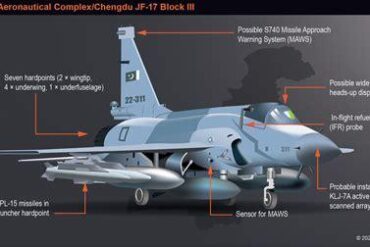
At the heart of the Block III upgrade lies a collection of avionics, sensor, and propulsion advancements that push it beyond mere affordability and into operational effectiveness.
The KLJ-7A Active Electronically Scanned Array (AESA) radar, developed by China, marks a historic first for Pakistani aviation. This radar allows multi-target tracking, stronger jamming resistance, and simultaneous engagement of aerial threats. In contested airspace, such functionality is a force multiplier.
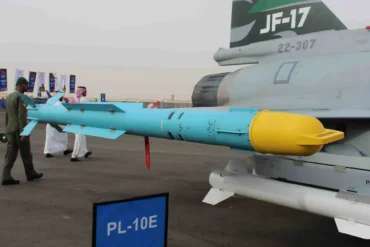
Beyond radar, the cockpit boasts a wide-area multifunction display, fully digital fly-by-wire flight controls, and a helmet-mounted display and sight (HMD/S) system that links directly to weapons like the PL-10 imaging infrared missile. Together with the RD-93MA turbofan engine, which brings improved thrust-to-weight ratio and reliability, the aircraft now competes within the tier of combat-proven fighters like the F-16V or J-10C.
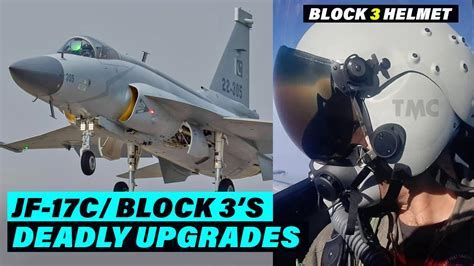
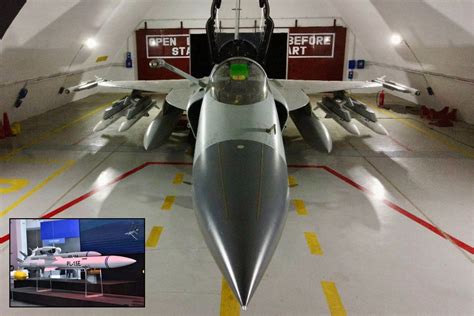
Weapons integration is another domain where the JF‑17C makes its mark. In addition to the PL-10 short-range missiles, the Block III also features PL-15E beyond-visual-range (BVR) air-to-air missiles. Though slightly reduced in range compared to China’s domestic version, the PL-15E remains a top-tier BVR missile with active radar homing, designed to challenge — and potentially outclass — legacy AIM-120 AMRAAM variants in contested skies.
Strategic Features: Survivability and Situational Awareness
To operate in modern war zones, survivability and awareness are key. The JF‑17 Block III includes:
- Integrated electronic warfare suite with jamming and deception capabilities
- IRST (Infrared Search and Track) for passive target acquisition
- Secure datalink compatible with allied command structures
These features improve situational awareness and create a battlefield profile that allows the JF‑17C to serve in both air-superiority and precision ground-attack roles. Its architecture is modular, making it easily customizable for export clients, a core selling point for nations seeking independence from major Western suppliers.
Export Strategy: From Budget Fighter to Strategic Contender
With an estimated unit cost far below that of the F-16 or Gripen, the JF‑17C Block III is emerging as the go-to solution for countries looking for advanced capabilities on a constrained budget. It has already made inroads with several global buyers:
- Azerbaijan’s $4.6 billion deal for 40 Block III jets — the largest in Pakistan’s aviation history
- Previous sales of Block I/II variants to Myanmar, Nigeria, and Ghana
- Expressions of interest from countries in Africa, Latin America, and Southeast Asia
These markets represent regions often neglected or priced out by Western manufacturers. The JF‑17C’s appeal lies not only in its lower price point but in its lack of political strings, as Pakistan often adopts a non-interventionist export policy — unlike the tightly regulated U.S. or EU defense sales ecosystems.
PAC Kamra: The Nucleus of Indigenous Aerospace Power
Behind the JF‑17 program lies the remarkable rise of PAC Kamra, Pakistan’s premier aerospace complex. Over the last two decades, PAC has transitioned from an aircraft maintenance facility into a vertically integrated aerospace hub. With Chinese support, PAC has gradually indigenized:
- Mission computers
- Avionics and displays
- Flight control software
- Weapon pylons and structural components
This transformation is not simply about self-reliance — it is a deliberate move toward strategic autonomy. With every new subsystem developed in-house, Pakistan becomes less vulnerable to sanctions or diplomatic restrictions. The ability to design, develop, test, and deploy platforms from within its borders places the country among a growing group of mid-tier aerospace powers.
RIAT 2025 as a Launchpad for Influence
Displaying the JF‑17C at RIAT was a masterstroke of aerospace diplomacy. The Royal International Air Tattoo is more than an airshow — it is a global networking venue where procurement officers, military attachés, and defense ministers converge. Presenting the JF‑17 Block III alongside NATO aircraft establishes visual and operational parity, while creating narrative momentum for the aircraft’s global campaign.
This move also serves as a counterweight to regional and global rivalries. While India showcases its Tejas at Farnborough and seeks Western alignment, Pakistan counters with a jet that draws deeply from Sino-Pakistani cooperation, offering a third path for nations unwilling to fall under the U.S. or Russian spheres.
Redefining the Budget Fighter Concept
For years, the JF‑17 was dismissed by analysts as a cheap but limited platform, designed only to fill numbers. The Block III flips that perception on its head. No longer a compromise aircraft, it now offers:
- Networked combat capabilities
- Advanced AESA radar
- True multirole performance
- Air-to-air and air-to-ground precision strike
And it does this at a fraction of the lifecycle cost of American or European fighters.
As global security architecture becomes more fragmented, countries are increasingly pursuing independent military capabilities. The JF‑17C is being positioned to fill that demand: agile, modular, export-friendly, and potent.
Conclusion: A Fighter Jet, A Statement of Intent
The JF‑17 Block III’s debut at RIAT 2025 is more than a technical demonstration — it is a strategic declaration. With this appearance, Pakistan signals its intent to play a larger role in the global defense market, backed by credible, indigenous innovation and an expanding industrial base. It also redefines the meaning of affordability in airpower: not as a synonym for inferiority, but as a value-optimized pathway to capability and deterrence.
As orders mount and interest spreads, the JF‑17C may become a defining aircraft for developing countries in the 21st century — not just as a tool of defense, but as an instrument of diplomacy, autonomy, and national pride.