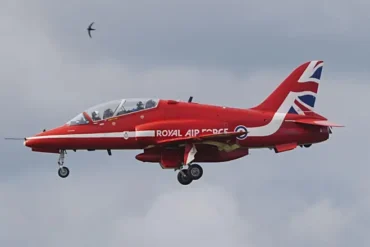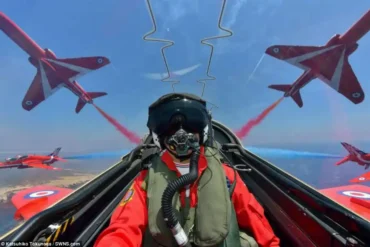
At the Royal International Air Tattoo (RIAT) 2025, the world-renowned Red Arrows have once again captivated audiences—not only with their iconic aerial choreography, but this time, with a significant leap toward sustainable aviation. As the RAF’s elite aerobatic display team soared over the Gloucestershire skies, trailing red, white, and blue smoke, what remained unseen to the average spectator was a revolution unfolding within their fuel tanks. For the first time in their storied history, the Red Arrows performed using a blend of traditional aviation fuel and hydrotreated vegetable oil, a strategic shift symbolizing the future of military aviation.
Red Arrows at the Forefront of Green Aviation
This historic flight marks a bold commitment by the Royal Air Force (RAF) to reduce its carbon footprint while maintaining its legendary operational capabilities. During their three-day appearance at RIAT, the Red Arrows operated using a 35% sustainable aviation fuel (SAF) blend, which included hydrotreated vegetable oil—a renewable fuel refined from used cooking oils and other sustainable feedstocks. This innovation is part of the RAF’s broader ambition to embrace greener alternatives as the defense sector confronts increasing pressure to mitigate its environmental impact.
According to Andy King, Senior Engineering Officer of the Red Arrows, this move isn’t just about climate responsibility—it’s also about strategic resilience. “As we scale production and that increases, what you actually get is the costs come down and you become more self-sufficient as a country,” King emphasized. In an era marked by geopolitical uncertainty, reducing dependence on imported fossil fuels, particularly from volatile regions, offers the UK a form of energy autonomy with clear defense benefits.
Strategic Fuel Shift: Reducing Dependence, Enhancing Resilience
The integration of SAF into RAF operations could provide the UK military with critical operational advantages, especially in times of conflict. “We’d no longer be reliant on their fuel,” King noted, referencing nations to the east whose supplies may not be guaranteed in times of international tension. This shift underscores the growing realization that energy security and national security are inextricably linked.
Hydrotreated vegetable oil (HVO) offers a clean-burning, high-performance alternative to traditional jet fuel. By utilizing waste vegetable oils that have been treated with hydrogen to remove impurities, HVO maintains combustion quality while drastically lowering lifecycle carbon emissions. In practice, SAF can reduce greenhouse gas emissions by up to 80% compared to conventional fossil-based jet fuel, depending on the feedstock and production method used.
RIAT 2025: Where Heritage Meets Sustainability
This year’s Royal International Air Tattoo is not only a celebration of aviation prowess but a platform for showcasing the future of air defense and sustainable flight. Held at RAF Fairford in Gloucestershire, RIAT 2025 commemorates its 40th anniversary with an eclectic mix of vintage aircraft, modern fighters, and cutting-edge aerospace technology. More than just a public spectacle, RIAT has become a focal point for the defense industry’s most ambitious environmental initiatives.
Over the course of the three-day event, hundreds of thousands of spectators witnessed demonstrations from air forces across Europe and beyond. Yet, it was the Red Arrows’ visible commitment to sustainability that arguably made the most profound statement. As jets painted the sky in patriotic hues, they carried within them a message about the future of aviation: innovation need not come at the planet’s expense.
Kate McKinley, People and Sustainability Director of RIAT, reiterated this ethos. “We’re closely monitoring the carbon footprint of the air show,” she stated. “We’ll assess the data later this year to understand how effective these measures have been.” Her remarks highlight a growing trend within aerospace event management: tracking, measuring, and mitigating emissions is no longer optional, but essential.
Behind the Technology: What Is Hydrotreated Vegetable Oil (HVO)?
Hydrotreated vegetable oil is derived from renewable organic materials, typically used cooking oil or animal fats. Through a refining process involving hydrogen treatment, impurities are removed, resulting in a stable, high-energy liquid fuel that can replace or blend with traditional kerosene-based aviation fuel without requiring engine modifications. HVO is a drop-in fuel, meaning it can be used in existing aircraft infrastructure with no mechanical alterations.
The benefits of HVO are substantial:
- Significantly reduced CO₂ emissions over the fuel’s lifecycle
- Lower particulate and sulfur emissions, improving air quality
- Compatibility with current jet engines and fuel distribution systems
- Sourced from waste products, minimizing environmental impact and competition with food supply
RAF’s decision to incorporate HVO is more than symbolic. It sends a powerful message to allied air forces and the global aviation industry that military operations can align with climate goals without compromising performance.
Military Innovation with Environmental Accountability
Traditionally, military aviation has been a heavy consumer of fossil fuels, with global defense sectors contributing substantially to national carbon footprints. As nations worldwide scramble to meet the targets of the Paris Agreement and prepare for a net-zero carbon future, integrating sustainable fuels into air fleets is a crucial step.
For the RAF, this transition reflects a broader defense strategy aimed at future-proofing military capabilities. Sustainable fuel usage allows air forces to operate in logistically constrained or fuel-insecure environments, which can be critical during prolonged deployments or in response to humanitarian crises. Moreover, it aligns defense policies with domestic environmental objectives, boosting public support and demonstrating institutional adaptability.
The Road Ahead: Scaling Production and Infrastructure
Despite the success at RIAT 2025, scaling the use of SAF remains a logistical and economic challenge. Current global SAF production only meets a fraction of aviation demand. Building the necessary refining capacity, supply chains, and regulatory frameworks is a monumental task that will require collaboration between government, military agencies, and private sector stakeholders.
However, initiatives like the RAF’s vegetable oil-powered flights offer a template for strategic investment. By showcasing real-world application of SAF at scale, the Red Arrows have opened the door for increased research funding, industry partnerships, and political momentum.
As King pointed out, increased demand will help drive down costs and accelerate production. When sustainable fuel becomes economically competitive with fossil-based alternatives, the transition can happen organically, driven by operational benefit and fiscal prudence rather than ideological imperative alone.
Cultural Impact and Public Engagement
There’s no underestimating the symbolic significance of the Red Arrows leading the way in sustainable flight. As a beloved national icon, their actions resonate beyond airfields and into public consciousness. The move represents a marriage of tradition and transformation, reinforcing that even the most prestigious institutions are not above change but can instead be its loudest champions.
By aligning themselves with sustainability, the RAF is also reshaping public perception of military aviation. No longer viewed solely as an emitter of greenhouse gases, the sector is now being recast as a potential driver of environmental innovation—a subtle but profound shift in narrative.
Conclusion: Vegetable Oil and Velocity – A New Era in Military Flight
The vegetable oil-fueled flights of the Red Arrows at RIAT 2025 are more than an engineering milestone—they are a declaration of intent. In leveraging hydrotreated vegetable oil, the RAF is signaling a commitment to energy independence, operational resilience, and environmental stewardship. This is not a stunt or a fleeting PR moment. It is part of a systematic transformation that could define the future of global air power.
As RIAT draws to a close, the roaring jets of the Red Arrows leave behind more than smoke trails in the summer sky. They leave behind a vision of what’s possible when technological innovation meets strategic foresight—a future in which speed and sustainability fly hand in hand.