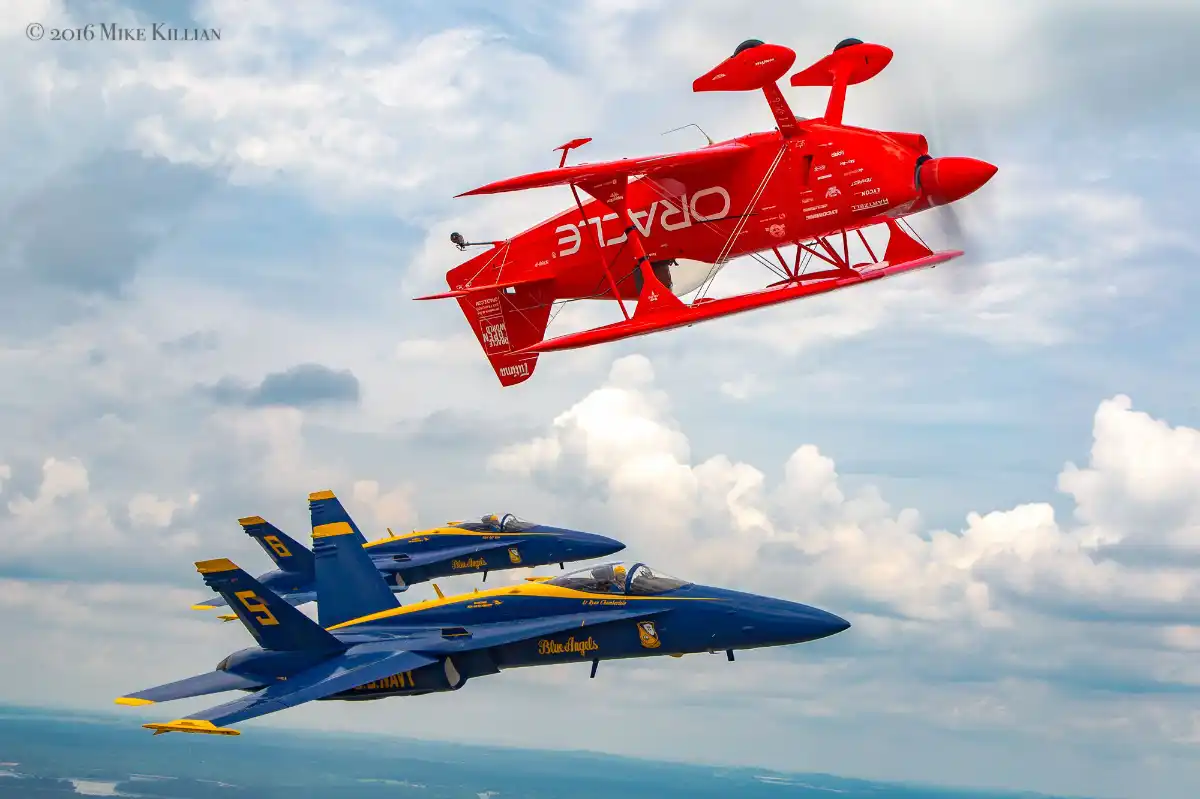
Two of the world’s most renowned aerial demonstration teams, the Blue Angels and the Red Arrows, captivate millions with breathtaking aerobatics. Both teams represent the pinnacle of military aviation, precision flying, and national pride. Despite their common mission—to showcase aerial prowess—each team possesses a distinct history, aircraft, and performance style. This article delves into their origins, aircraft, formations, cultural impact, and global recognition.
Origins and Military Affiliation
Blue Angels: The U.S. Navy’s Elite Demonstration Squadron
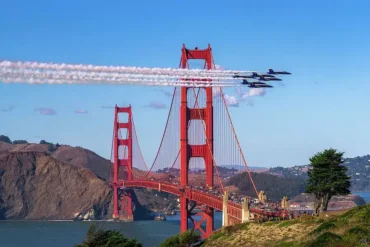
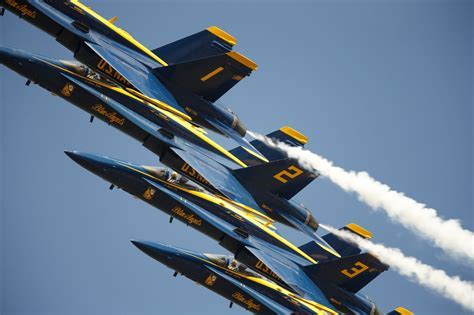
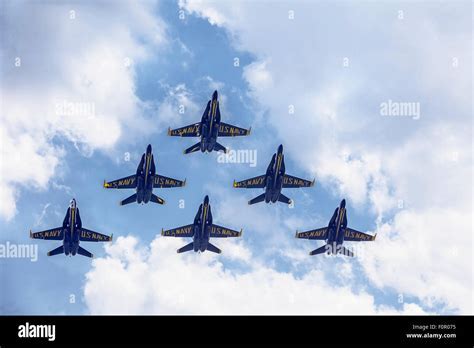
Established in 1946, the Blue Angels belong to the United States Navy and hold the distinction of being the world’s first officially recognized military aerial demonstration team. The team was named after a New York nightclub, the “Blue Angel”, where early members gathered. Over the decades, the Blue Angels have epitomized U.S. naval aviation excellence, reflecting the strength and skill of carrier-based fighter pilots.
Red Arrows: The Pride of the Royal Air Force
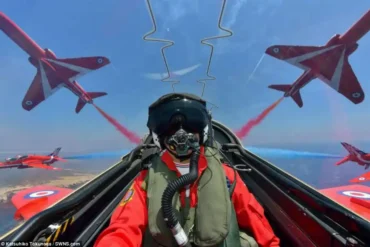
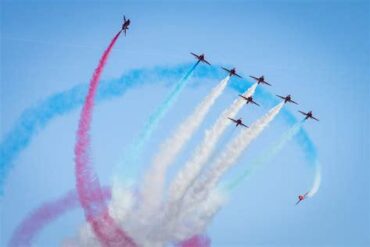
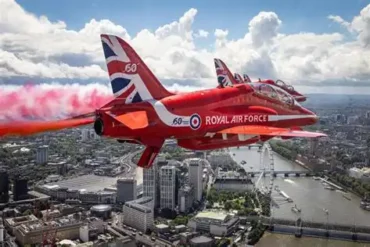
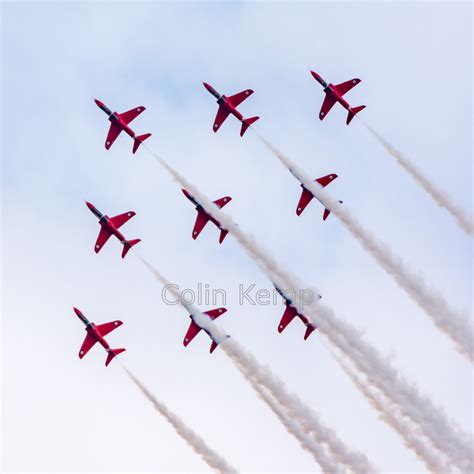
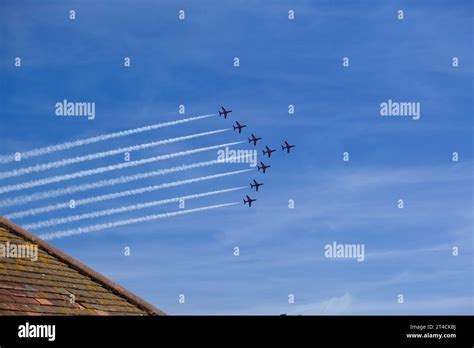
The Red Arrows were officially formed in 1965 under the Royal Air Force (RAF) of the United Kingdom. Their origins trace back to various RAF aerobatic teams, which were merged into a single elite unit. Their nine-aircraft diamond formation has become a globally recognized symbol of British aviation expertise, representing discipline, teamwork, and elegance.
Aircraft and Performance Characteristics
Blue Angels: Power and Speed with the F/A-18 Super Hornet
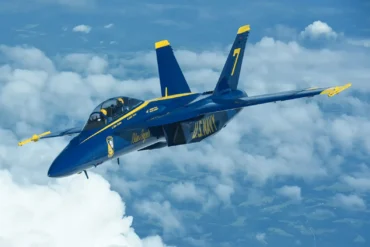
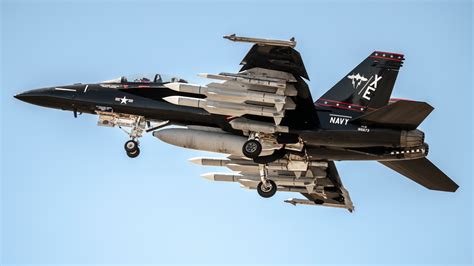
The Blue Angels operate the F/A-18E/F Super Hornet, a twin-engine, carrier-capable fighter jet. This aircraft is known for its:
- High-speed capabilities (maximum speed over Mach 1.8)
- Aggressive maneuverability
- Ability to perform low-altitude, high-speed passes
- Extreme close-formation flying (separation as tight as 0.9 meters)
Previously, the Blue Angels used aircraft such as the F6F Hellcat and F-4 Phantom II, gradually evolving to their current jet, which enhances their dramatic and high-energy performances.
Red Arrows: Precision and Grace with the BAE Hawk
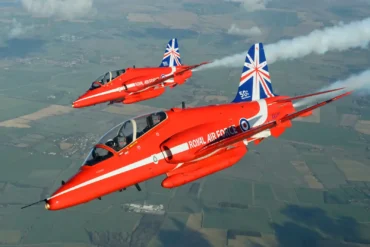
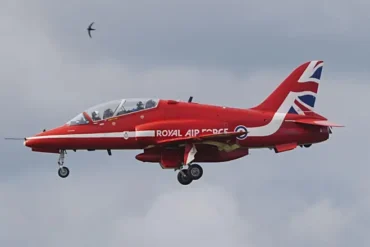
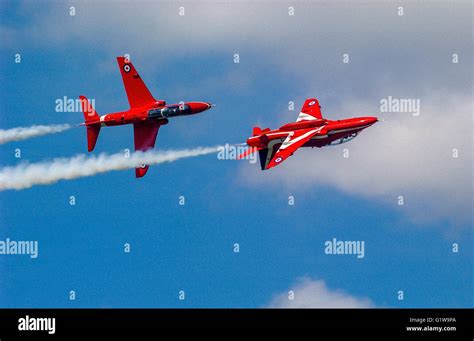
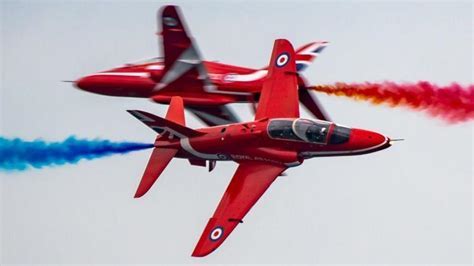
The Red Arrows fly the BAE Hawk T1/T2, a British-built advanced jet trainer. While not as powerful as the Super Hornet, the Hawk is lighter, more agile, and exceptionally maneuverable, making it ideal for synchronized aerobatics. The team is renowned for:
- Smooth and precise formation changes
- Signature smoke trails in red, white, and blue
- Graceful geometric patterns such as the heart and arrow shapes
The Hawk’s efficiency and reliability allow for prolonged international tours, making the Red Arrows one of the most widely seen aerobatic teams worldwide.
Formation Size and Aerobatic Style
Blue Angels: Intense, High-G, Close-Quarters Flying
The Blue Angels typically perform in a six-aircraft formation, designed to highlight speed, precision, and power. Their most iconic maneuvers include:
- Opposing Knife-Edge Pass – Two aircraft pass at extreme speeds with minimal clearance.
- Section High Alpha Pass – Aircraft maintain near-stall speeds, demonstrating superior control.
- Vertical Breakout – A high-G maneuver showcasing rapid ascents and descents.
This style embodies raw power and aggressive execution, captivating audiences with its intensity.
Red Arrows: Elegance and Large-Scale Precision
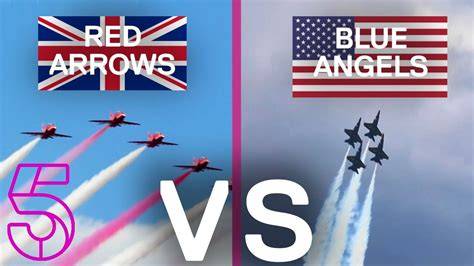
With a nine-aircraft formation, the Red Arrows emphasize graceful, fluid choreography. Their famous moves include:
- Diamond Nine Formation – A symmetrical, elegant pattern unique to their team.
- Heart and Spear – A heart shape drawn in smoke, pierced by a solo aircraft.
- Tornado Break – A synchronized dispersion creating a breathtaking visual effect.
Their approach is artistic, calculated, and visually mesmerizing, resembling an airborne ballet.
Cultural Impact and Public Perception
Blue Angels: Power, Strength, and Military Might
The Blue Angels embody American military dominance and technological superiority. Their shows often integrate naval themes, including simulated carrier takeoffs and landings. The crowd response is typically one of awe, describing their performances as “electrifying” and “adrenaline-fueled.”
Red Arrows: Elegance and British Aviation Heritage
Conversely, the Red Arrows project British aviation excellence and teamwork. Their performance style, coupled with smoke-trailing aerobatics, is often described as “graceful” and “sophisticated.” Unlike the high-G forces of the Blue Angels, the Red Arrows create a more artistic spectacle, reflecting the tradition and pageantry of the RAF.
Global Reach and Tours
Blue Angels: Primarily North American Presence
The Blue Angels have performed in over 1,000 shows, mostly across North America. They have occasionally ventured overseas, but their focus remains on U.S. audiences, showcasing the Navy’s power to domestic spectators.
Red Arrows: A True Global Ambassador
With over 4,600 performances in 53 countries, the Red Arrows have a strong international presence. They frequently participate in European airshows and made history with appearances in China, the Middle East, and North America. Their worldwide reach cements their status as one of the most recognizable aerobatic teams on the planet.
Conclusion: Two Teams, Two Philosophies
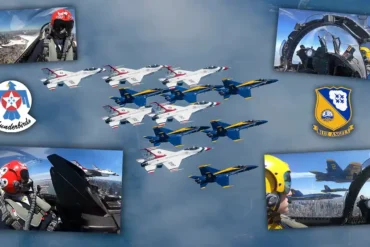
Both teams represent the pinnacle of aerial demonstration, yet their differences define them:
- The Blue Angels showcase military strength, high-speed maneuvers, and tight formations.
- The Red Arrows emphasize grace, precision, and large-scale formation transitions.
Each team is unique, yet both stand as icons in aviation history, pushing the limits of what is possible in the sky.
FAQ Section
1. Which team flies faster aircraft, the Blue Angels or the Red Arrows?
The Blue Angels’ F/A-18 Super Hornet is significantly faster, capable of exceeding Mach 1.8, while the Red Arrows’ BAE Hawk is a subsonic trainer aircraft with a top speed of Mach 0.84.
2. Why do the Red Arrows use smoke trails during performances?
The Red Arrows’ colored smoke trails enhance visibility and emphasize formation changes. The trails also improve safety, helping pilots track each other’s movements during complex maneuvers.
3. How close do the Blue Angels fly to each other?
The Blue Angels fly in formations with a minimum separation of just 0.9 meters (3 feet), requiring extreme precision and pilot discipline.
Both teams continue to push the boundaries of aviation excellence, inspiring future generations of pilots and aviation enthusiasts worldwide.