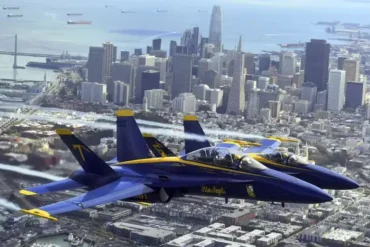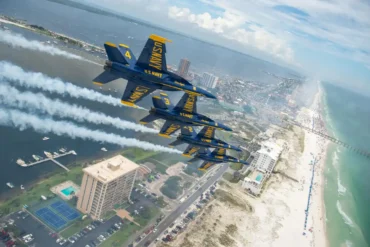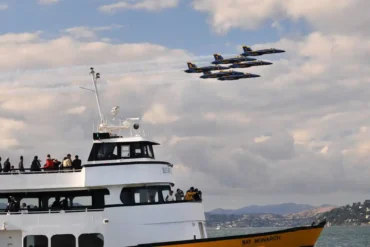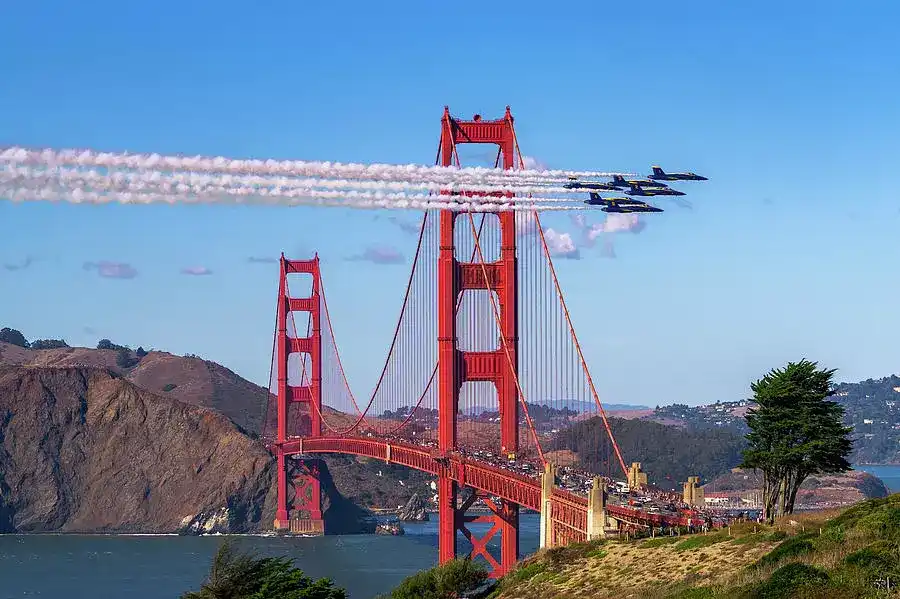
The Blue Angels, officially recognized as the U.S. Navy Flight Demonstration Squadron, are one of the most prestigious and recognizable military aerobatic teams in the world. Since their formation in 1946, they have been a key component of naval aviation, demonstrating the power, precision, and teamwork of the U.S. Navy and Marine Corps. Understanding the exact composition of the team, including the number of personnel and aircraft, provides insight into the organization’s operational capacity and the immense effort required to maintain their breathtaking performances.
The Structure of the Blue Angels
Total Number of Blue Angels Officers
The Blue Angels team consists of 17 officers who serve in various capacities to ensure the squadron operates seamlessly. These officers come from the U.S. Navy and U.S. Marine Corps, each bringing specialized expertise to their respective roles. Among these officers are:
- Six demonstration pilots – The pilots responsible for executing the aerobatic performances seen at air shows across the country.
- Commanding officer (CO) – Also known as the “Boss,” this officer leads the team and flies in the number 1 jet.
- Executive officer (XO) – Oversees team discipline, organization, and administrative duties.
- Naval flight officer – Provides operational and technical support.
- Events coordinator – Manages scheduling and public engagements.
- Maintenance officer – Oversees the technical team responsible for aircraft upkeep.
- Supply officer – Ensures that necessary parts and equipment are available.
- Public affairs officer – Handles media relations and public communication.
- Administrative officer – Manages personnel and paperwork.
- Flight surgeon – Provides medical oversight to keep personnel fit for duty.
Enlisted Personnel: The Backbone of the Team
Beyond the officers, the Blue Angels rely on a robust team of over 100 enlisted sailors and marines. These individuals perform critical roles such as:
- Aircraft maintenance – Ensuring jets are in top condition for each performance.
- Logistical support – Managing transportation, accommodations, and equipment.
- Administrative functions – Handling daily operations and personnel management.
- Public relations and community engagement – Supporting outreach initiatives and event coordination.
The success of the Blue Angels is largely dependent on the expertise and dedication of these enlisted personnel.
How Many Blue Angels Planes Are There?
The Blue Angels Fleet Overview
The Blue Angels operate a fleet of 11 F/A-18 Super Hornets and one C-130J Super Hercules. These aircraft are carefully maintained and prepared for demonstrations, with specific aircraft assigned for performances and others reserved as spares.
F/A-18 Super Hornets: The Heart of the Demonstration
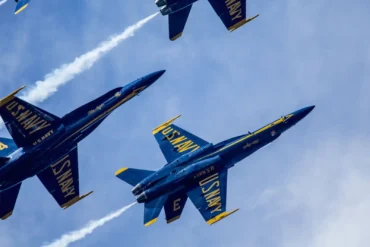
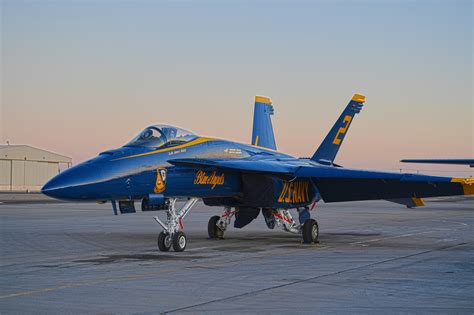
The Blue Angels fly the F/A-18E and F/A-18F Super Hornets, which are the latest iterations of the legendary F/A-18 platform. Their fleet includes:
- 9 single-seat F/A-18E Super Hornets
- 2 two-seat F/A-18F Super Hornets
Out of these, only six aircraft are used in active demonstrations, numbered 1 through 6, with the others acting as backup jets in case of mechanical issues or unexpected contingencies.
Fat Albert: The Support Aircraft
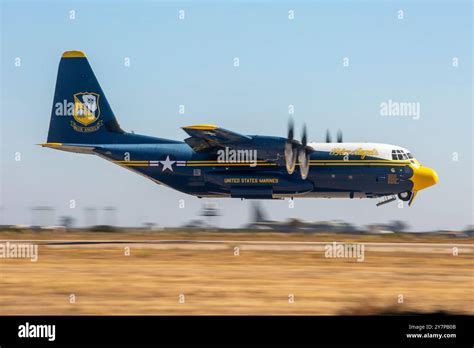
In addition to their jet fighters, the Blue Angels also operate a C-130J Super Hercules, affectionately known as “Fat Albert”. This aircraft plays a crucial role in transporting equipment, spare parts, and support personnel between air show locations. While it was traditionally flown by Marine Corps pilots, it continues to be an essential part of the squadron’s logistics.
The Blue Angels Demonstration Routine
Each performance by the Blue Angels is a meticulously planned and flawlessly executed display of aerial skill. The show consists of multiple formations and solo maneuvers that highlight the capabilities of the F/A-18 Super Hornet and the exceptional training of its pilots.
Formation Flying
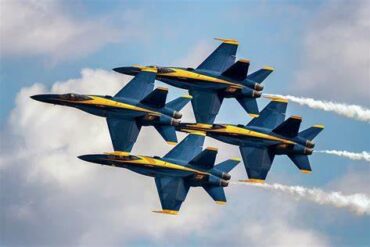
The first segment of a typical Blue Angels performance features tight formation flying, where jets maintain just 18 inches of separation while traveling at speeds exceeding 400 mph. Signature formations include:
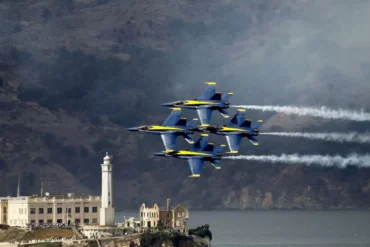
- Diamond Formation – Jets 1 through 4 fly in a diamond shape.
- Echelon Formation – Jets line up in an angled formation.
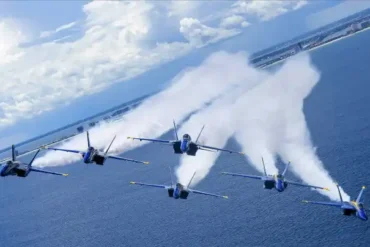
- Line Abreast – A horizontal line of jets side by side.
Solo Maneuvers
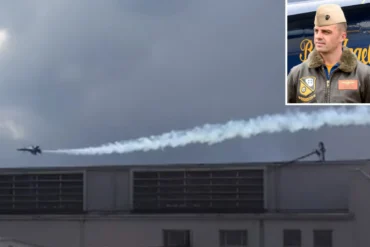
Jets 5 and 6 break away from the formation to showcase the high-speed capabilities of the aircraft. These maneuvers include:
- High-speed passes – Showcasing the power of the Super Hornet.
- Crossover break – Two jets pass each other at high speeds.
- Tail stand (high alpha pass) – Demonstrating controlled low-speed flight.
Conclusion
The Blue Angels continue to be a symbol of precision, excellence, and dedication in the world of aviation. With a team of 17 officers, over 100 enlisted personnel, and a fleet of 12 aircraft, they represent the best of the U.S. Navy and Marine Corps. Whether thrilling crowds with their aerobatic performances or inspiring future aviators, the Blue Angels remain a cherished part of American military heritage.
FAQ
How fast do the Blue Angels fly during performances?
During air shows, the Blue Angels fly at speeds ranging from 120 mph (low-speed maneuvers) to 700 mph (high-speed passes). However, they do not break the sound barrier during performances.
How close do Blue Angels jets fly to each other?
In their famous diamond formation, Blue Angels jets maintain a distance of just 18 inches between wingtips, requiring extreme precision and skill.
How do pilots get selected for the Blue Angels?
Pilots must be career officers in the U.S. Navy or Marine Corps with extensive flight experience. Selection is highly competitive, with candidates undergoing rigorous evaluation before being chosen for the team.