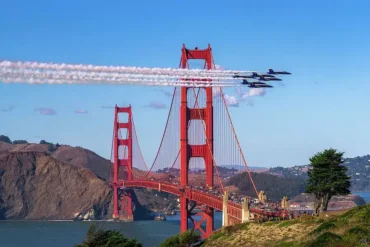
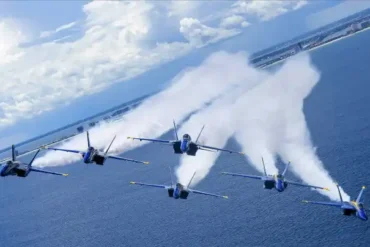
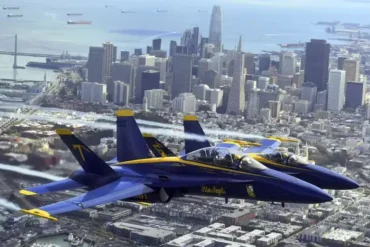
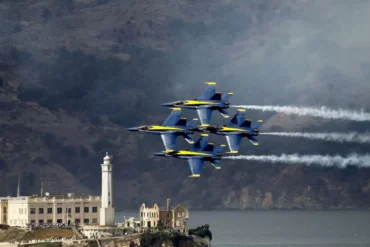
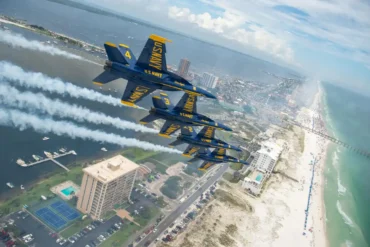
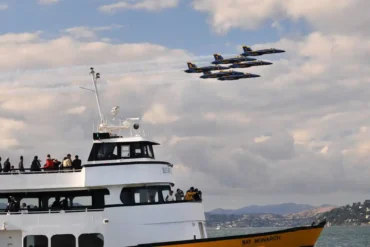
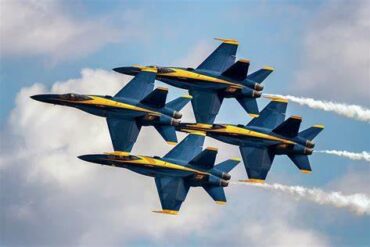
The U.S. Navy Blue Angels, established in 1946, are renowned for their exhilarating aerial performances, showcasing the prowess of naval aviation. Over the decades, they have flown various aircraft, each marking a significant era in their illustrious history.
Current Aircraft
F/A-18 Super Hornet
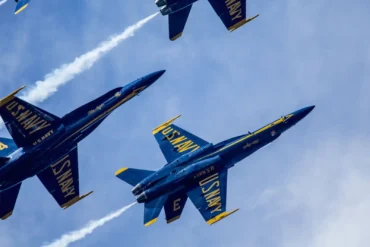
Since 2021, the Blue Angels have been flying the Boeing F/A-18 Super Hornet, a twin-engine, multirole fighter jet that represents the pinnacle of modern naval aviation. This aircraft is an evolution of the original Hornet, offering enhanced capabilities in terms of range, payload, and avionics. The Super Hornet’s versatility allows it to perform both air-to-air and air-to-ground missions, making it an ideal platform for the team’s dynamic aerial displays.
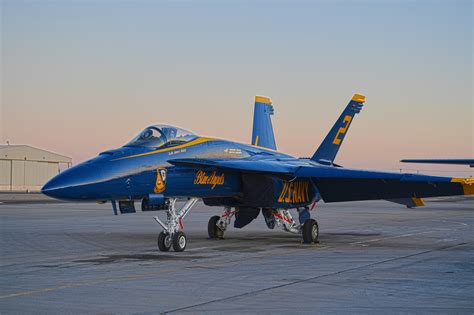
Specifications:
- Crew: One (pilot)
- Length: 60.3 feet
- Wingspan: 44.9 feet
- Maximum Speed: Approximately Mach 1.6
- Range: 1,275 nautical miles
The Super Hornet’s advanced flight control systems and aerodynamic design enable the Blue Angels to execute precise formations and complex maneuvers, captivating audiences worldwide.
C-130J Super Hercules (“Fat Albert”)
Complementing the fighter jets, the Blue Angels operate a Lockheed Martin C-130J Super Hercules, affectionately known as “Fat Albert.” This aircraft serves a crucial role in transporting personnel, equipment, and spare parts between show sites. Operated by the U.S. Marine Corps, Fat Albert also participates in demonstrations, showcasing its impressive capabilities.
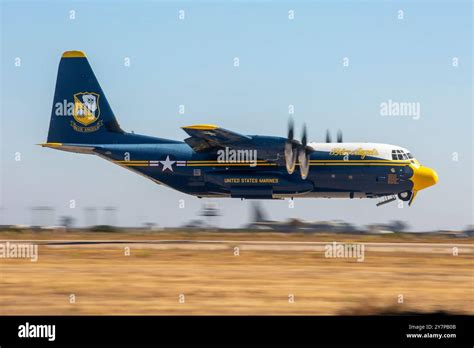
Specifications:
- Crew: Three to five (including pilots and loadmasters)
- Length: 97.8 feet
- Wingspan: 132.6 feet
- Maximum Speed: Approximately 362 knots (417 mph)
- Range: Over 2,000 nautical miles
Fat Albert’s performances often include impressive takeoffs and tactical maneuvers, demonstrating the aircraft’s versatility and the skill of its crew.
Historical Aircraft
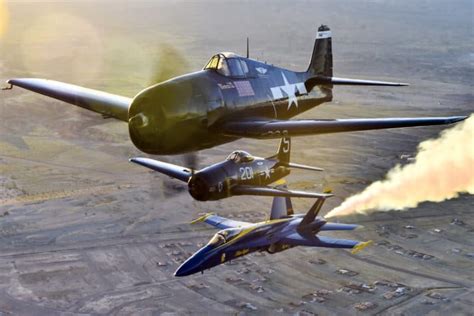
Throughout their history, the Blue Angels have flown several aircraft, each reflecting technological advancements and the evolving mission of naval aviation.
F6F Hellcat (1946)
The team’s inaugural aircraft, the Grumman F6F Hellcat, was a carrier-based fighter that played a pivotal role during World War II. Known for its durability and combat effectiveness, the Hellcat set the foundation for the Blue Angels’ precision flying.
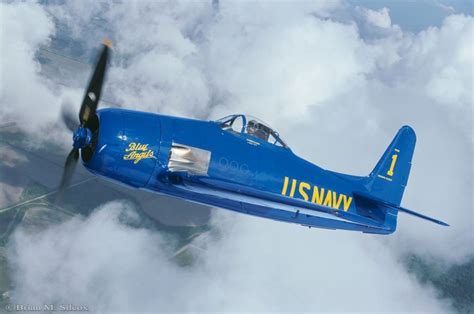
F8F Bearcat (1946–1949)
Transitioning to the Grumman F8F Bearcat, the Blue Angels embraced an aircraft renowned for its agility and speed. The Bearcat’s performance capabilities enabled more dynamic aerial displays.
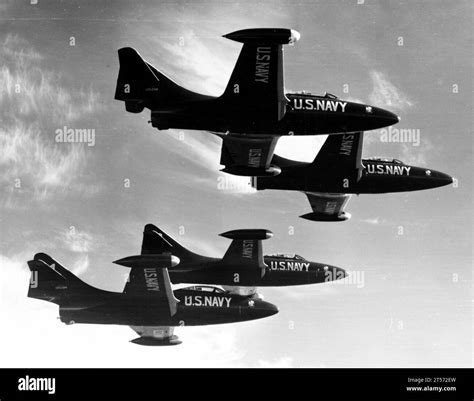
F9F Panther (1949–1955)
The introduction of the Grumman F9F Panther marked the Blue Angels’ transition into the jet age. As their first jet-powered aircraft, the Panther showcased the Navy’s advancements in aviation technology.
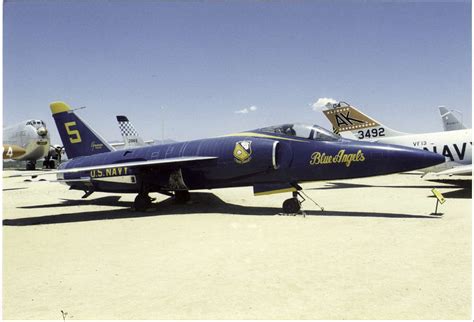
F11F-1 Tiger (1957–1968)
The Grumman F11F-1 Tiger brought supersonic capabilities to the Blue Angels, reflecting the rapid advancements in aviation during the late 1950s. This aircraft allowed the team to perform at higher speeds, adding new dimensions to their shows.
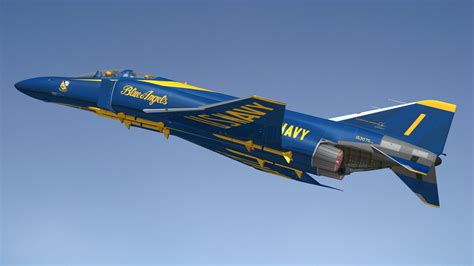
F-4J Phantom II (1969–1974)
The McDonnell Douglas F-4J Phantom II was a tandem two-seat, twin-engine, all-weather, long-range supersonic jet interceptor and fighter-bomber originally developed by McDonnell Aircraft for the United States Navy. Its introduction to the Blue Angels marked a period of high-speed, high-performance demonstrations.
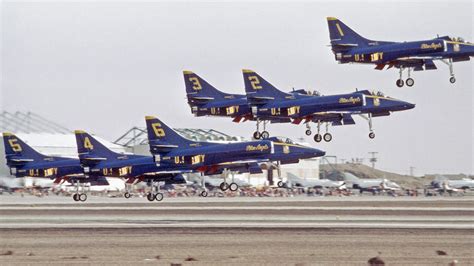
A-4F Skyhawk (1974–1986)
The Douglas A-4F Skyhawk brought a return to smaller, more nimble jets, allowing for tighter formations and greater precision in aerobatic maneuvers.
Transition to the F/A-18 Hornet
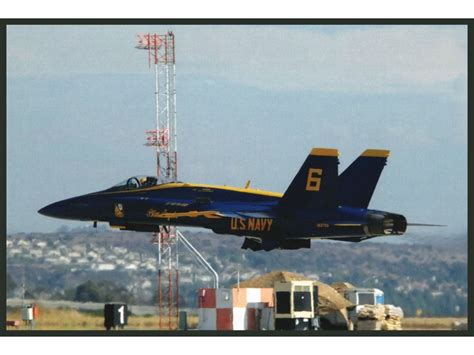
In 1986, the Blue Angels adopted the McDonnell Douglas F/A-18 Hornet, marking a new era of performance and agility. The F/A-18 remained the primary aircraft for over three decades, demonstrating its versatility as both a fighter and an attack aircraft. The team flew various models, including:
- F/A-18C (Single-seat variant) – Used for standard performances
- F/A-18B (Two-seat variant) – Used for training
- F/A-18D (Two-seat variant) – Used for logistics and special demonstrations
The Future of the Blue Angels
In 2021, the Blue Angels completed their transition to the F/A-18E/F Super Hornet, an upgraded version of the legacy Hornet. The Super Hornet features advanced avionics, increased range, and improved fuel efficiency, ensuring that the team remains at the cutting edge of aerial performance.
With this transition, the Blue Angels continue their mission to inspire audiences while showcasing the incredible capabilities of naval aviation.
FAQ
What is the current aircraft used by the Blue Angels?
The Blue Angels currently fly the Boeing F/A-18 Super Hornet and the Lockheed Martin C-130J Super Hercules (“Fat Albert”).
How fast can the Blue Angels’ jets fly?
The F/A-18 Super Hornet can reach speeds of up to Mach 1.6 (1,190 mph), though during airshows, the team typically flies at lower speeds to maintain formation integrity.
Why do the Blue Angels use military fighter jets?
The Blue Angels use frontline military aircraft to demonstrate the skill, precision, and capabilities of the U.S. Navy and Marine Corps aviation. The aircraft are modified for safety, with weapons systems removed and smoke generators installed for visibility.
The Blue Angels remain a testament to the excellence of naval aviation, thrilling millions each year with their stunning performances.