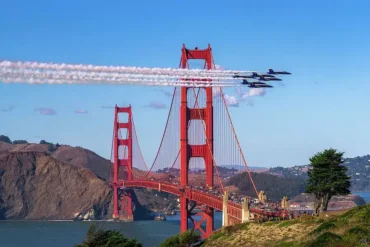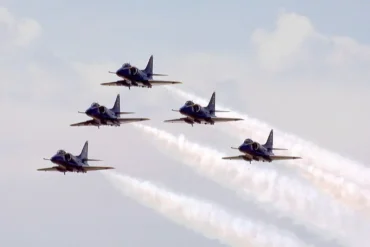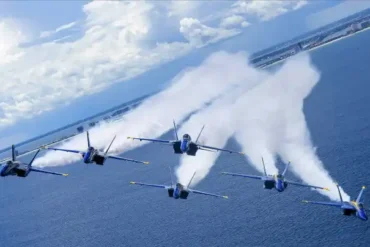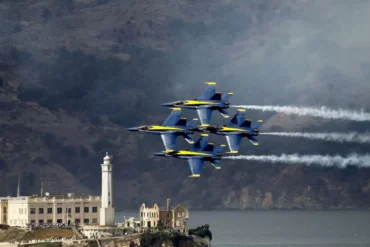
The US Navy Blue Angels represent the pinnacle of military aviation excellence, combining precision, innovation, and a storied history that has captivated audiences worldwide. With a legacy stretching back to 1946, these elite pilots have elevated the art of aerobatic flight to an extraordinary level, showcasing daring maneuvers and cutting-edge technology that continue to inspire both military professionals and civilians alike.
Historical Background and Formation
Founded in 1946, the US Navy Blue Angels were conceived in the aftermath of World War II as a symbol of American airpower and innovation. In the early days of their formation, there was a proposal to name the team the Blue Lancers. However, the turning point came during a show in Omaha, Nebraska, in July 1946. At this event, the name Blue Angels was used for the first time—an inspiration drawn from an advertisement in the New Yorker magazine promoting a nightclub called the Blue Angel. This evocative name resonated with both the public and the team members, cementing its place as a lasting symbol of excellence in military aviation.
Operating under the banner of the United States Navy, the Blue Angels are comprised of a select group of aviators drawn from the Navy and Marine Corps. The unit today includes 16 officers and 110 members who undergo rigorous training to maintain the highest standards of performance and safety. Originally headquartered at the Jacksonville Naval Air Station, the team relocated in 1987 to the Pensacola Naval Air Station, while their winter training facility is based in Escentro, California. This geographic diversification is key to ensuring year-round excellence and operational readiness.
Evolution of Aircraft and Technological Innovation
The evolution of the US Navy Blue Angels is closely linked to the advancements in military aviation technology over the decades. In their nascent years, the team flew legendary aircraft such as the F6F propeller fighter in 1946 and the F9F jet fighter in 1949. These early models set the stage for a tradition steeped in both innovation and fearless performance.
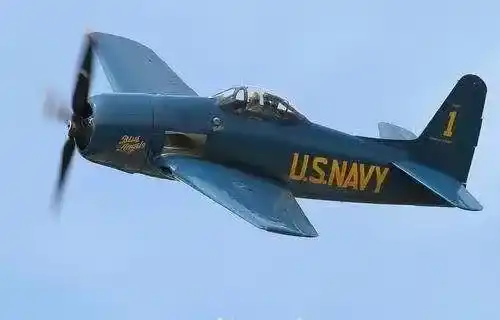
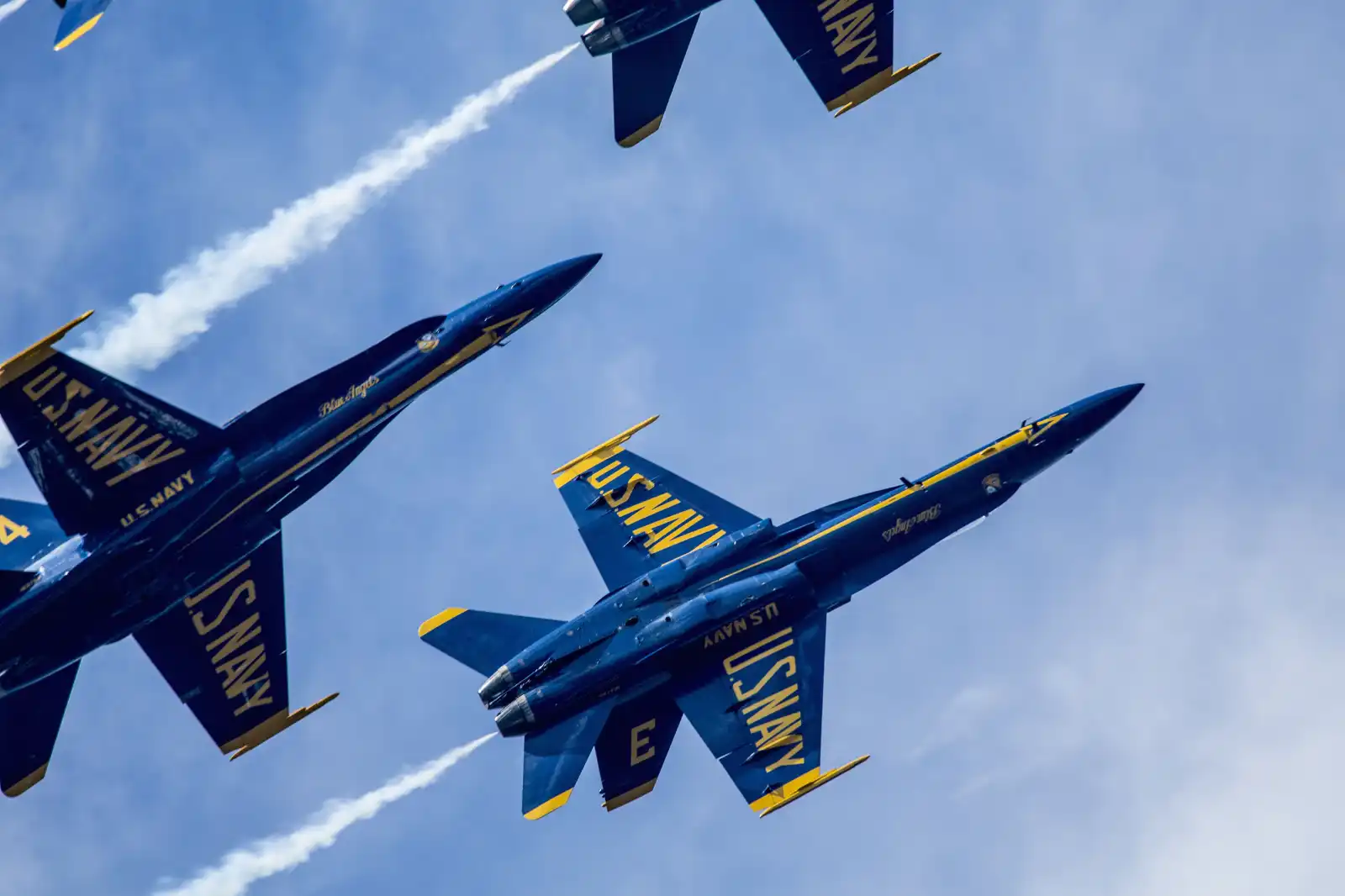
A pivotal moment in the unit’s history was marked by the introduction of the F-4J “Ghost”, which symbolized a transformative era in military aviation. Fast-forward to the modern era, and the Blue Angels now fly the advanced F/A-18E/F Super Hornet. Since 2020, this cutting-edge aircraft has replaced its predecessors—the F/A-18A/B models—boasting enhanced maneuverability and state-of-the-art technology. The current fleet comprises 11 aircraft in total, including 9 single-seat models and 2 dual-seat models. Of these, 6 aircraft are dedicated to the main demonstration formation, showcasing precision and technical mastery during every performance.
Key Aircraft Evolution Table
| Category | Details |
|---|---|
| Founding Aircraft | F6F Propeller Fighter (1946), F9F Jet Fighter (1949) |
| Notable Historical Model | F-4J “Ghost” |
| Modern Aircraft | F/A-18E/F Super Hornet (2020-Present) |
| Aircraft Count | 11 total (9 single-seat, 2 dual-seat; 6 in main formation) |
Spectacular Flight Formations and Demonstrative Techniques
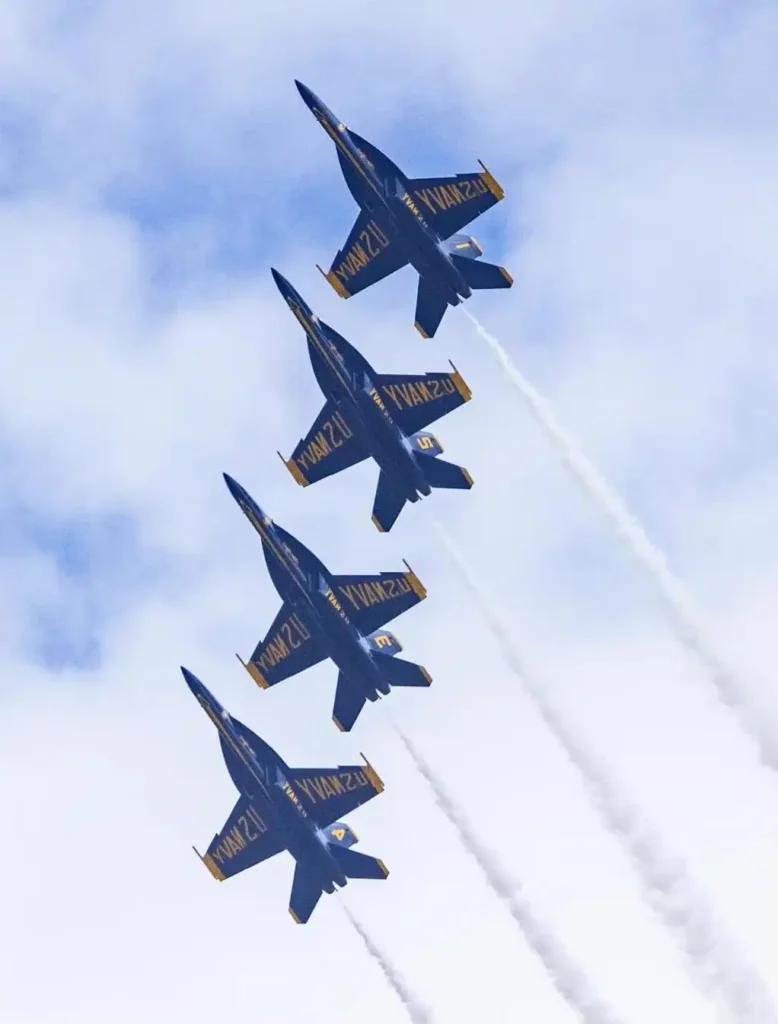
The hallmark of the US Navy Blue Angels lies in their breathtaking and meticulously choreographed aerial displays. Known for their ability to execute maneuvers at speeds that defy gravity and within formations with separations as tight as 1-2 meters, the team transforms the sky into a stage of precision artistry. This awe-inspiring performance is the result of countless hours of training and an unyielding commitment to operational excellence.
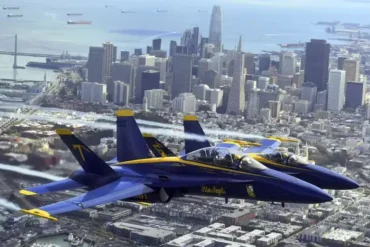
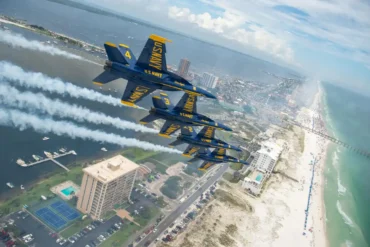
Among the most celebrated maneuvers are the diamond formation, intricate barrel roll crossings, and the visually captivating 6-plane lily formation. The team also impresses with their 4-plane diamond formation, executing synchronized front and reverse flights, as well as dual aircraft performing inverted, head-to-head rolls. These maneuvers, executed in a standard formation typically consisting of 8 aircraft, demonstrate not only the physical prowess of the pilots but also the advanced capabilities of their aircraft. Each routine is carefully designed to underscore the combination of speed, control, and precision that the Blue Angels have become synonymous with.
Global Tours and International Influence
The impact of the US Navy Blue Angels extends far beyond the borders of the United States. Their high-octane performances are a staple at premier airshows and public events, drawing massive crowds and enhancing the global reputation of American military aviation. Notable appearances include the 2021 75th Anniversary Commemorative Flight and the 2023 Fort Lauderdale Airshow in Florida, events that demonstrated the team’s blend of historical homage and modern spectacle.
Scheduled appearances in 2025 in locations such as Jacksonville further illustrate the team’s commitment to engaging with a diverse international audience. Historically, the Blue Angels have also played a crucial role in cultural exchange, with performances in countries like Russia in 1992, where their display of skill and precision broke new ground in international military relations. These global tours not only highlight the technological advancements of the team but also serve as a bridge, fostering mutual respect and admiration among nations.
Public Engagement and Interactive Experiences
Beyond their sky-high exhibitions, the US Navy Blue Angels are deeply committed to engaging with the public and strengthening the bond between military personnel and civilians. Fans can experience the spectacle up close by purchasing tickets that allow access to premium viewing areas within airport complexes. Additionally, free viewing areas surrounding the airports offer an opportunity for the public to witness these aerial marvels, albeit with the need to navigate traffic control and coordinated departure schedules.
During airshows, the Blue Angels complement their aerial displays with extensive ground exhibits. These interactive presentations feature advanced fighter jets, cutting-edge technology, and live demonstrations, providing audiences with a behind-the-scenes look at the operations and training that make the Blue Angels a world-class team. Active military personnel are on hand to discuss technical specifications, answer detailed questions, and share insights into the rigorous preparation that underpins every performance. This dual focus on both spectacle and education enriches the overall experience, deepening public understanding of military aviation technology and the sacrifices made by service members.
Innovation, Upgrades, and Future Prospects
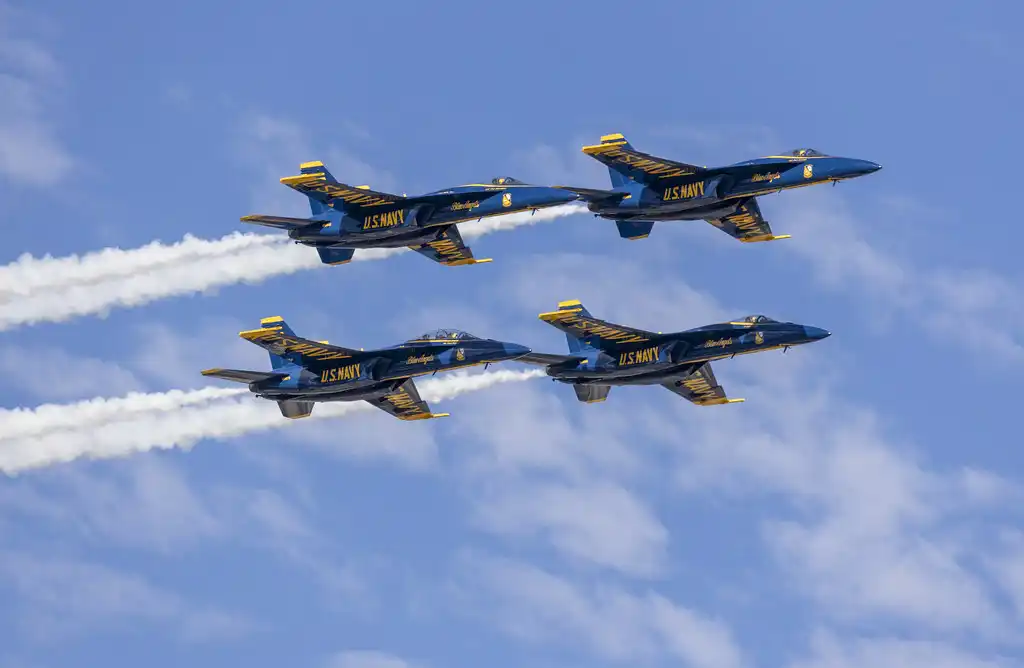
The US Navy Blue Angels have long been at the forefront of innovation in military aviation. Their evolution from early propeller fighters to modern jet aircraft is a testament to a relentless pursuit of excellence. The recent transition to the F/A-18E/F Super Hornet reflects a broader commitment to leveraging the latest technological advancements to enhance performance, safety, and maneuverability.
Looking to the future, there are promising prospects for further upgrades. The continual emergence of next-generation fighter jets promises to keep the Blue Angels ahead of the curve, ensuring that they remain the gold standard for aerobatic demonstration teams worldwide. With an eye toward expanding international collaborations, future tours may see the team engaging with even broader audiences and showcasing innovations that have far-reaching implications for military technology and global defense strategies.
Cultural Impact and Soft Power
The influence of the US Navy Blue Angels extends well beyond their aerial acrobatics. They are a vibrant symbol of American cultural soft power, embodying a blend of military might, technological innovation, and a deep-rooted historical legacy. The iconic blue and yellow livery of the F/A-18 Super Hornet is immediately recognizable, evoking images of both tradition and cutting-edge progress that have been central to the identity of the Blue Angels since their inception.
Every performance is imbued with cultural significance. The routines often incorporate elements that pay tribute to historical air combat, particularly the legacy of World War II, serving as a powerful reminder of the evolution of military aviation. This deliberate blending of tradition with modern spectacle reinforces national pride and projects a message of enduring strength and ingenuity. The Blue Angels are not just performers—they are ambassadors of American resilience, creativity, and leadership in the global arena.
Conclusion
The US Navy Blue Angels are more than just a flight demonstration team; they are an enduring symbol of American excellence and innovation in military aviation. Their rich history, from the initial proposal as the Blue Lancers to the adoption of the now-iconic Blue Angels—a name born in Omaha, Nebraska, in July 1946—illustrates a journey marked by bold decisions and a visionary approach to performance. The transformative shift from early aircraft like the F6F propeller fighter to the modern F/A-18E/F Super Hornet underscores a legacy of relentless innovation and superior skill.
Every maneuver, from the gravity-defying barrel rolls to the tightly coordinated formations, is a testament to the team’s dedication to precision and excellence. As they continue to dazzle audiences at airshows across the globe—from the commemorative events in 2021 and 2023 to the upcoming displays in 2025—the Blue Angels remain a beacon of technological prowess and cultural significance.
Their commitment to public engagement through interactive exhibits and educational displays further cements their role as ambassadors of American military innovation. The US Navy Blue Angels not only celebrate a storied past but also pave the way for future advancements in aviation technology, ensuring that their legacy will inspire generations to come.
In every breathtaking flight and meticulously executed formation, the Blue Angels demonstrate an unwavering pursuit of perfection—a true embodiment of the spirit of innovation, precision, and cultural pride that defines the United States Navy.