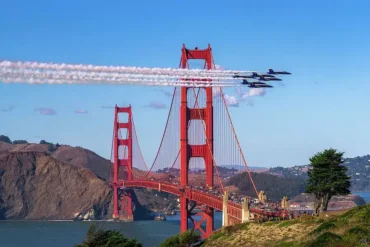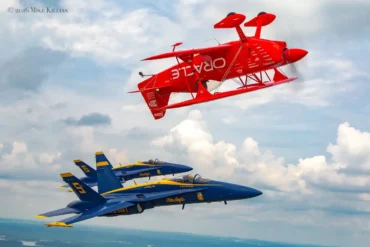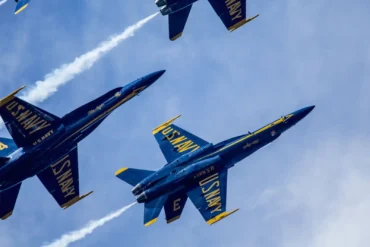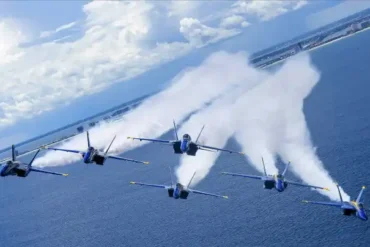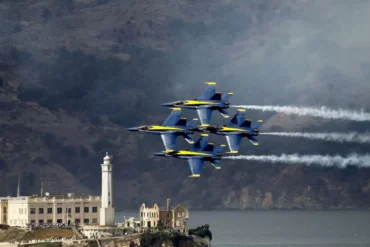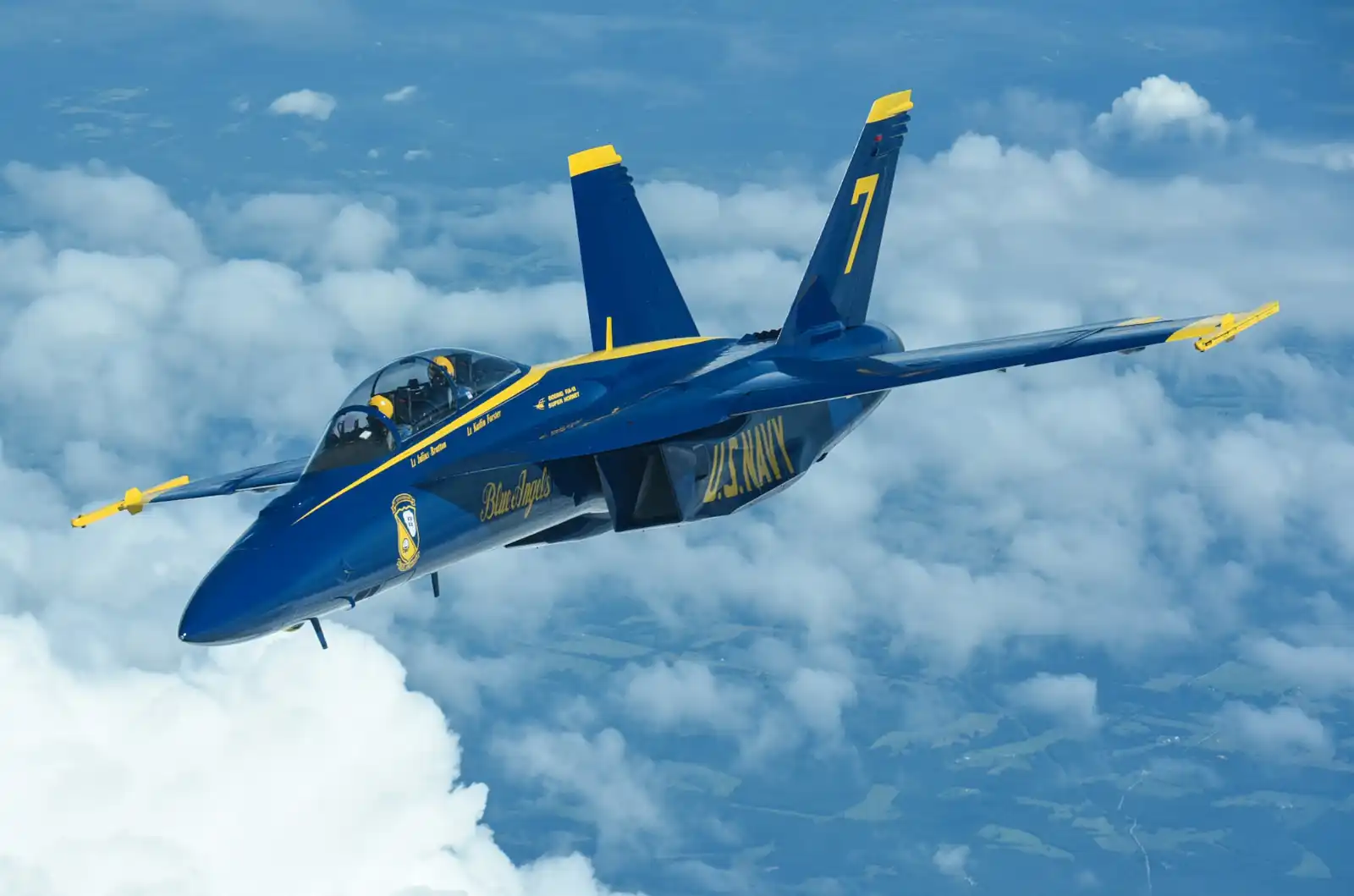
The F/A-18 “Blue Angels” represents one of the most iconic aircraft in modern aviation, serving as the backbone of the U.S. Navy Flight Demonstration Squadron. Known for their precision aerobatics and unparalleled agility, these aircraft captivate millions of spectators worldwide. The Blue Angels’ F/A-18s are not just standard fighter jets; they are meticulously modified for aerial performance, agility, and safety, distinguishing them from combat-ready Hornets.
Historical Background of the F/A-18 in the Blue Angels
Transition to the F/A-18 Hornet
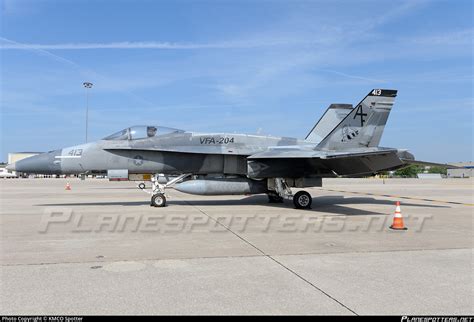
The Blue Angels adopted the F/A-18A/B Hornet in 1986, replacing the aging A-4F Skyhawk. This shift marked a significant technological leap, introducing an aircraft capable of supersonic speeds, high maneuverability, and multi-role capability. The Hornet’s superior thrust-to-weight ratio allowed for sharper turns and steeper climbs, essential for the Blue Angels’ signature formations.
Upgrade to the F/A-18E/F Super Hornet
In 2020, the Blue Angels transitioned to the F/A-18E/F Super Hornet, a modernized variant featuring improved thrust, avionics, and fuel capacity. This upgrade ensured better compatibility with current naval operational standards while enhancing performance in high-risk aerobatic maneuvers. The Super Hornet is larger, has more powerful engines, and incorporates advanced fly-by-wire control systems.
Technical Specifications and Modifications
Performance and Capabilities
The Blue Angels’ F/A-18E/F Super Hornet boasts:
- Top Speed: Mach 1.6 (1,190 mph)
- Range: 1,275 nautical miles
- Engines: Twin General Electric F404 turbojets, delivering exceptional thrust-to-weight ratio for vertical climbs and sharp turns
- G-force Tolerance: Up to 7.5 Gs, vital for performing high-speed loops and rolls
Distinctive Livery and Design
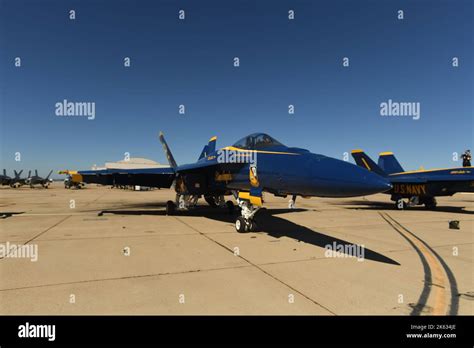
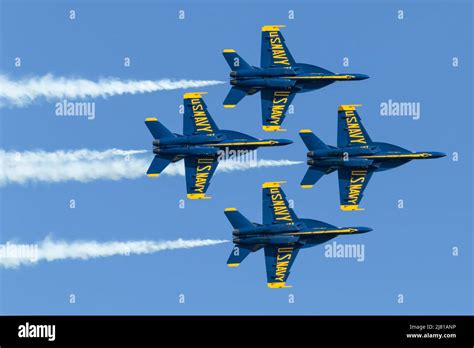
The aircraft are painted in the signature “Blue Angel Blue” with yellow highlights. Unlike standard F/A-18s, the Blue Angels’ jets lack radar and weapons systems, reducing weight and enhancing maneuverability.
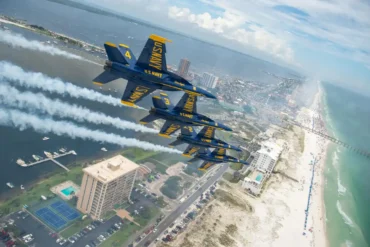
Additionally, a smoke-oil system is installed, enabling the jets to produce white smoke trails that enhance visibility during aerial demonstrations. The cockpit features a spring-loaded stick, which provides precise control during inverted flight—a crucial aspect of the team’s intricate formations.
Operational Role and Flight Demonstrations
Composition of the Blue Angels Flight Team
The Blue Angels operate 11 F/A-18s, with six primary performance jets, two dual-seat aircraft for media and guest rides, and three backups. The core flight formation includes:
- Lead Solo & Opposing Solo: Execute high-speed passes and inverted maneuvers
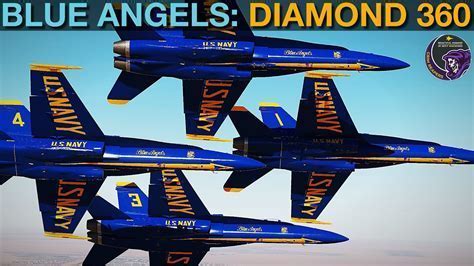
- Diamond Formation: Four aircraft flying in tight formation, wingtips separated by only 18 inches
Signature Aerobatic Maneuvers
The Blue Angels’ aerial routines include some of the most demanding flight maneuvers in the world:
- Diamond 360: A close-formation pass at 400 mph, with pilots relying solely on visual cues
- Opposition Pass: Two aircraft fly towards each other at 700 mph, crossing within 100 feet
- Low Transition Takeoff: Pilots lift off at high speed and level just 10 feet above the runway before executing a steep climb
- The Fleur-de-Lis: A synchronized five-aircraft maneuver showcasing precise geometric flight paths
Pilot Training and Selection
Rigorous Qualification Standards
Pilots chosen for the Blue Angels undergo an intensive selection process, requiring:
- 1,250+ flight hours in tactical jets
- Carrier qualification to ensure combat-ready expertise
- A 10-month training program focused on close-formation flying, aerobatic precision, and emergency procedures
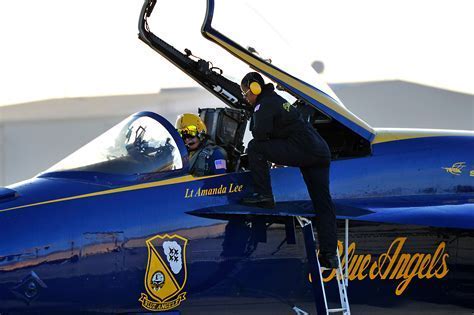
Squadron Structure and Team Dynamics
The Blue Angels team consists of 16 officers, including 8 demonstration pilots and 110 support personnel. Every maneuver is meticulously rehearsed to maintain safety and synchronization. Pilots fly within just a few feet of each other at speeds exceeding 700 mph, requiring exceptional discipline and focus.
Legacy and Public Impact
Global Recognition and Influence
The Blue Angels perform for over 11 million spectators annually, representing the U.S. Navy and Marine Corps worldwide. Their displays demonstrate not just technical excellence, but also the power of teamwork and dedication.
Historical Milestones and Future Outlook
The team’s use of the F/A-18 spans nearly four decades, with the Super Hornet expected to remain in service until at least 2030. Future enhancements may include sixth-generation fighter jets capable of even more advanced maneuvers.
For those eager to witness the F/A-18 Blue Angels in action, their 2025 performance schedule includes major airshows across the country, with tickets available through their official website.
FAQ
1. What makes the Blue Angels’ F/A-18 different from standard Navy Super Hornets?
The Blue Angels’ F/A-18E/F Super Hornets are stripped of combat systems such as radar and weapons, making them lighter and more agile. They also include a smoke-oil system for visibility and cockpit modifications for precision aerobatic control.
2. How close do Blue Angels pilots fly to each other?
In formations like the Diamond 360, pilots fly with wingtips as close as 18 inches apart, requiring extreme precision and concentration.
3. How fast do Blue Angels aircraft fly during performances?
The aircraft reach speeds of up to 700 mph during high-speed passes and maneuvers, with some formation flights cruising at around 400 mph for audience engagement.
The F/A-18 Blue Angels are not just symbols of naval aviation excellence—they represent the perfect synergy between engineering mastery and pilot skill, ensuring their place as one of the most revered flight teams in the world.