Etihad Airways continues to redraw the map of long-haul narrowbody flying, unveiling one of the most unexpected European routes seen in years. On January 9, the Abu Dhabi–based carrier confirmed it will begin nonstop service between Abu Dhabi and Luxembourg, marking the first time a Middle Eastern airline has scheduled regular passenger flights to the tiny but economically potent European state. The announcement fits squarely within Etihad’s aggressive 2025 expansion plan, which already includes more than 30 new or returning destinations, yet Luxembourg stands out as a particularly unconventional choice.
Luxembourg is not a city that usually headlines airline network announcements. With a population of under 700,000 and a land area ranking 163rd globally, it lacks the obvious scale that typically attracts Gulf carriers. Yet size alone misses the point. Luxembourg consistently ranks among the world’s wealthiest countries by GDP per capita, hosts a dense concentration of financial institutions, and sits at a strategic crossroads between Germany, France, and Belgium. For decades, this positioning has made it a magnet for cargo operators, most notably Cargolux, reinforcing its reputation as a logistics and finance hub rather than a mass-market leisure destination.
The route will launch on October 29, neatly aligned with the IATA winter schedule change, a moment airlines favor for introducing new long-haul services with cleaner slot availability. Etihad will operate the route three times weekly, a conservative but standard approach for testing a thin, high-yield-leaning market. The timing is carefully engineered to mesh with Etihad’s hub-and-spoke model, enabling smooth onward connections across Asia, Africa, and Australia via Abu Dhabi.
From Abu Dhabi, flights will depart at 2:45 am, arriving in Luxembourg just before 7:00 am, perfectly synchronized with Etihad’s busiest overnight Europe-bound departure bank. The return leg leaves Luxembourg mid-morning and lands back in Abu Dhabi in the early evening, feeding Etihad’s peak arrival wave from Europe. This is classic hub optimization, where schedule geometry matters as much as raw demand, especially for routes that rely heavily on connecting traffic rather than local origin-and-destination flows.
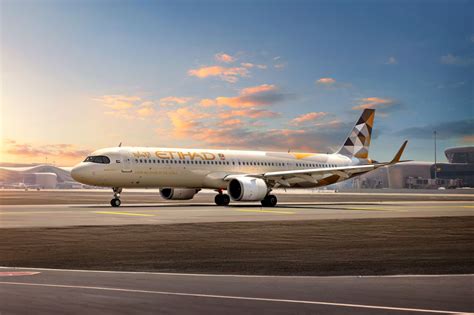
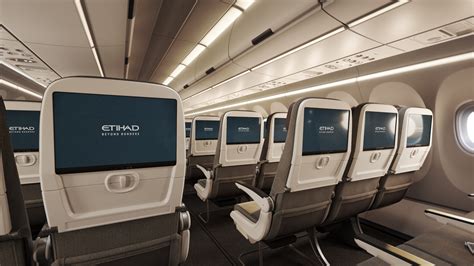
The aircraft choice is central to the story. Etihad will deploy the Airbus A321LR, a jet that has quietly become one of the most disruptive tools in modern airline network planning. Etihad currently operates ten A321LRs, each configured with 160 seats, but this is no ordinary narrowbody layout. The cabin includes two First Class suites with fully flat beds, a first for Etihad on single-aisle aircraft, alongside 14 Business Class seats, also fully flat, arranged in a premium 1-1 configuration. The remaining 144 Economy Class seats offer a pitch ranging from 30 to 34 inches, competitive for a flight just under seven hours.
This configuration reveals Etihad’s intent. Luxembourg is not about volume; it is about yield. Financial professionals, government traffic, and premium leisure travelers are far more likely to value privacy, flat beds, and seamless long-haul connectivity than rock-bottom fares. By offering a First Class product on a narrowbody, Etihad is effectively testing whether ultra-premium experiences can thrive on thinner long-haul routes where widebodies would be economically inefficient.
Despite the premium angle, Etihad will still need to lean heavily on connecting traffic. Booking data for the twelve months leading up to October 2025 shows that Luxembourg generated approximately 210,000 round-trip passengers traveling to or from the Middle East, Asia, Australia, and Eastern and Southern Africa combined. Spread evenly across the year, that equates to roughly 575 passengers per day, a modest pool shared among multiple carriers and hubs. Turkish Airlines, routing passengers via Istanbul, currently dominates much of this traffic, underscoring how hub efficiency often outweighs geographic distance in global travel patterns.
Within that flow, Etihad’s strongest opportunities lie beyond the Gulf itself. Data indicates Bangkok as the largest onward market from Luxembourg via Abu Dhabi, followed by Tokyo, Shanghai, Delhi, and Singapore. Secondary but still meaningful flows include Mauritius, Bali, Seoul, Mumbai, and Beijing. None of these city pairs are large enough individually to sustain dedicated nonstop service, but together they form the connective tissue that hub carriers depend on, where dozens of thin routes combine into a viable network.

Still, the move has raised eyebrows across the industry. Several seasoned airline network planners, speaking privately, have described the decision as bewildering, questioning whether the economics truly justify the risk. Some argue that Scandinavian capitals such as Oslo or Stockholm would have offered deeper winter demand to Asia and stronger summer resilience. From that perspective, Luxembourg appears to be a niche experiment rather than a straightforward commercial win.
Yet Etihad has been here before. The airline has spent the past few years deliberately moving away from scale-at-any-cost expansion toward precision growth, using right-sized aircraft and targeted markets to rebuild profitability. The A321LR is the embodiment of that strategy, allowing Etihad to probe destinations that would have been unthinkable with widebody economics. Luxembourg, with its wealth concentration and strategic location, may be less irrational than it first appears when viewed through that lens.
Whether the route becomes a quiet success or joins the list of short-lived experiments will depend on Etihad’s ability to stimulate premium demand while capturing enough connecting traffic to fill the cabin consistently. What is undeniable is that this launch reinforces Etihad’s reputation for network creativity and its willingness to challenge conventional wisdom. In an industry often driven by imitation, the Abu Dhabi–Luxembourg route is a reminder that airline strategy still has room for bold, unconventional bets.