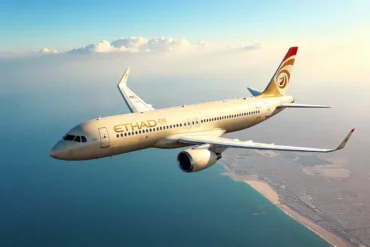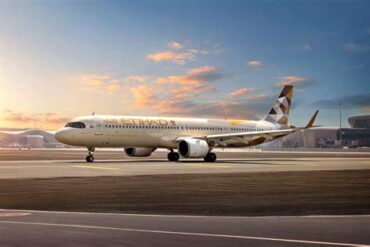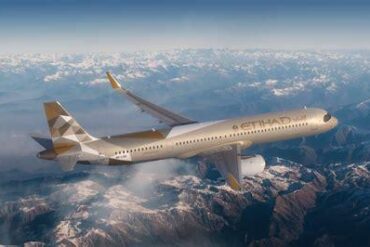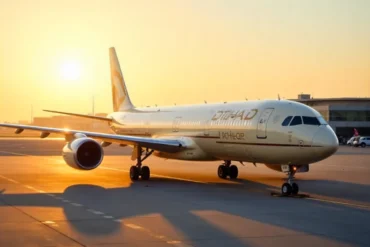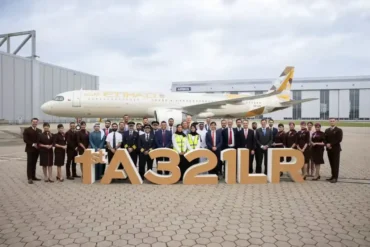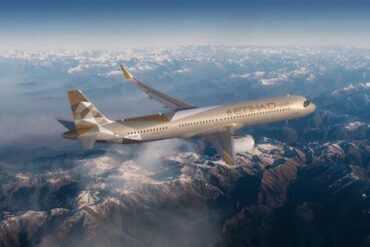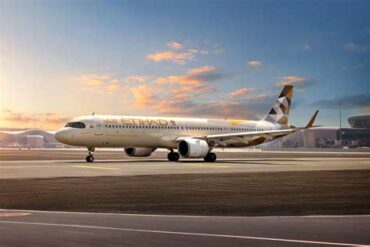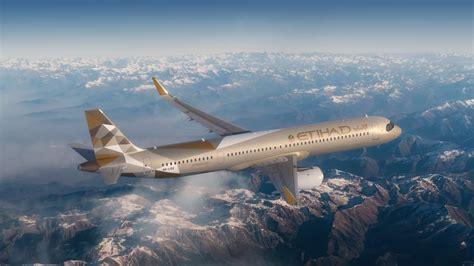
Etihad Airways is accelerating its European footprint with a bold move: the introduction of new 8-hour Airbus A321LR services to key cities across the continent. The airline’s expansion strategy, already one of the most aggressive among global carriers, is reshaping market dynamics as it leans heavily on the long-range efficiency of the A321LR to open niche routes, boost frequencies, and strengthen competitive connectivity from its Abu Dhabi hub.
This latest development reflects Etihad’s growing reliance on single-aisle long-haul aircraft to fill strategic gaps in its network. The A321LR’s blend of range, premium-heavy configuration, and dramatically lower operating costs makes it a powerful tool for strengthening Europe-bound flows, particularly during peak connectivity windows linking Asia-Pacific and the Middle East with Western Europe.
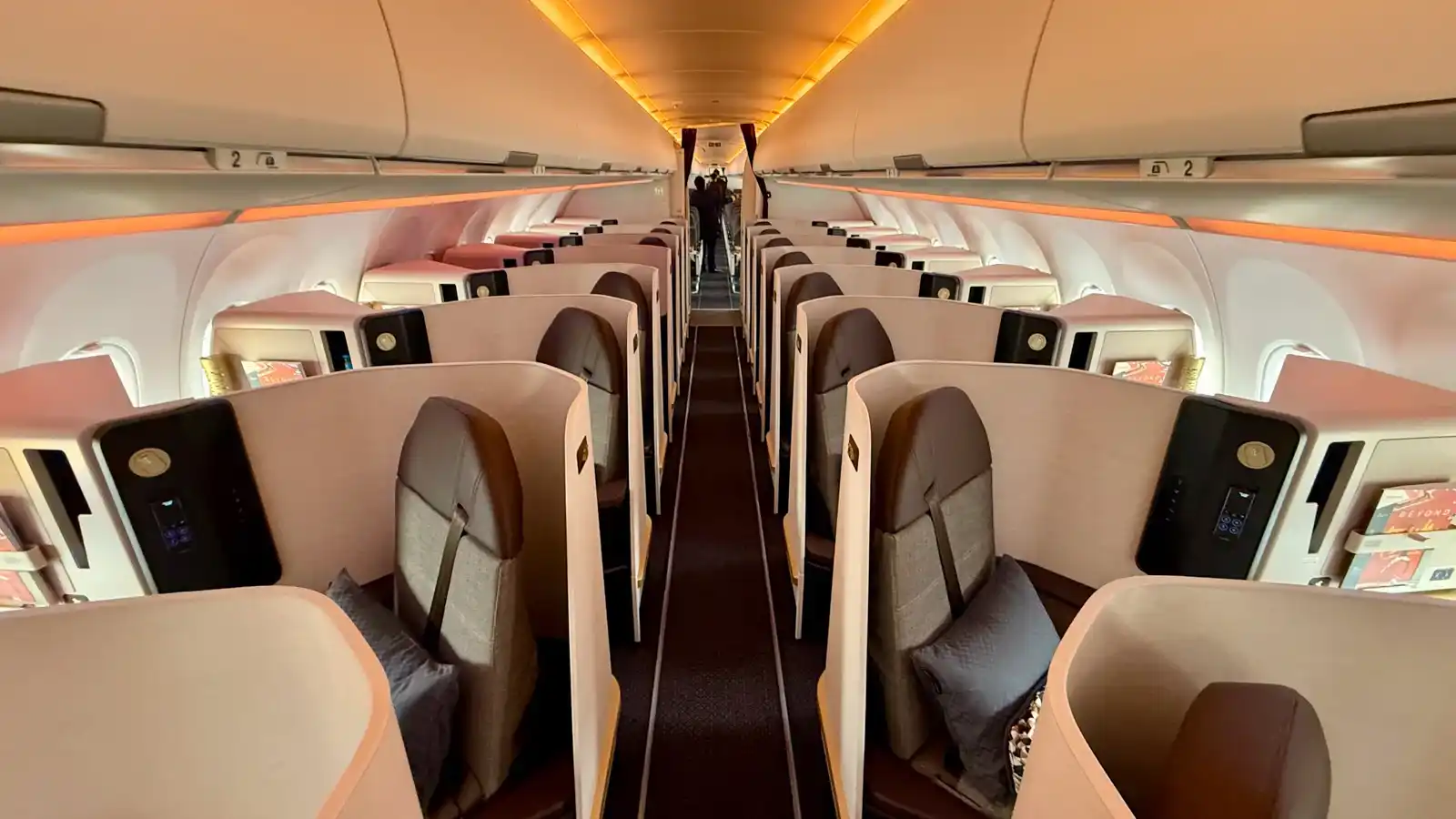
Etihad is temporarily doubling its presence in Amsterdam Schiphol, marking its first sustained two-daily schedule in more than a decade. The additional flight operates on the 160-seat A321LR, introducing a unique product to the European market: two First Class suites, 14 fully flat Business Class seats in a 1-1 layout, and a refreshed 144-seat Economy cabin.
The new flight leaves Abu Dhabi at 3:05 am, landing in Amsterdam at 7:50 am—perfectly timed to capture an exceptionally dense bank of Asia-Pacific arrivals in the UAE. The return flight departs the Netherlands at 10:00 am, touching down at 7:50 pm, feeding Etihad’s busiest outbound connections toward East and Southeast Asia.
The temporary uplift not only increases Etihad’s visibility in one of Europe’s most constrained airports—it also strengthens its competitive stance against regional rivals tapping into similar east-west flows. While the expansion is scheduled only through mid-March, performance during this period will play a key role in determining whether Amsterdam becomes a long-term double-daily market.
Rising Frequencies in Germany: Düsseldorf and Munich See Major Gains
Germany is emerging as one of Etihad’s strongest growth arenas in Europe. After shifting Düsseldorf from the Boeing 787-9 to the A321LR in late 2025, the carrier saw a corresponding surge in frequency, which moved from three weekly flights to a daily operation. Now Etihad plans to scale the route even further.
Beginning September 1, 2026, Düsseldorf becomes a twice-daily A321LR market—its first double-daily service since 2019. The new afternoon departure at 2:30 pm gives travelers better same-day connectivity across Abu Dhabi, while the German return flight at 9:30 pm arrives in the UAE at 6:00 am the following morning, perfectly aligned with connecting banks.
Munich is on an even steeper growth curve. For the first time since joining the network in 2005, the Bavarian gateway will shift from a two-daily operation to three flights per day. The A321LR supplements the Boeing 787-9 with a carefully crafted schedule: a 9:00 am Abu Dhabi departure and a 12:20 am arrival back home. This new timing is tailored to maximize connectivity with long-haul flights toward Asia-Pacific. Once launched, Etihad will operate more Munich flights than Emirates and Qatar Airways combined.
A Growing A321LR Empire: 22 Routes and Counting
Etihad’s embrace of the A321LR is transforming its network structure. By 2026, the airline will deploy the type across 22 routes, spanning 12 European cities, eight destinations in Asia, and two in Africa. Recent additions such as Krabi, Medan, and Phnom Penh underline how the narrowbody’s long-range capability enables Etihad to unlock thinner markets previously uneconomical for widebodies.
The airline first tested the waters in Zurich in late 2025, where a mix of widebody and A321LR operations quickly created a rare triple-daily schedule. Zurich now stands as a showcase of Etihad’s hybrid fleet strategy, proving how narrowbodies can boost frequency and yield without diluting premium cabin quality.
Why the A321LR Is Central to Etihad’s Strategy
The A321LR may be a narrowbody, but Etihad treats it like a small widebody. Its long-range efficiency lets the airline:
- Increase frequencies on routes where demand is strong but not widebody-strong.
- Strengthen arrival and departure waves in Abu Dhabi to enhance global connectivity.
- Offer First Class and fully flat Business Class seats on routes traditionally dominated by regional jets or standard narrowbodies.
- Lower its per-flight operating costs on secondary European markets.
As aviation economics increasingly favor flexibility over size, Etihad is positioning the A321LR as a cornerstone of its strategic growth into 2026 and beyond.
What This Means for Travelers and the Wider Market
For passengers, the biggest win is frequency. More flights mean more choice—in departure times, fare tiers, and connection patterns. Business travelers benefit from the premium-heavy cabin layouts, and leisure travelers gain access to better-timed long-haul connections.
For the industry, Etihad’s deployment of the A321LR on flights stretching up to 8 hours signals a broader shift happening worldwide. Single-aisle long-haul is evolving from an experiment into a mainstream competitive tool, especially for network carriers seeking to fill geographic gaps without committing a 350-seat widebody.
Etihad’s rapid rollout of the type across Europe is likely a preview of broader changes across the Middle East aviation landscape, where rivals will respond in kind to protect their connectivity dominance.
The coming months and years will reveal whether this ambitious growth strategy is sustainable, but for now, Etihad is pressing ahead—and reshaping the long-haul map with every new A321LR added to its fleet.