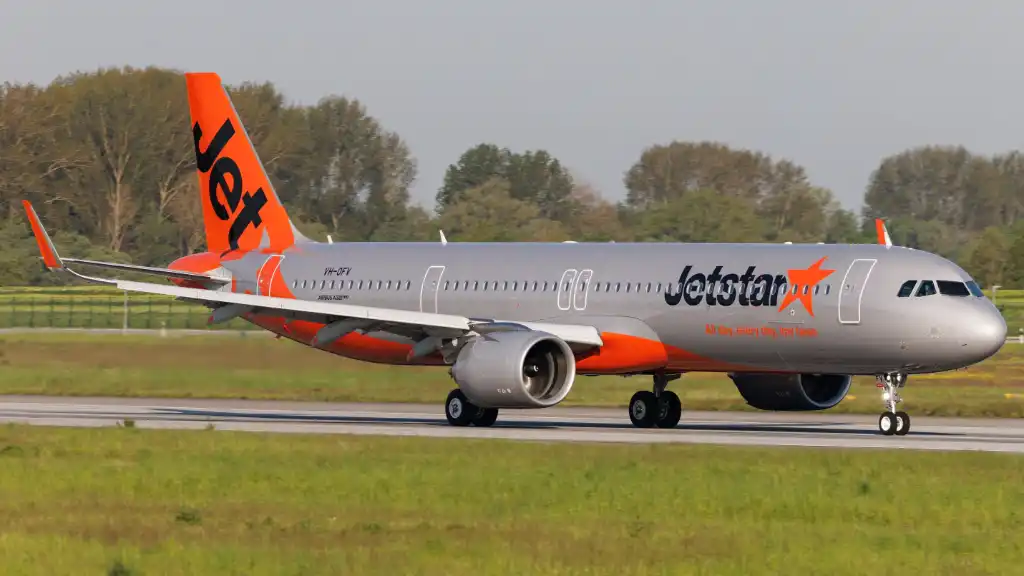
Jetstar has entered a striking new chapter in its international expansion with the launch of nonstop Perth–Manila flights using the Airbus A321LR, a route measuring 2,790 nautical miles and stretching up to 7 hours and 25 minutes. This new service marks the airline’s return to the Australia–Philippines market after more than a decade away and instantly becomes one of the most ambitious missions ever operated by a narrowbody in its fleet.
The service took off on November 27, reinstating a crucial connection for the Filipino diaspora in Western Australia and deepening Jetstar’s growing network across Asia. Despite being its longest A321LR route by block time, Perth–Manila is only the airline’s third-longest by distance, demonstrating how winds, airspace, and slot constraints shape modern flight planning. The A321LR’s efficiency allows Jetstar to maintain low fares while sustaining long-haul narrowbody economics.
Passengers on this route ride aboard Jetstar’s 232-seat all-economy A321LRs—high-capacity workhorses that maximize revenue per flight and help counter the route’s naturally low yields. Manila’s perpetual slot congestion further dictates the schedule, pushing departures into late-evening and early-morning windows that balance operational feasibility with passenger convenience.
The Return of Jetstar to the Philippines Market
This re-entry into the Philippines market comes after Jetstar last operated a Darwin–Manila service more than ten years ago. The new Perth–Manila link addresses strong demand: booking data indicates roughly 70,000 round-trip passengers traveled between the two cities in the year to September 2025, dominated overwhelmingly by the Filipino community. The route ranks as Perth’s tenth-largest Asian market, behind major regional hotspots like Singapore, Bangkok, and Tokyo.
Jetstar now competes directly with Philippine Airlines, which launched Manila–Perth flights in 2023 using its own 168-seat A321neo. While PAL increases frequencies around peak travel seasons, Jetstar’s three-weekly pattern maintains steady year-round access and broadens price accessibility.
Schedule Built for Efficiency and Manila’s Slot Reality
The schedule in early December reflects both operational discipline and the constraints of Manila’s tightly choreographed arrival flow. Jetstar’s Perth departures run on Tuesdays, Thursdays, and Sundays, while Manila departures operate Mondays, Wednesdays, and Fridays. Block times vary between seven hours and seven hours twenty-five minutes depending on wind patterns.
Late-night departures from Perth ensure seamless same-day arrivals, while early-morning Manila departures avoid heavier airport congestion. The pattern is optimized for aircraft utilization, a key pillar of low-cost carrier economics.
Perth Becomes a Major International Hub in Jetstar’s Network
The carrier’s footprint out of Perth has quietly grown into one of its most significant international operations. Jetstar now flies to Bali, Bangkok, Manila, Phuket, and Singapore, all operated with A321LRs. In the examined week of early December, Bali alone sees twenty weekly departures, cementing it as Jetstar’s backbone market from Western Australia.
Jetstar’s 34 weekly international departures from Perth represent its highest level of activity ever from the city. Perth now stands as the airline’s second-busiest airport for flights to Asia, trailing only Melbourne and narrowly edging out Brisbane.
A Wider Philippines Strategy: Cebu Launches Next
A major piece of Jetstar’s Philippines strategy unfolds just days later. On December 3, Jetstar will start Brisbane–Cebu flights—Australia’s first-ever nonstop link to Cebu—operating three times per week with the A321LR. At 2,820 nautical miles, this becomes Jetstar’s second-longest narrowbody route by distance, though not by duration, thanks to favorable winds.
Demand from Brisbane to Cebu historically hovered around 12,000 annual passengers—a modest number that has kept nonstop service off the map until now. With Jetstar’s entry, the market is expected to grow significantly, especially as passengers from Sydney, Melbourne, and Auckland can connect via Brisbane with ease.
What Jetstar’s A321LR Strategy Signals for the Future
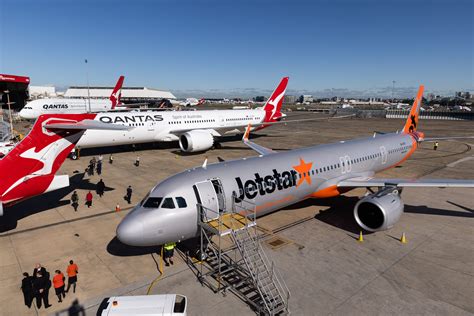
The A321LR has become the centerpiece of Jetstar’s international growth plan. These new long-range narrowbody flights demonstrate that secondary markets—once too thin for widebody jets—are now ripe for efficient point-to-point service. With lower costs and strong diaspora-driven demand, the Philippines is emerging as a central pillar of Jetstar’s evolving Asia portfolio.
The new Perth–Manila service embodies this shift: long, lean, and turbocharged by next-generation aircraft economics. As Jetstar continues layering routes across Australia and Southeast Asia, the A321LR looks set to unlock even more city pairs previously relegated to one-stop connectivity.
The network changes now underway suggest that Jetstar is not merely adding flights but rewriting the playbook for medium-haul, low-cost travel between Australia and Asia—a development worth watching as the A321XLR era approaches.