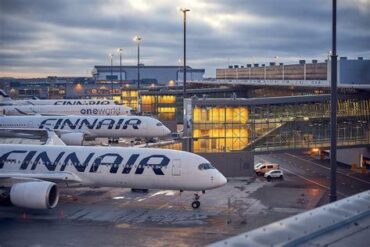
In a dramatic twist that few saw coming, Finnair has stunned the aviation world with its announcement of a brand-new daily long-haul service from Helsinki to Melbourne, marking its ambitious foray into the Australian market. The move positions Finnair as the third European airline—alongside British Airways and Turkish Airlines—to currently operate scheduled passenger flights to Australia.
A Groundbreaking Route Between Continents
Launching on October 26, 2026, just ahead of Australia’s high-demand summer season and the peak Christmas travel rush, Finnair’s Helsinki-Bangkok-Melbourne route is anything but conventional. Traditionally, new ultra-long-haul routes begin cautiously, often with just two or three weekly rotations to test market viability and mitigate financial risk. But Finnair is bypassing that safety net entirely. It’s going all in—with daily flights from the very start.
This aggressive strategy not only underlines the airline’s confidence but also its desire to establish a strong footprint in a competitive landscape dominated by Middle Eastern and Asian carriers. Even Turkish Airlines, an aggressive global operator, only runs three weekly flights between Istanbul and Melbourne.
The A350-900: Finnair’s Crown Jewel Takes Flight
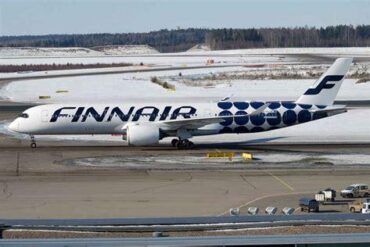
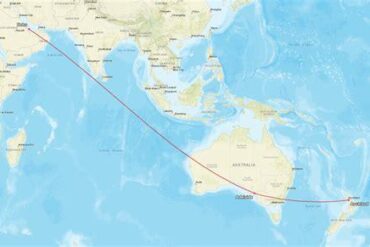
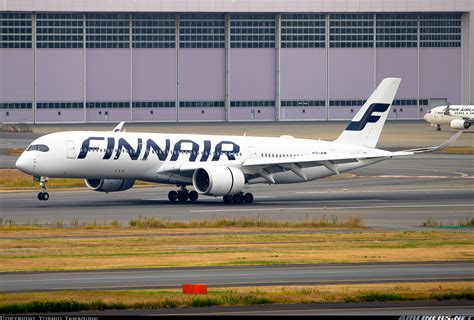
The flights will be operated using the Airbus A350-900, Finnair’s flagship aircraft. Known for its fuel efficiency, spacious cabins, and long-range capabilities, the A350-900 is a fitting choice for this colossal journey, which spans an estimated 9,150 nautical miles (16,946 km) each way—thanks to ongoing airspace restrictions over Russia and Ukraine that force detours.
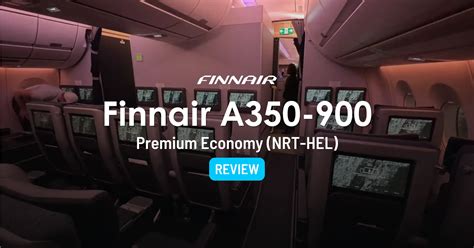
Despite these geographic challenges, the aircraft’s configuration is tailor-made for long-haul comfort, featuring spacious business class pods, premium economy, and a reimagined economy experience. Still, filling these seats daily poses a major logistical and marketing hurdle.
Connecting the Nordics to Australia—Via Bangkok
At first glance, the market for direct traffic between Helsinki and Melbourne might seem too thin to sustain such an ambitious route. Booking data from the 12 months to October 2025 reveals that fewer than 10,000 travelers flew between the two cities—a number on par with routes from much smaller European cities like Zagreb.
However, Finnair is leveraging a key advantage: fifth freedom rights between Bangkok and Melbourne, allowing it to transport passengers on that segment alone. This opens up a secondary market beyond Europe-Australia traffic, giving the route some cushion against poor point-to-point demand.
The Bangkok connection is more than just a pit stop—it’s a strategic linchpin. Finnair already operates up to three daily flights to the Thai capital during winter, which aligns with the upcoming Melbourne service. This route extension allows Finnair to tap into demand between Thailand and Australia, a corridor that sees significant leisure and business travel.

A Network Play for Northern and Eastern Europe
Beyond Bangkok, Finnair envisions this route as a way to offer seamless connections from the Nordic and Baltic regions to Australia. The schedule, which sees flights depart Helsinki at 12:10 am and return by 6:05 am two days later, is carefully constructed to align with feeder traffic from cities like:
- Copenhagen (18,000 pax/year to Melbourne)
- Stockholm (11,000)
- Oslo (9,000)
- Riga, Tallinn, Vilnius, Gothenburg (each <2,000)
This wide regional net creates the potential for multi-leg journeys into Australia, albeit with two stopovers—not ideal for speed-conscious travelers. Some passengers from Copenhagen, for instance, would have to backtrack to Helsinki before heading east to Bangkok, then south to Melbourne.
Competition and Complexity in the Ultra-Long-Haul Arena
Finnair’s announcement comes amid intensifying competition on Europe-Australia routes. Gulf carriers such as Emirates, Qatar Airways, and Etihad dominate with efficient one-stop connections via their hubs. Even budget offshoots like flydubai are expanding aggressively, recently introducing service between Dubai and Baltic capitals with connections to Emirates’ Australian flights.
In this environment, Finnair’s two-stop itinerary might seem unattractive unless offset by pricing, service differentiation, or loyalty perks. While Finnair belongs to the oneworld alliance, along with Qantas, it’s unclear how much of this network synergy will actively feed traffic into the route.
Still, price-sensitive and niche travelers—such as digital nomads, back-packers, and students—might be enticed by competitive fares or loyalty incentives. But that likely means discounting, which is a dangerous proposition on ultra-long-haul operations that hinge on tight profit margins.
A Bold Strategic Gamble
For Finnair, this is not just a route; it’s a strategic statement. While other European airlines have retreated from Australia, daunted by distance and costs, Finnair is moving in the opposite direction. It’s betting on:
- Underutilized long-haul capacity, especially during the northern winter
- A growing Scandinavia-Asia travel corridor
- Traffic rights that allow Bangkok to act as a dual-purpose hub
Additionally, Qantas’ leasing of Finnair A330s reflects a deeper relationship that may translate into codeshare opportunities or even joint operations in the future.
It’s also worth noting the potential upside of brand visibility. A flagship Europe-Australia route puts Finnair on the global map in a way few other services can. Even if the route doesn’t turn an immediate profit, it enhances Finnair’s international stature and opens doors for future market expansion.
The Wider European Context
Only two other European carriers currently operate to Australia:
- British Airways, via Singapore en route to Sydney, running daily from London Heathrow.
- Turkish Airlines, with Istanbul-Melbourne (via Singapore) and Istanbul-Sydney (via Kuala Lumpur), running up to five times weekly.
Given these figures, Finnair’s entry is a rare and bold exception rather than the norm. While many European carriers pulled out of the Australian market decades ago, citing unprofitability and distance, Finnair is reversing that narrative.
Final Thoughts: Ambition Meets Complexity
Finnair’s Helsinki-Bangkok-Melbourne service represents more than just a new air route. It encapsulates a broader vision of international relevance, network innovation, and risk tolerance. It dares to go where others have either hesitated or retreated.
Yes, the route faces daunting hurdles—low point-to-point demand, two stopovers, intense competition, and long flight times. But it also offers something different: a niche, well-branded Scandinavian option for reaching Australia.
If Finnair succeeds in making this route viable—economically and logistically—it won’t just be flying planes. It will be charting a new course for mid-sized European carriers with global ambitions.