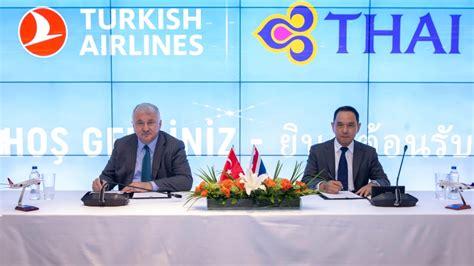
On June 1, 2025, during the IATA Annual General Meeting in Delhi, Turkish Airlines and THAI Airways made a groundbreaking announcement that is set to reshape international air travel. The two flag carriers have entered into a Joint Business Agreement (JBA) that will significantly enhance flight connectivity, bolster tourism, and foster economic collaboration between Türkiye and Thailand. This partnership primarily focuses on the highly trafficked Bangkok–Istanbul corridor, but both airlines have grander visions for expanding cooperation in the future.
A Groundbreaking Step for Aviation
The agreement, signed in Delhi, marks a pivotal shift in global aviation partnerships. By jointly managing crucial aspects like pricing strategies, route scheduling, and marketing initiatives, Turkish Airlines and THAI are setting the stage for a new era in airline cooperation. This partnership represents a significant step forward for both countries, aimed at creating stronger ties in the realms of tourism, trade, and bilateral relations.
Beyond the Bangkok–Istanbul Route
While the Bangkok–Istanbul route remains the focal point of this collaboration, industry experts predict that it is just the beginning. Both airlines are considering the introduction of chartered flights, seasonal services, and even connections to secondary cities across Türkiye and Thailand. These decisions will be driven by tourism trends and fluctuating market demands, paving the way for future expansion.
This collaboration has the potential to set a precedent in the aviation industry, especially within the Star Alliance network. Other members of the alliance may follow suit, seeking similar partnerships to strengthen their positions in rapidly evolving post-pandemic travel markets. By sharing resources and risks, Turkish Airlines and THAI are well-positioned to adapt to the changing demands of global air travel.
Rollout Plans for Winter 2025–2026
The operational rollout of this ambitious project is slated to begin with the Winter 2025–2026 flight schedule, contingent on the necessary regulatory approvals. The first phase will emphasize codeshare agreements and synchronized timetables between Istanbul and Bangkok. The goal is to offer travelers more flexibility, smoother connections, and coordinated services.
Both Turkish Airlines and THAI are working together to improve customer experience by integrating their booking systems, streamlining baggage handling procedures, and establishing unified customer service protocols. Additionally, both airlines aim to improve their frequent flyer programs—Miles&Smiles and Royal Orchid Plus—by offering enhanced rewards and mile redemption opportunities that span both networks.
Boosting Tourism and Trade Between Türkiye and Thailand
This partnership comes at a perfect time for both countries. Recent agreements between Türkiye and Thailand have expanded bilateral air traffic rights, now allowing up to 42 weekly flights between the two nations. This expansion is expected to fuel higher tourist traffic in both directions, benefiting not only travelers but also local economies.
Turkish tourists, particularly during the winter months, flock to Thailand for its tropical climate, beautiful beaches, and cultural heritage. Similarly, Thai tourists are increasingly seeking out Türkiye’s rich history, stunning architecture, and vibrant cultural festivals. The partnership between Turkish Airlines and THAI will facilitate easier access to both destinations, which will further bolster the travel industry in both countries.
In addition to tourism, this partnership will likely enhance trade relations and foster cross-border investments, particularly in sectors reliant on efficient logistics and transport networks. The improved air link between Bangkok and Istanbul is expected to strengthen supply chains, providing a more reliable transportation network for businesses operating in Southeast Asia and Europe.
Enhancing the Star Alliance Framework
As members of the Star Alliance, Turkish Airlines and THAI’s collaboration extends far beyond just codeshare flights. The JBA introduces a profit-sharing model that will deepen their partnership, especially on select routes. By working closely together on operational logistics and commercial strategies, the two airlines are poised to create a more seamless travel experience for passengers while maximizing their respective network strengths.
Turkish Airlines brings to the table a robust global network that spans over 340 destinations across six continents, while THAI boasts a dominant presence in Southeast Asia and Thailand’s domestic market. Together, the partnership offers a compelling choice for travelers looking for long-haul flights paired with convenient regional connections.
Aligning with Industry Trends
The aviation industry is facing numerous challenges, including rising fuel costs, fluctuating demand, and increasingly complex regulations. In such an environment, airlines are seeking new ways to remain competitive and maintain profitability. Joint business agreements like the one between Turkish Airlines and THAI have become a vital tool for carriers aiming to reduce costs and improve operational efficiency.
By sharing resources, pooling expertise, and coordinating marketing efforts, the two airlines are setting themselves up for long-term success in a highly competitive marketplace. This partnership will not only enable Turkish Airlines and THAI to strengthen their positions on key air routes connecting Europe, Asia, and the Middle East but also allow them to respond quickly to changing travel patterns and growing demand.
What This Means for Global Travelers
For passengers, the new partnership promises a range of benefits that will improve the overall travel experience. Some of the key advantages include:
- Increased flexibility with more flight options between Europe and Asia.
- Better connectivity through seamless flights between Istanbul and Bangkok, along with efficient layovers.
- Unified loyalty rewards that allow passengers to accumulate and redeem miles more easily across both Turkish Airlines’ and THAI’s networks.
- A more convenient travel experience, thanks to coordinated flight schedules, smoother transitions, and integrated booking systems.
For frequent flyers, the new partnership also means more opportunities to earn and redeem miles, as both airlines work together to enhance their respective frequent flyer programs.
Economic Impact and Regional Opportunities
The economic impact of this partnership goes far beyond just tourism. The increased flight availability and improved logistics will boost exports, encourage business travel, and attract foreign direct investment from Southeast Asia and Europe. As trade and investment continue to grow, the strengthened air bridge between Thailand and Türkiye will play an essential role in ensuring smooth cross-border transactions and robust economic ties.
Important economic hubs like Chiang Mai, Phuket, Krabi, and Istanbul are expected to see increased traffic, not only from tourists but also from business travelers seeking easier access to markets in both regions. Furthermore, the enhanced connectivity will foster cultural exchanges, educational collaborations, and entrepreneurial opportunities—especially for small and medium-sized enterprises looking to expand their operations.
A Game-Changing Moment for Aviation
The Turkish Airlines-THAI partnership is more than just a business agreement; it is a symbol of how the aviation industry is evolving. In a landscape increasingly characterized by collaboration over competition, this partnership sets the stage for future airline alliances. As the implementation of the JBA rolls out in Winter 2025–2026, this partnership could very well become a model for other airlines looking to navigate the complexities of post-pandemic global travel.
The partnership not only promises enhanced air travel options but also lays the foundation for a more robust economic relationship between Türkiye and Thailand. As international demand for both leisure and business travel continues to rise, the alliance between Turkish Airlines and THAI offers a glimpse into the future of intercontinental travel—efficient, flexible, and mutually beneficial.