The first week of February delivered an unusually dense burst of network expansion across the US airline industry, with 11 new or returning routes launching in just five days. Allegiant, American, Breeze, and Southwest all moved quickly, quietly reshaping regional connectivity while testing fresh demand patterns. The timing matters. Early February sits in a shoulder season where airlines can experiment with lower risk, letting schedules settle before spring demand accelerates.
What stands out is not just the number of routes, but how deliberately they target underserved markets, replacement capacity, and leisure-heavy flows. Frontier and Spirit are absent, Super Bowl charters are excluded, and the spotlight instead falls on a new generation of “ready-made markets” where airlines slide neatly into gaps left by others. This is modern network strategy at work: fast, opportunistic, and data-driven.
Breeze Airways Pushes Growth at Full Throttle
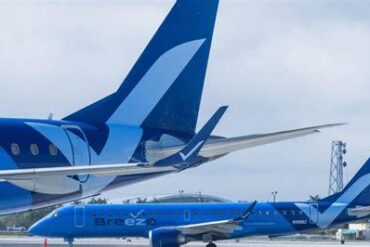
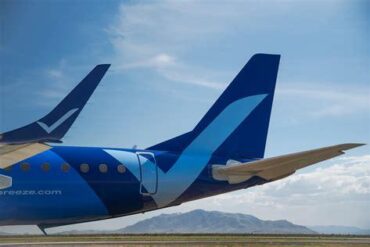
Breeze Airways accounts for six of the 11 new routes, reinforcing its status as the fastest-growing airline in the United States. The carrier’s expansion during this five-day window is not scattershot. It is highly structured around medium-density leisure markets, secondary airports, and Airbus A220 economics.
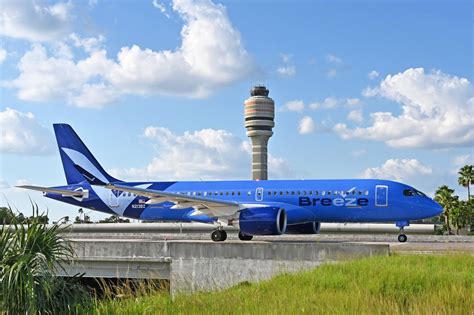
From New Orleans, Breeze launches daily A220-300 service to Las Vegas and Los Angeles, strengthening its presence in a city it clearly views as a strategic anchor. The Los Angeles route returns after a 2023 experiment, signaling renewed confidence backed by better fleet availability and stronger brand awareness.
The airline also opens Provo–Burbank, a route no airline has ever flown before. That detail matters. Breeze is not merely replacing competitors here; it is creating demand from scratch, betting on Southern California leisure traffic and visiting-friends-and-relatives flows tied to Utah County.
Further east, Breeze adds Myrtle Beach–Orlando and Myrtle Beach–Manchester, continuing its methodical build-out of leisure corridors where legacy carriers rarely compete aggressively. These routes show Breeze’s comfort operating at lower frequencies initially, scaling up only once demand proves durable.
New Orleans Becomes Breeze’s International Gateway
The most strategically important addition is New Orleans–Cancún, launching February 7. This route marks Breeze’s third service to Cancún and further accelerates its young international operation, which only began last month.
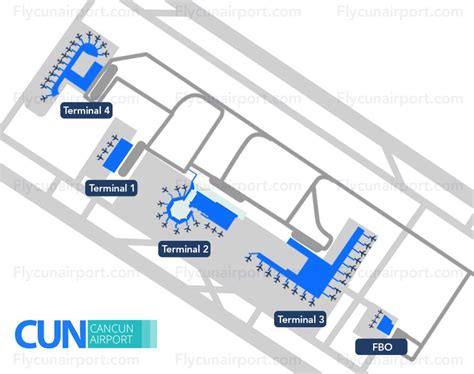
At 567 nautical miles, New Orleans–Cancún is one of Breeze’s shortest international routes, and unlike its Norfolk and Charleston services, it enters a competitive arena. Breeze joins Southwest and Spirit, creating a rare three-carrier dynamic that will test pricing power and brand loyalty. For New Orleans travelers, the result is simple: more choice, more frequency, and downward pressure on fares.
This route also highlights Breeze’s broader ambition. The airline is no longer just a domestic disruptor. It is positioning itself as a selective international player, carefully choosing near-international markets that fit A220 range and cost profiles.
American Eagle Steps Into Ready-Made Markets
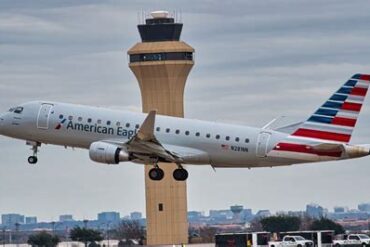
American Eagle launches two Essential Air Service–supported routes to Shenandoah Valley (Staunton) on February 3, flying daily CRJ700s operated by SkyWest from Charlotte and Chicago O’Hare.
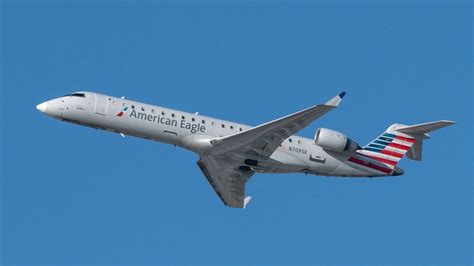
The Charlotte service is particularly notable because it begins just two days after Contour Airlines exited the market, making this a textbook example of a ready-made market entry. Passenger awareness already exists, infrastructure is in place, and subsidy support reduces downside risk.
The O’Hare route carries an extra layer of intrigue. United previously served this market between 2018 and 2022, and with United now aggressively expanding at O’Hare, American’s return feels quietly competitive. Small routes like this often look insignificant, but they reveal how hub rivalry now extends deep into regional networks.
Allegiant Targets Ultra-Thin Demand With Confidence
Allegiant adds one route during the period, but it may be the boldest. On February 6, the airline launches Phoenix Mesa–La Crosse, a city pair that has never seen nonstop service.
Passenger data shows just 2,600 round-trip travelers between Phoenix and La Crosse over an entire year, translating to barely 3.6 passengers per day each way. Allegiant understands this better than anyone. Its model depends on stimulation, not existing demand. Low fares, limited frequencies, and snowbird traffic give this route a chance to grow where none previously existed.
La Crosse also benefits indirectly, pulling travelers from nearby cities like Rochester, Minnesota, who may now drive to access nonstop service.
Southwest Quietly Reinforces Caribbean Strength
Southwest launches Orlando–St. Thomas on February 5 and follows with Baltimore–St. Thomas on February 7. While less flashy, these additions deepen Southwest’s Caribbean footprint and revive long-dormant connectivity. The Baltimore route, in particular, returns after 29 years, underscoring how leisure demand patterns have shifted since the 1990s.
A Snapshot of Airline Strategy in 2026
Taken together, these 11 routes reveal an industry leaning into precision growth. Airlines are no longer chasing volume for its own sake. They are probing markets, replacing failed capacity, leveraging subsidies, and trusting narrowbody economics to do the heavy lifting. In just five days, the US route map changed meaningfully—and this early-February burst may be a preview of a far more dynamic year ahead.