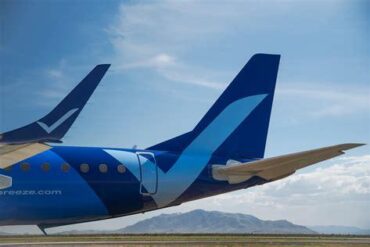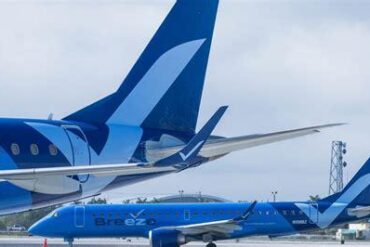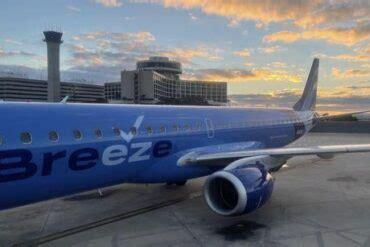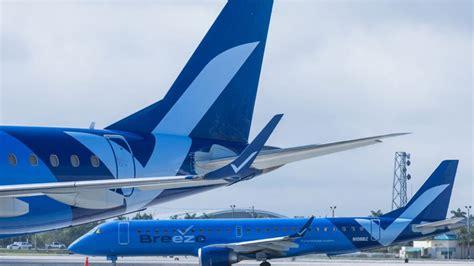
Breeze Airways has once again demonstrated why it remains one of the fastest-growing airlines in the United States. In an aggressive three-day network expansion, the low-cost carrier introduced or restarted 14 routes between May 6 and May 8, dramatically expanding its footprint across underserved domestic markets. The rapid rollout reflects Breeze’s increasingly confident strategy: target overlooked city pairs, revive abandoned routes, and build loyalty in secondary airports where competition remains limited.
The expansion arrives during a period of exceptional momentum for the airline. According to Cirium Diio schedule data, Breeze Airways now operates an average of 222 daily round-trip flights in May 2026, representing a remarkable 34% increase compared to the previous year. While the airline still operates from a smaller base than major US carriers, its network growth has become impossible to ignore.
Rather than focusing solely on major hub airports, Breeze continues to pursue a distinct model centered around convenience, nonstop connectivity, and thinner point-to-point markets that legacy airlines often overlook. This latest route surge perfectly captures that strategy in action.
The most notable development in the expansion is Breeze’s first-ever service to Atlantic City, alongside its return to San Antonio, a market absent from the airline’s map since 2022.
Breeze Airways Opens Six New Markets On May 6
The first wave of launches began on May 6, when Breeze introduced six separate routes in a single day. The additions included Charleston to Atlantic City, Louisville to Los Angeles, Myrtle Beach to Long Island, Raleigh-Durham to Bangor, Raleigh-Durham to Stewart International Airport, and Raleigh-Durham to Vero Beach.
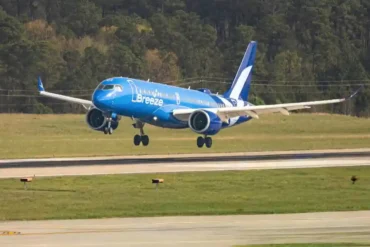
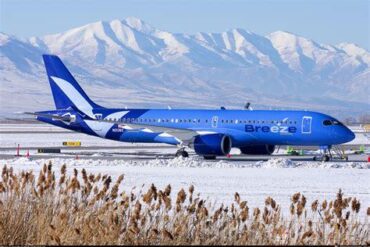
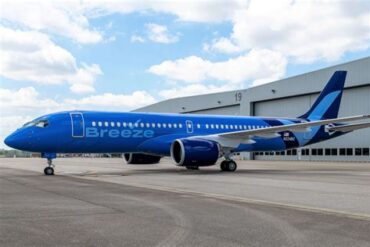
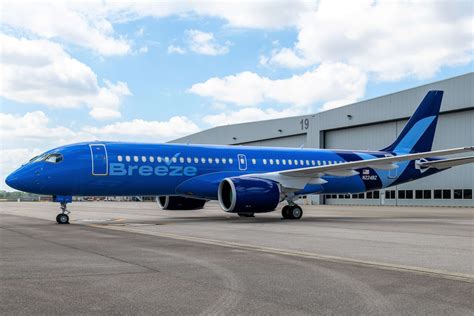
Every route in the group is operated using the Airbus A220-300, an aircraft that has become central to Breeze’s expansion strategy because of its lower operating costs, passenger comfort, and efficiency on medium-haul domestic flights.
Among the six launches, three routes stand out as entirely new markets with no prior nonstop competition. Charleston to Atlantic City immediately gives travelers in South Carolina direct access to one of the East Coast’s most recognizable resort destinations. Meanwhile, Raleigh-Durham to Bangor fills a major gap in the northeastern leisure market, connecting North Carolina travelers directly to Maine without requiring connections through larger hubs.
Raleigh-Durham has quietly evolved into the airline’s most important operational base. Breeze’s growing presence there reflects both strong regional demand and the airport’s strategic geographic position for east coast connectivity.
The Raleigh-Durham to Bangor route especially illustrates Breeze’s market-selection philosophy. US Department of Transportation data showed more than 11,000 indirect passengers traveled between the two cities last year despite the absence of nonstop service. Breeze identified that hidden demand and moved quickly before competitors could react.
Louisville to Los Angeles represents another example of Breeze capitalizing on abandoned opportunities. Spirit Airlines previously served the route before discontinuing it in late 2025. Breeze effectively stepped into an already validated market while offering a potentially more attractive onboard experience.
The Myrtle Beach to Long Island route marks a slightly different strategy. Unlike many Breeze launches that enter uncontested markets, this service directly competes with Frontier Airlines. It is the first time two airlines have simultaneously operated the route, signaling growing confidence in seasonal leisure demand between the two destinations.
San Antonio Returns As Breeze Expands Further On May 7
The second day of expansion brought four additional routes into Breeze’s network. These included Fort Lauderdale to Pensacola, Fort Lauderdale to Savannah, Raleigh-Durham to San Antonio, and Savannah to Akron-Canton.
The return to San Antonio is particularly significant because the Texas city previously disappeared from Breeze’s route map after the airline suspended operations there in 2022. Earlier Breeze service connected San Antonio with Northwest Arkansas, Oklahoma City, and Tulsa, but none of those destinations returned in this latest expansion.
Instead, Breeze chose Raleigh-Durham as San Antonio’s newest nonstop partner, a move supported by surprisingly strong indirect traffic numbers. Department of Transportation statistics revealed nearly 73,000 passengers traveled between the cities last year through connecting itineraries, averaging roughly 200 daily travelers despite the lack of nonstop service.
That level of hidden demand often exceeds traffic levels seen on some established long-haul routes. Breeze clearly believes nonstop convenience can stimulate even greater passenger volumes.
The Fort Lauderdale additions reveal another important element of Breeze’s network planning: rapid replacement of discontinued competitor routes. Spirit Airlines exited the Pensacola market only days before Breeze entered it, while Allegiant Air abandoned Fort Lauderdale to Savannah shortly before Breeze announced its own service.
This opportunistic timing allows Breeze to inherit existing customer awareness without needing to educate travelers about entirely new markets. It is a smart and increasingly effective growth tactic in today’s highly competitive airline industry.
Savannah to Akron-Canton also highlights Breeze’s willingness to challenge competitors directly. Allegiant already serves the route, making this another example of Breeze entering active leisure-focused markets rather than relying solely on uncontested territory.
Four More Routes Complete The Three-Day Expansion
The final stage of the rollout arrived on May 8 with four additional route launches: Greenville-Spartanburg to Columbus, Memphis to San Antonio, Providence to Columbus, and Raleigh-Durham to Madison.
Once again, Breeze focused heavily on underserved city pairs. Greenville-Spartanburg to Columbus and Raleigh-Durham to Madison had never previously seen nonstop airline service, creating entirely new travel options for passengers in both regions.
Memphis to San Antonio revives another abandoned market that disappeared after Frontier Airlines exited in 2018. Historically, the route once benefited from Memphis’ importance as a hub for Northwest Airlines and later Delta Air Lines. Breeze now hopes changing travel patterns and lower-cost operations can make the market viable again.
Providence to Columbus may ultimately become the most closely watched route in the entire expansion. Unlike the other additions, Breeze itself previously operated the service between 2022 and 2024 before dropping it because of weak performance. Department of Transportation data showed average seat occupancy remained below 50%, including during the route’s final year.
Its return suggests Breeze sees stronger future demand conditions, potentially driven by improved scheduling, pricing adjustments, or broader network connectivity. However, the route will likely face intense scrutiny internally. If passenger loads fail to improve substantially, another cancellation could follow.
Breeze Airways Continues Redefining Domestic Route Expansion
Breeze Airways is pursuing a growth strategy that differs sharply from traditional US airlines. Instead of concentrating on major hubs already crowded with competition, the carrier continues identifying overlooked markets where nonstop convenience alone can generate demand.
The airline’s latest 14-route expansion illustrates how rapidly that strategy is scaling nationwide. From Atlantic City and Bangor to Madison and San Antonio, Breeze is stitching together secondary cities that larger carriers often ignore.
For travelers frustrated by lengthy layovers and limited nonstop options, Breeze’s expansion represents a meaningful shift in domestic aviation. For competitors, it serves as another warning that the airline’s ambitious growth phase is accelerating faster than many expected.