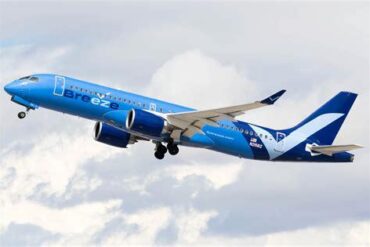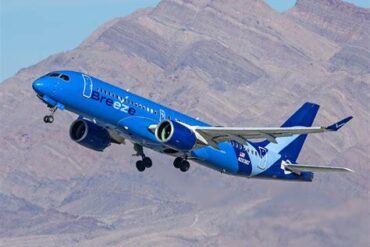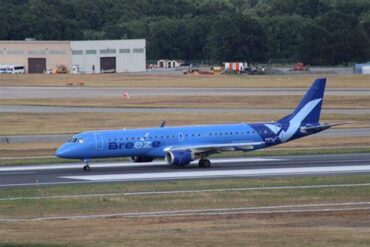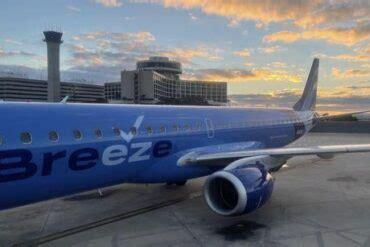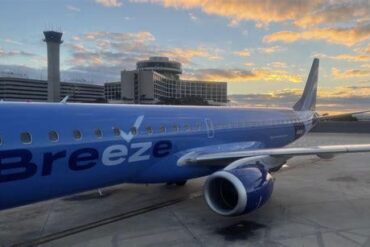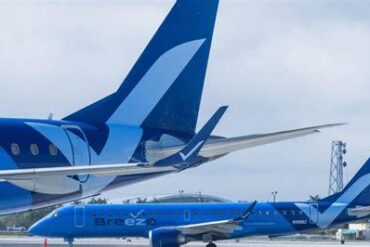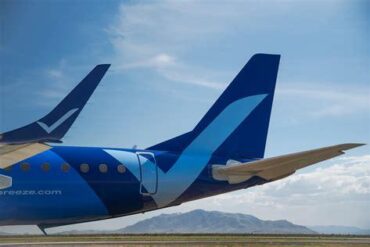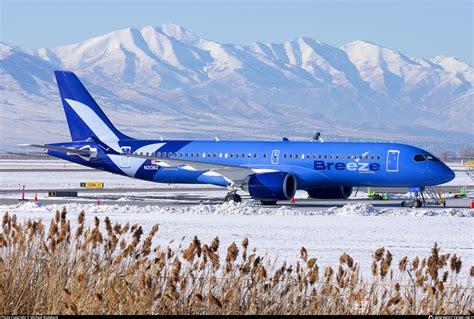
Breeze Airways has taken another decisive step in expanding its fast-growing network with the addition of three new Airbus A220-300 aircraft, delivered through a long-term lease agreement with Dutch aircraft lessor TrueNoord. The deliveries, completed in February, highlight both Breeze’s ambitious fleet strategy and TrueNoord’s growing presence in the new-generation regional jet market.
For the Utah-based airline, the A220-300 has quickly become the backbone of its operations. The aircraft’s efficiency, range, and passenger capacity allow Breeze to operate routes that many larger airlines have historically avoided. By connecting secondary and tertiary cities across the United States, the carrier continues to carve out a niche in underserved markets where demand exists but traditional airline economics often fail.
The three aircraft represent a milestone for TrueNoord as well. Although the lessor has long specialized in regional aircraft such as ATR turboprops, Embraer jets, and De Havilland Canada models, these newly delivered A220-300s mark the first Airbus aircraft in its owned fleet. The step signals a strategic expansion into the increasingly important 100–150 seat aircraft segment, where modern efficiency and versatility are reshaping airline fleet planning.
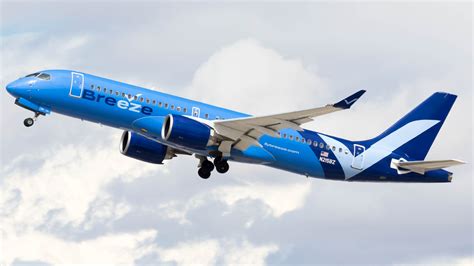
Breeze Airways Continues Rapid Fleet Expansion
The addition of these three aircraft increases Breeze Airways’ operating fleet to 49 aircraft, according to aviation data sources. This expansion provides the airline with the capacity needed to support its rapidly growing route network, which now spans nearly 300 year-round routes across the United States, Mexico, and the Caribbean.
The airline’s strategy has been simple yet disruptive. Rather than focusing on crowded hub-to-hub routes dominated by major carriers, Breeze concentrates on direct flights between smaller cities that historically lacked nonstop connections. These routes often require aircraft that balance capacity with operational efficiency — precisely where the Airbus A220-300 excels.
With seating for roughly 130 to 150 passengers depending on configuration, the aircraft fits neatly into Breeze’s business model. Its advanced aerodynamics, lightweight materials, and fuel-efficient Pratt & Whitney geared turbofan engines enable airlines to reduce operating costs while still maintaining competitive range and speed. For Breeze, this translates into the ability to launch routes that might otherwise be economically unviable.
TrueNoord CEO Anne-Bart Tieleman emphasized the importance of the milestone, noting that the A220 aligns with the lessor’s broader focus on modern aircraft in the regional jet category. As airlines worldwide shift toward more efficient fleets, leasing companies are increasingly investing in aircraft that combine flexibility with lower environmental impact.
Why the Airbus A220-300 Fits Breeze’s Strategy
Few aircraft have generated as much industry enthusiasm in recent years as the Airbus A220. Originally developed by Bombardier as the CSeries before Airbus took control of the program, the jet has become one of the most efficient aircraft in the 100-150 seat market.
For an airline like Breeze, the aircraft’s capabilities unlock opportunities that older regional jets simply cannot match. The A220 offers longer range, quieter cabins, and significantly improved fuel burn, making it particularly suitable for mid-distance routes connecting smaller markets.
Breeze has leveraged these advantages to build a network that stretches well beyond traditional regional boundaries. Routes now connect cities across the continental United States while also extending into popular leisure destinations in Mexico and the Caribbean.
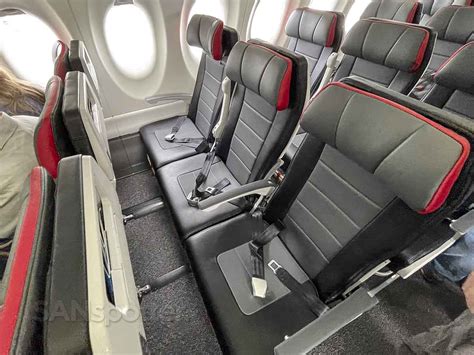
Passengers benefit from the aircraft as well. The A220 is widely praised for its spacious cabin design, large windows, and reduced noise levels, creating a passenger experience that often feels closer to that of a mainline narrow-body jet rather than a regional aircraft.
A Low-Cost Airline Focused on Underserved Cities
Since launching operations in May 2021, Breeze Airways has pursued a distinctive growth strategy that prioritizes convenience and affordability. The airline now serves 86 cities across North America and the Caribbean, including 76 destinations within the United States alone.
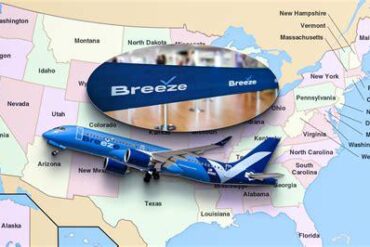
Its route network covers more than 34 U.S. states, linking destinations that previously required connecting flights through major airline hubs. This point-to-point model reduces travel time for passengers while giving Breeze access to markets with less direct competition.
The airline also emphasizes customer-friendly policies that appeal to leisure travelers. Passengers can take advantage of no change or cancellation fees, flexible booking options, and complimentary family seating. Onboard amenities include high-speed Wi-Fi and a range of food and beverage purchases, allowing travelers to customize their flight experience.
Operationally, Breeze supports its network through multiple bases strategically located across the country. These include Akron/Canton, Charleston, Fort Myers, Hartford, New Orleans, Norfolk, Orlando, Providence, Provo, Raleigh-Durham, Tampa, and Vero Beach. From these locations, the airline can efficiently connect smaller regional markets with both leisure destinations and larger metropolitan areas.
TrueNoord Expands Into Next-Generation Jets
For TrueNoord, the A220 delivery represents more than a simple fleet addition. The Amsterdam-based lessor has traditionally focused on regional aircraft that serve short-haul markets, building a diverse portfolio of over 120 owned or committed aircraft spanning ten different types.
The company’s fleet currently has an average age of approximately ten years, reflecting a deliberate strategy to maintain modern and reliable aircraft while still supporting a wide range of airline customers. According to company figures, the total portfolio value now exceeds $1.4 billion.
TrueNoord’s global presence continues to grow, with offices in Amsterdam, Dublin, London, and Singapore supporting airline partners around the world. These partners include carriers such as Air Canada, Ethiopian Airlines, IndiGo, LOT Polish Airlines, Porter Airlines, and Philippine Airlines, among many others.
The company’s financing structure relies on partnerships with major global banks, including BNP Paribas, Deutsche Bank, Société Générale, BayernLB, MUFG, and Airbus Bank. Such financial backing allows TrueNoord to acquire aircraft and lease them to airlines that prefer operational flexibility over outright ownership.
Leasing plays a crucial role in modern airline economics. Purchasing aircraft outright requires massive capital investments, often tying up funds that could otherwise be used for operations, expansion, or network development. By leasing aircraft, airlines like Breeze can rapidly scale their fleets while maintaining financial flexibility, adjusting capacity as market conditions evolve.
A Fast-Growing Airline With Ambitious Plans
Breeze Airways was founded by aviation entrepreneur David Neeleman, whose track record includes launching highly successful carriers such as JetBlue, WestJet, and Azul Brazilian Airlines. The airline originally began as Moxy Airways in 2018, later rebranding before launching its first commercial flight between Tampa and Charleston.
In just a few years, Breeze has emerged as one of the fastest-growing airlines in the United States, benefiting from strong demand for leisure travel following the pandemic. The company reported reaching profitability last year, a significant achievement for a young airline in a competitive market.
The A220 will continue to play a central role in this expansion. Breeze already operates dozens of the aircraft and has additional units on order, signaling a long-term commitment to the type as the foundation of its fleet strategy.
As the airline continues adding routes and destinations, the combination of efficient aircraft, underserved markets, and flexible leasing arrangements positions Breeze to expand even further. The arrival of these three new A220-300 jets is another sign that the carrier’s growth story is far from over — and that its unconventional approach to route planning may continue reshaping how Americans travel between smaller cities.