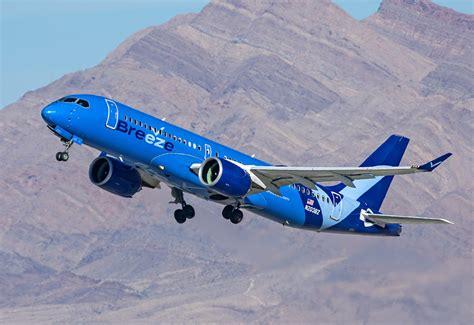
On the evening of July 18, 2025, a serious ground incident occurred at Charleston International Airport (CHS) involving two commercial aircraft: a Breeze Airways Airbus A220-300 and a Boeing 787-10 Dreamliner destined for All Nippon Airways (ANA). The collision, which happened while the A220 was parked and awaiting refueling after a weather-related diversion, resulted in minor injuries to two passengers and has triggered investigations by aviation authorities and operators.
Timeline and Circumstances of the Incident
Flight MX509, operated by Breeze Airways, was en route from Las Vegas Harry Reid International Airport (LAS) to Norfolk International Airport (ORF) when it was diverted to Charleston due to thunderstorm activity near its destination. According to Flightradar24 data, the aircraft departed Las Vegas at 12:59 PM—20 minutes behind schedule—and was scheduled to arrive in Norfolk at 8:28 PM. However, deteriorating weather conditions forced a diversion, and the flight safely landed at Charleston at 9:30 PM Eastern Time.
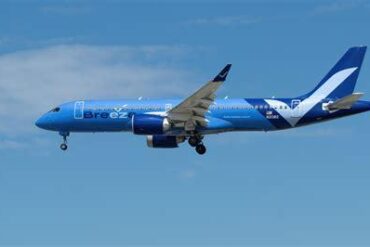
While the Airbus A220-300 (registration N247BZ, serial number 55341) sat idle on the tarmac awaiting refueling, a yet-to-be-delivered ANA Boeing 787-10 taxied nearby. At approximately 9:49 PM, the wingtip of the Dreamliner struck the tail of the stationary A220, causing noticeable physical damage. This collision prompted an immediate response from airport emergency services and led to the evacuation of all passengers onboard the Breeze flight.
Injuries and Immediate Response
Although the aircraft was stationary at the time of impact, the jolt from the collision was significant enough that two passengers sustained minor injuries. Both individuals were promptly evaluated by on-site medical personnel at the terminal. Following standard safety protocol, Breeze Airways swiftly deplaned all passengers and made arrangements for a recovery flight.
The replacement aircraft, another A220-300 registered as N211BZ, was brought in to complete the journey. The recovery flight departed Charleston at 1:52 AM and successfully arrived in Norfolk at 2:50 AM on Saturday, July 19.
Details of the Aircraft Involved
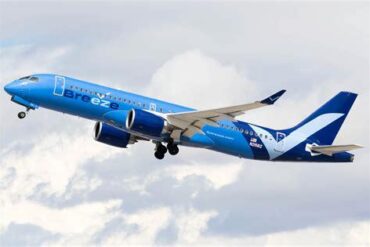
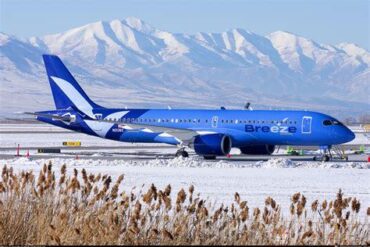
The Breeze A220-300 involved in the collision was a relatively new addition to the airline’s fleet, having been delivered in March 2025. The aircraft is powered by two Pratt & Whitney PW1524G-3 engines and is configured in Breeze’s standard layout, featuring:
- 12 Breeze Ascent (first class) seats
- 45 extra legroom seats
- 80 standard economy seats
This layout supports a total passenger capacity of 137, and the aircraft had been in service for only four months at the time of the incident.
The ANA Boeing 787-10 involved is part of the airline’s ongoing fleet expansion. While ANA already operates eight Dreamliner -10 variants, six additional units are on order. Boeing manufactures the 787-10 exclusively at its Charleston, South Carolina facility, and the aircraft involved was likely in the final phases of delivery preparation. The 787-10 is the largest model in the Dreamliner family, with the following specifications:
- Length: 224 feet (68.3 meters)
- Wingspan: 197 feet (60.1 meters)
- Height: 55 feet 4 inches (16.9 meters)
Operational Fallout and Investigations
In the immediate aftermath, both aircraft were grounded at Charleston for detailed inspection and damage assessment. While the visible damage to the A220’s tail is being evaluated, attention is also being given to the Boeing 787’s wingtip, as even minor structural impacts can affect aerodynamic integrity. The full extent of repair needs, potential delivery delays for ANA, and long-term operational impacts on Breeze’s fleet remain under review.
Breeze Airways issued a brief official statement:
“Breeze Airways flight MX509, an Airbus A220-300 aircraft with service from Las Vegas to Norfolk, Virginia, diverted to Charleston due to thunderstorms. The plane landed safely and was parked when the tail was struck by another aircraft, an ANA Boeing 787-10, at approximately 9:49 PM ET. All Guests safely deplaned, and two Guests were evaluated for minor injuries. A recovery flight delivered our Guests to ORF and we are working with authorities to determine the cause of the incident.”
Despite multiple outreach attempts, Boeing has yet to release a formal comment, nor has it confirmed whether the delivery schedule for ANA will be altered due to the incident. This silence underscores the delicacy of the situation, especially given the visibility of Boeing’s Charleston facility as the sole production site for the 787-10.
Strategic Implications for Breeze Airways
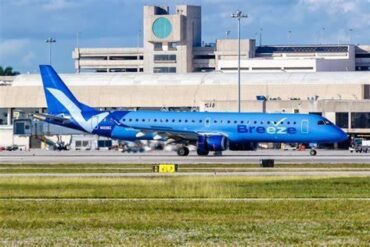
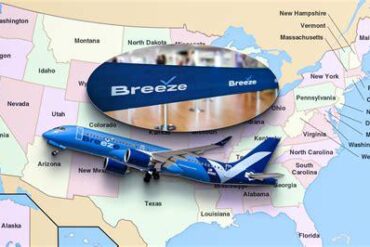
For Breeze Airways, founded by airline veteran David Neeleman, this incident marks a rare operational disruption. The carrier, which focuses on connecting underserved domestic markets across the United States, currently operates a fleet of 43 A220-300s, with an additional 47 on order. The airline also maintains a smaller subfleet of ten Embraer 190s used for shorter routes.
With services spanning 69 destinations, the A220 plays a crucial role in Breeze’s route network, offering a unique balance of range, efficiency, and passenger comfort. Any grounding or delay in the A220 fleet—especially newly delivered airframes—can have a ripple effect on scheduling, frequency, and revenue.
Moreover, the airline’s emphasis on providing premium economy experiences in underserved city pairs makes maintaining operational reliability essential. The prompt replacement flight and minimal disruption demonstrate the airline’s resilience, but repeated issues of this nature could erode traveler confidence.
Boeing’s Position and Potential Liability
Boeing, which has faced intense scrutiny in recent years due to quality control and production issues, may come under regulatory review depending on the investigation’s outcome. If the 787-10 was being operated by Boeing personnel during the taxi maneuver, questions regarding ground crew training, communications, and procedural adherence could emerge.
While wingtip strikes are rare, they are not unprecedented—particularly at congested or logistically complex airports. However, the proximity of the incident to Boeing’s own production line adds a layer of reputational sensitivity. The Federal Aviation Administration (FAA) and the National Transportation Safety Board (NTSB) are expected to conduct a detailed review of the circumstances, including:
- Taxi clearance procedures
- Ground radar footage
- Crew logs and communications
- Aircraft tow or taxi dynamics (if under tow)
The degree to which Boeing is held responsible will hinge on whether the collision stemmed from human error, technical misjudgment, or airport procedural misalignment.
Safety, Protocols, and Broader Industry Context
This incident reignites discussion about the safety of ground operations at mixed-use facilities like Charleston International, which shares infrastructure with Charleston Air Force Base. Military and civilian operations often coexist at such locations, and while typically well-coordinated, the risk of miscommunication can be higher.
Additionally, with newer, larger aircraft like the 787-10 becoming more common, airport taxiway geometry and apron design must keep pace to prevent space-constrained conflicts. The industry has already seen numerous initiatives toward ground-based collision-avoidance systems, but the rollout and enforcement of such technologies remain uneven.
Finally, this event underscores the importance of post-diversion planning. Breeze’s presence in Charleston was unintended—a byproduct of severe weather. Ensuring adequate parking, fueling logistics, and ground personnel readiness at diversion airports is a growing concern as climate events become more disruptive to aviation operations.
Conclusion
The July 18 tailstrike incident at Charleston serves as a stark reminder that aviation safety doesn’t end upon landing. Ground operations, especially at busy or multi-role airports, present their own unique challenges. As investigations unfold, stakeholders across the industry—from manufacturers and airlines to airport authorities—must take note of the contributing factors and adopt necessary reforms.
For Breeze Airways, the timely recovery flight helped contain the passenger experience fallout, but the event nonetheless affects its growing brand image. For Boeing, the proximity of this error to its production environment places additional pressure on an already scrutiny-heavy production line. Ultimately, the aviation industry’s ability to learn from such incidents and prevent recurrence will be the true measure of progress.