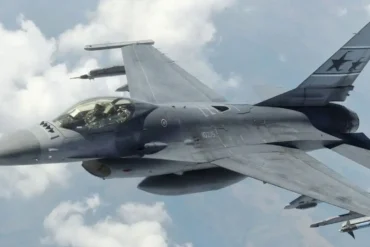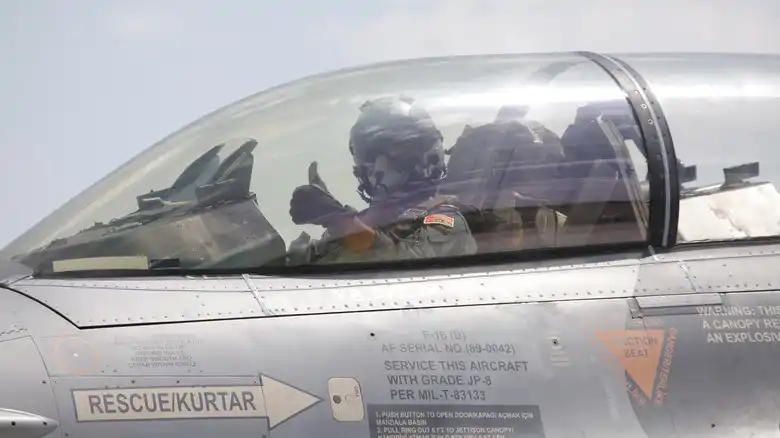
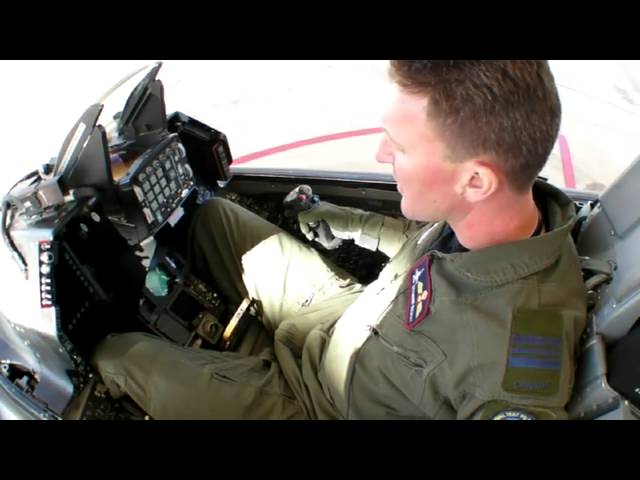
The F-16 Fighting Falcon looks unconventional from almost every angle, but few of its design choices are as immediately noticeable as the pilot’s reclined cockpit seat. Instead of sitting relatively upright like pilots in most conventional fighter aircraft, the F-16 pilot sits at an angle of roughly 30 degrees. It is not a cosmetic choice, nor was it designed primarily for comfort. The unusual position exists because the F-16 was engineered around one demanding priority: giving its pilot the best possible chance of surviving and winning a high-G air combat maneuver.
The F-16 entered service in 1978 as the product of the U.S. Air Force’s Lightweight Fighter Program. Designers wanted a relatively small, agile aircraft capable of exceptional maneuverability and sustained turning performance. That philosophy influenced almost everything about the aircraft, including its relaxed static stability, blended fuselage, leading-edge extensions, bubble canopy, side-mounted control stick, and reclined seat.
The result was an aircraft that approached fighter design from the perspective of the pilot as much as the airframe itself. The 30-degree reclined seat addressed two separate challenges. First, it helped the human body tolerate the extreme acceleration produced during hard turns. Second, it improved the pilot’s ability to look upward and maintain visual contact with another aircraft during a dogfight.
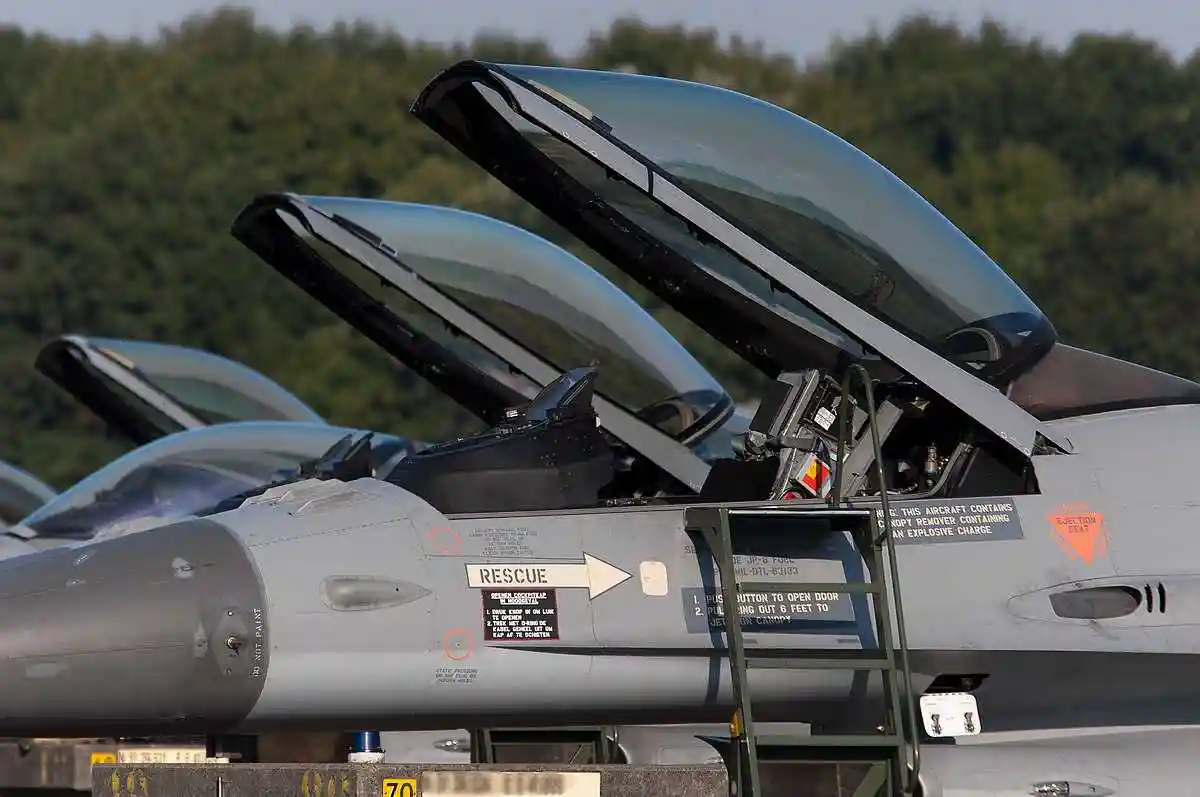
How the F-16 Reclined Seat Helps With High-G Forces
High-G maneuvering is one of the most physically punishing aspects of flying a modern fighter. When an F-16 pulls several times the force of gravity during a tight turn, the pilot’s body does not simply become heavier. The cardiovascular system faces a major challenge because blood is driven away from the brain and toward the lower portions of the body.
As blood pressure in the brain decreases, a pilot can experience visual impairment, including gray-out, followed by loss of consciousness known as G-induced loss of consciousness, or G-LOC. In a dogfight, even a momentary loss of consciousness can be disastrous because the aircraft may continue maneuvering while the pilot is unable to respond.
The F-16’s reclined seating position changes how those forces act on the pilot. Rather than placing the body in a nearly vertical position, the seat distributes the pilot’s posture backward so that more of the acceleration is experienced along the chest and back.
This arrangement effectively reduces the vertical distance between the heart and brain. That matters because the heart has less difficulty maintaining blood flow to the brain when the two organs are positioned closer together relative to the direction of acceleration. The seat therefore works as part of a broader system designed to preserve pilot consciousness during demanding maneuvers.
The reclined position does not eliminate the effects of high G, and F-16 pilots still depend on anti-G suits, muscular straining techniques, breathing techniques, and extensive training. Instead, the seat provides another physiological advantage that complements those measures.
Why the Seat Improves F-16 Dogfighting Vision
The second major reason for the F-16’s unusual seating position is much less obvious but equally important: visibility during air combat.
A fighter pilot needs to maintain visual contact with an opponent whenever possible. Losing sight of an adversary can mean losing the ability to understand the opponent’s position, energy state, and next maneuver. In close-range aerial combat, situational awareness can disappear almost instantly.
During many fighter maneuvers, an opposing aircraft may appear above the pilot’s normal horizontal line of sight. A pilot who has to repeatedly tilt the head far backward or extend the neck upward can quickly develop fatigue, particularly during a prolonged engagement involving high-G turns.
The F-16’s reclined posture changes the pilot’s natural line of sight. Because the torso and head are already angled backward, the pilot can look into the upper regions of the bubble canopy with less extreme neck extension.
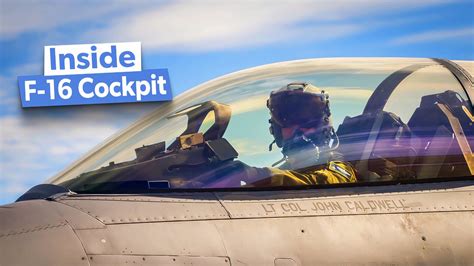
This seemingly small ergonomic decision can make a meaningful difference. The pilot does not need to fight the seat position simply to look toward an opponent occupying an important part of the sky. The cockpit geometry instead supports the visual demands of close-in maneuvering.
The F-16 Was Designed Around the Pilot
The reclined seat makes more sense when viewed alongside the F-16’s other unconventional cockpit features. The aircraft uses a side-stick controller rather than a conventional center-mounted control stick. This allows the pilot to make control inputs without having to move a traditional stick between the legs, while also fitting naturally into the aircraft’s reclined seating arrangement.
The F-16 also features a large frameless bubble canopy, giving the pilot unusually broad visibility. Together, the canopy, seat angle, and cockpit arrangement were intended to provide a highly integrated view of the battlespace.
The design philosophy was fundamentally different from building an aircraft first and then accommodating the pilot afterward. Engineers treated the pilot as a central component of the weapon system. The aircraft’s maneuverability was valuable only if its pilot could remain conscious, control the airplane, and see the opponent during those maneuvers.
What Are the Disadvantages of a Reclined F-16 Seat?
The 30-degree angle is not perfect for every phase of flight. A heavily reclined pilot position can be less convenient during routine operations, particularly when the aircraft is flying straight and level and the pilot needs a more conventional forward-looking posture.
There are also practical ergonomic compromises. Tasks that are simple in an upright cockpit can become less convenient when the pilot is deeply reclined. The seating position was therefore not selected because it was universally comfortable. It was selected because the advantages during high-performance combat outweighed the disadvantages during less demanding phases of flight.
That distinction reveals something important about the F-16. Its designers were willing to sacrifice conventional cockpit ergonomics when doing so created a tactical advantage. The aircraft was never intended to be a luxury environment. It was optimized for a pilot operating an exceptionally agile fighter in an environment where seconds, degrees, and visibility could determine the outcome of an engagement.
Why the F-16 Seat Became So Iconic
The F-16’s reclined cockpit seat has become one of the clearest physical expressions of the aircraft’s original design philosophy. The Lightweight Fighter Program emphasized maneuverability, energy management, and close-range combat performance, and the cockpit was developed to support those priorities.
By reducing the physiological burden of high-G acceleration and making upward visual scanning easier, the 30-degree reclined seat addressed two of the most important human limitations in a turning fight.
The F-16’s success ultimately demonstrated why these unusual choices mattered. Its combination of relaxed stability, powerful flight controls, excellent visibility, lightweight construction, and pilot-centered ergonomics helped establish the Fighting Falcon as one of the most influential multirole fighters ever developed.
The reclined seat, then, is more than an interesting cockpit feature. It represents a simple but powerful idea in aviation design: when an aircraft is built around extreme performance, the human being inside it must be engineered into the solution as well. For the F-16, sitting back was not about relaxing. It was about staying conscious, seeing the enemy, and keeping control when the sky became a high-G battlefield.