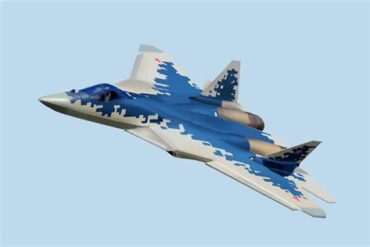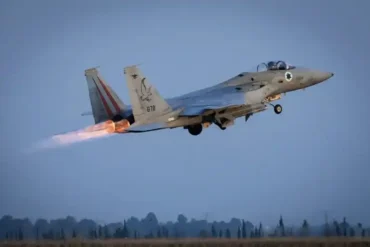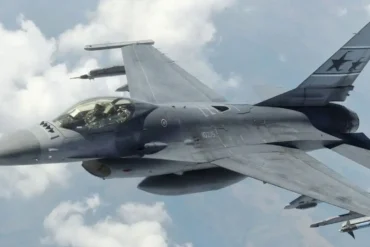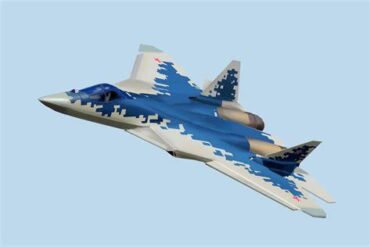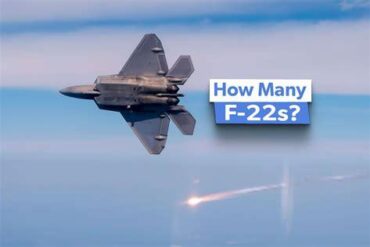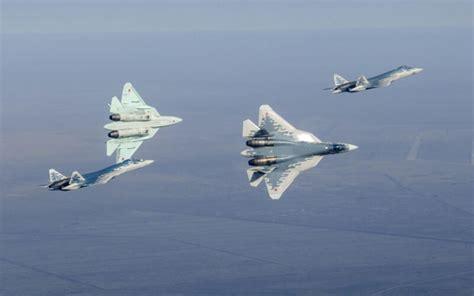
The Sukhoi Su-57, designated “Felon” by NATO, represents the pinnacle of Russian fighter aircraft technology. As Russia’s first operational stealth aircraft, it signals Moscow’s ambition to maintain air superiority in an increasingly contested fifth-generation battlefield. Since its conceptual inception at the dawn of the 21st century, the Su-57 has emerged as the Russian counterpart to the American F-22 Raptor, with comparable stealth, speed, and multirole capabilities.
After years of research, delays, and refinements, the Su-57 finally entered the Russian Aerospace Forces’ inventory in 2020. Its journey from a prototype to an active combat platform underscores both Russia’s commitment to advanced aerospace development and its urgency in modernizing its fighter fleet.
In contrast to the swift and voluminous production cycles of Western fifth-generation jets, the Su-57’s rollout has been gradual but deliberate, reflecting both the scale of technological innovation and the economic realities of Russia’s defense industry.
Stealth Evolution: The Rise of the Su-57 Felon
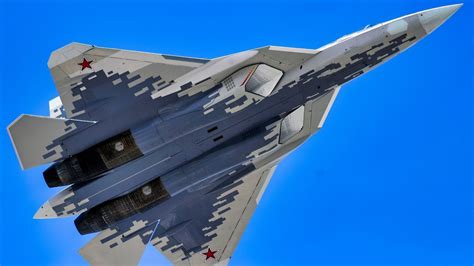
The Su-57’s development began under the PAK FA (Prospective Airborne Complex of Frontline Aviation) program, a direct response to the United States’ early dominance with the F-22. As Russia’s first foray into fifth-generation design, the Su-57 integrates stealth shaping, internal weapons bays, and radar-absorbing materials, giving it a reduced radar cross-section, though not on par with Western designs.
Equipped with thrust-vectoring nozzles and supercruise capabilities, the Su-57 is both agile and fast. Its maximum speed of Mach 2 (1,535 mph) and sustained supersonic cruising without afterburners gives it an operational flexibility previously unseen in Russian fighters. However, what truly differentiates the latest Su-57 variant is its onboard intelligence.
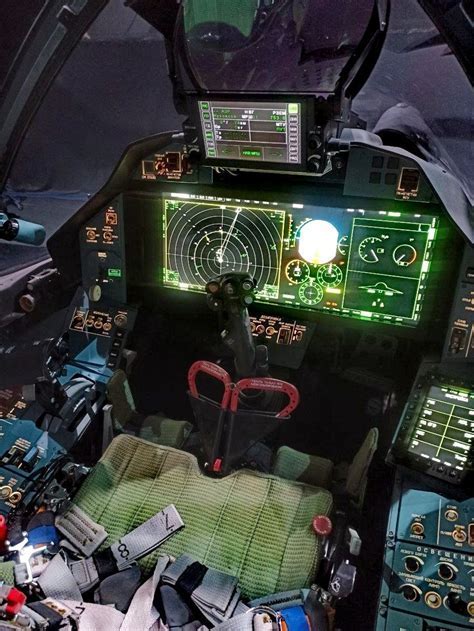
The Su-57M1, revealed in May 2025, incorporates a new generation of avionics and an AI-assisted pilot interface. With its AL-51F-1 engines, the fighter benefits from lower infrared and acoustic signatures, longer ranges, and enhanced fuel economy. The integrated helmet-mounted targeting system and visor-based heads-up display give pilots real-time data in combat, bringing Russian avionics closer to parity with Western systems.
Russia’s Production Timeline: A Slow But Steady March
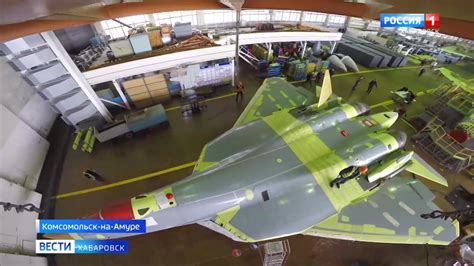
When the Su-57 first entered production in 2019, the Russian Ministry of Defense placed an order for 76 airframes, expected to be delivered by 2027. However, actual delivery has varied year by year, reflecting the pressures of international sanctions, production complexity, and geopolitical shifts.
- In 2022, only 6 Su-57s had entered service.
- By the end of 2023, that number increased to 18, with 12 new jets added.
- 2024 saw a major jump, with a total of 42 Su-57s estimated to be in service.
- As of April 2025, two additional units were delivered, bringing the total Su-57 inventory to 44 aircraft.
This acceleration in production—going from 6 to 44 units in just over two years—demonstrates a significant scaling of manufacturing capability. It also highlights how Russia is prioritizing the Su-57 despite broader economic constraints, likely viewing the aircraft as a cornerstone of future air defense strategy.
How Many Su-57s Does Russia Have Today?
As of May 2025, Russia possesses a confirmed fleet of 44 Su-57 fighter jets. The most recent deliveries, completed in April, included two more legacy-model Su-57s. While the Su-57M1 has been unveiled, it has not yet been incorporated into the operational fleet.
The breakdown as of May 2025:
- Total Su-57s in inventory: 44
- Newly delivered in 2025: 2
- Target by 2027: 76
With 32 more aircraft expected over the next two years, it is clear that Russia remains committed to completing its first batch. If production continues at the current or slightly increased pace, the goal appears attainable—barring any interruptions from economic sanctions, resource shortages, or military-industrial constraints.
Strategic Deployment and Combat Readiness
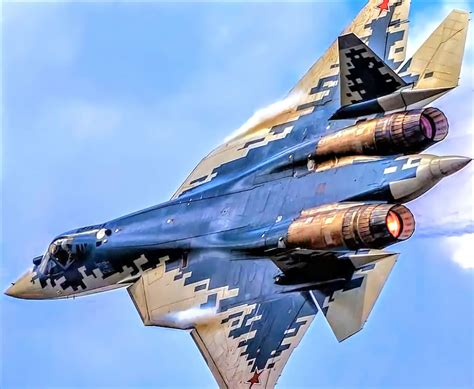
Despite the Su-57’s relatively small fleet size, Russia has been eager to demonstrate its capabilities. Units have reportedly been deployed in limited roles in Syria, testing avionics and sensor systems in live environments. These combat trials allow Russian engineers to refine mission systems and prepare the platform for more intense future deployments.
The Su-57 has also appeared prominently in military exercises across the Eurasian region. These displays are both political and strategic, acting as deterrent messages aimed at NATO and other regional rivals. Unlike its predecessors, the Su-57 is intended to serve not only as an interceptor or air superiority platform, but also as a multirole strike fighter capable of deep penetration into contested airspace.
Export Potential and Global Impact
Although currently in exclusive Russian service, the Su-57 is not confined to domestic use indefinitely. The first foreign customer, Algeria, signed an agreement to purchase the aircraft, though deliveries have not yet occurred as of early 2025. The deal, reportedly for 14 jets, indicates that Moscow is prepared to scale production not just for its own air force but also for select strategic partners.
Export versions of the Su-57 are likely to be slightly downgraded in terms of software and radar capabilities, in line with standard Russian defense export practices. Nevertheless, the aircraft’s entrance into international markets could shift regional power balances, especially in areas where Western fighter sales are politically restricted.
Technological Leap: The Su-57M1 Upgrade Path
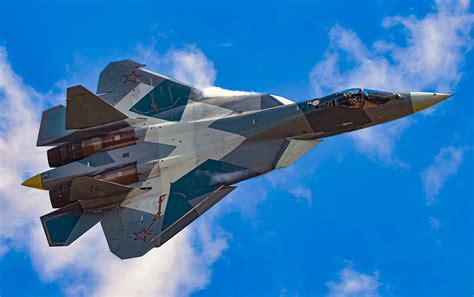
The May 2025 unveiling of the Su-57M1 signals a decisive evolution in the fighter’s design. This variant includes:
- Artificial Intelligence Systems for semi-autonomous operations
- Improved AL-51F-1 Engines with better thrust-to-weight ratio
- Reduced acoustic and infrared signatures
- Advanced Electronic Warfare (EW) suites
- Next-generation radars and targeting systems
Though not yet fielded, the Su-57M1 is being presented as a true fifth-generation-plus fighter, one that could compete against upgraded variants of the F-35 and F-22, as well as upcoming platforms like the NGAD (Next Generation Air Dominance) in the United States.
Operational Challenges and Outlook
Despite its sophisticated design, the Su-57 program has faced persistent challenges. These include supply chain disruptions, technological delays, and the impact of Western sanctions on critical avionics and composite materials. Moreover, the aircraft’s combat effectiveness in a real peer-to-peer conflict has not yet been tested.
Critics argue that Russia’s slow rollout reveals a strained defense economy, unable to produce such complex systems at scale. Others point to the relative opacity surrounding actual capabilities—many specifications are speculative or based on promotional materials rather than independently verified data.
Nonetheless, with 44 jets delivered, a firm production target for 76, and a potential export future, the Su-57 has transitioned from prototype to operational mainstay. As the Su-57M1 enters serial production, the Russian Aerospace Forces are poised to elevate their fifth-generation capabilities into a more formidable strategic tool by the end of the decade.
Conclusion: The Su-57’s Role in Russia’s Military Doctrine
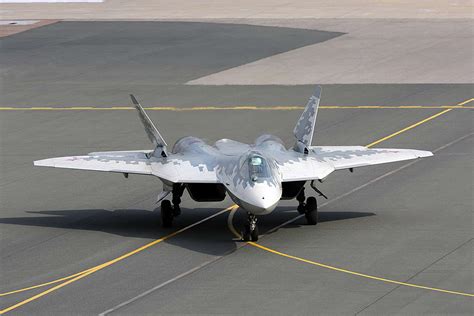
The question of how many Su-57 fighter jets Russia has is more than a matter of inventory—it’s a lens into Moscow’s strategic trajectory. With 44 operational jets and 32 more slated by 2027, Russia is building a lean but advanced fleet intended to operate as a force multiplier, not a mass-deployment asset.
Whether the Su-57 will reach its full potential depends on geopolitical stability, sustained industrial output, and the successful integration of newer variants like the M1. For now, it stands as a symbol of Russia’s ambitions in 21st-century aerial warfare, flying faster and further into the future.