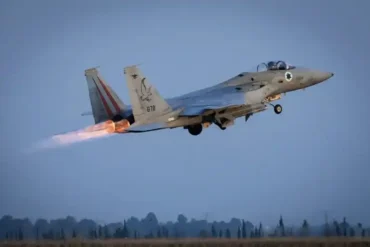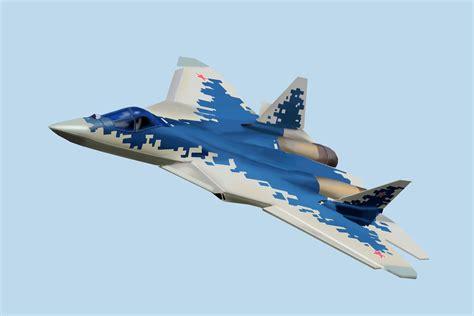
Russia’s airpower remains a cornerstone of its national defense strategy, and few aircraft better embody this dominance than the Sukhoi Su-35. Officially known as the Su-35S in its operational variant, this aircraft is among the most advanced fourth-generation fighters ever built, blending brutal agility with sophisticated avionics and a powerful weapons loadout. While many countries are transitioning to fifth-generation fighters like the F-35 Lightning II or Russia’s own Su-57 Felon, the Su-35 continues to serve as a critical workhorse of the Russian Aerospace Forces (VKS).
With its origins rooted in the late Cold War-era Su-27 platform, the Su-35 was born out of Russia’s desire to enhance its air-superiority capabilities without entirely reinventing the wheel. The result is an aircraft that shares superficial design cues with its predecessor but is in fact a wholly modernized and substantially more lethal platform.
Su-35 Fighter Jet Count: What the Numbers Reveal
As of mid-2025, the estimated number of Su-35s in Russian service stands at approximately 114 aircraft. This figure is drawn from data compiled by the World Directory of Modern Military Aircraft (WDMMA) and has been echoed by independent media sources including The Kyiv Independent and Military Watch Magazine.
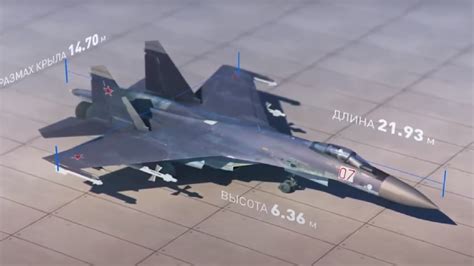
This operational inventory includes aircraft deployed across multiple aviation regiments, with some stationed in strategic regions such as Kaliningrad, the Far East, and the Arctic Circle, underscoring the Su-35’s versatility in diverse operational theaters. While this figure does not account for aircraft undergoing maintenance or upgrades, it provides a reliable snapshot of Russia’s current Su-35 capability.
A Deep Dive Into the Su-35’s Evolution and Design
The Su-35’s development began as far back as the 1980s, culminating in a prototype flight in June 1988. Initially branded for the export market, internal demand grew as Russia sought a capable alternative to the Su-27 and Su-30 platforms. By 2014, after years of incremental refinement, the Su-35S officially entered Russian service.
Though still classified as a 4++ generation jet—due to its lack of full stealth technology—the Su-35 delivers near-fifth-generation performance thanks to a suite of upgrades. Chief among these is its reengineered airframe, now reinforced with composite materials that increase structural integrity while reducing radar signature. The jet’s avionics, cockpit displays, and fire control systems are completely digitized, enabling improved pilot situational awareness and reduced cognitive workload during combat scenarios.
Power and Performance: A Supersonic Predator
The Su-35 is powered by two Saturn AL-41F1S turbofan engines with thrust vectoring nozzles, enabling extreme agility unmatched by many Western fighters. This allows the aircraft to perform high-angle-of-attack maneuvers such as the Pugachev’s Cobra, which is tactically significant in close-range dogfights.
The fighter boasts a top speed of Mach 2.25 and a combat radius of 1,600 kilometers, making it suitable for long-range air patrols and deep-strike missions. Its Irbis-E passive electronically scanned array (PESA) radar allows simultaneous tracking of up to 30 aerial targets and engagement of eight at once, making the Su-35 a threat multiplier in multi-domain warfare.
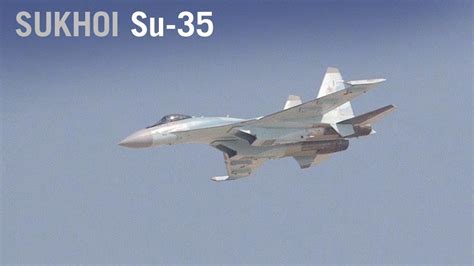
Weapons and Combat Systems: Arsenal of the Sky
The Su-35’s formidable weapons capacity includes:
- Up to 12 hardpoints for air-to-air and air-to-surface missiles
- R-77 (AA-12 Adder) medium-range active radar-guided missiles
- R-73 (AA-11 Archer) short-range infrared-guided missiles
- Kh-31 and Kh-59 precision-guided air-to-surface munitions
- 30mm GSh-301 cannon for close combat engagements
Unlike many Western fighters that prioritize stealth over firepower, the Su-35 remains faithful to the Russian doctrine of heavily armed and aggressively maneuverable combat platforms.
Operational History: Syria and Ukraine
The Su-35’s first combat deployment occurred in 2016 during Russia’s intervention in Syria. Four aircraft were stationed at Khmeimim Air Base to provide air cover and ground-attack support for Russian and Syrian government forces. Reports indicate that the aircraft not only engaged ISIS targets but also intercepted Israeli fighter jets over Syrian territory on several occasions.
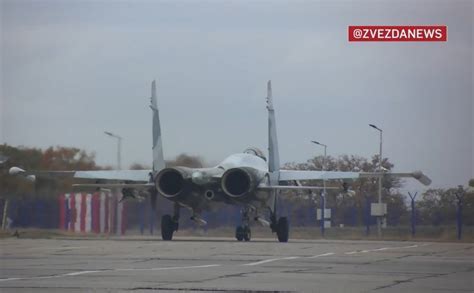
Since the onset of the Russia-Ukraine conflict, the Su-35 has been tested under far harsher conditions. Facing modern NATO-supplied air defense systems such as the Patriot PAC-3 and NASAMS, the aircraft’s survivability and effectiveness have been challenged.
According to the open-source intelligence group Oryx, at least eight Su-35 jets have been visually confirmed lost in the Ukraine theater. This includes one downed by a Ukrainian F-16, which reportedly received targeting data from a Swedish Saab S100D Argus airborne surveillance platform. These losses, while significant, do not necessarily reflect a systemic flaw in the aircraft but rather the evolving complexity of contested airspaces.
Production and Export Dynamics
The Su-35 is manufactured by Sukhoi, a division of the United Aircraft Corporation (UAC), and represents a bridge between legacy Soviet designs and modern Russian aerospace engineering. Annual production rates vary based on domestic requirements and international contracts.
The fighter has also attracted limited but notable foreign interest. China was the first foreign customer, acquiring 24 units between 2016 and 2018, marking a rare case of Beijing purchasing advanced foreign jets. Egypt also reportedly signed a deal for over two dozen Su-35s, although U.S. pressure and potential CAATSA sanctions appear to have stalled delivery.
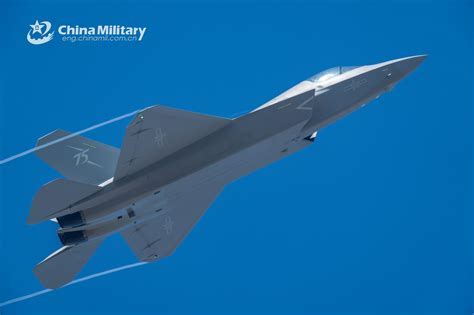
Other potential buyers have included Indonesia, Algeria, and Iran, though negotiations have often been hampered by geopolitical complications or financial constraints. Russia continues to market the Su-35 as a cost-effective alternative to Western fifth-generation fighters, particularly in regions with strained relationships with the U.S. or NATO.
Su-35 vs. Western Fighters: Tactical Comparisons
While not as stealthy as the F-22 Raptor or F-35 Lightning II, the Su-35 excels in other domains. It offers better kinematic performance than most fourth-generation aircraft and a broader missile payload. Its radar and countermeasure systems, though slightly behind Western equivalents in sensor fusion and low observability, remain effective, particularly when operated within a robust integrated air defense network.
Pilots trained on the Su-35 often highlight its “fly-by-wire” responsiveness and raw maneuverability as key advantages in dogfighting scenarios. In beyond-visual-range (BVR) engagements, however, aircraft like the F-35, with stealth and network-centric warfare advantages, may hold the upper hand.
Challenges Ahead and Strategic Implications
Despite its strengths, the Su-35 program faces several challenges:
- Attrition from the Ukraine war is steadily eroding fleet numbers.
- Sanctions have complicated access to microelectronics and avionics components.
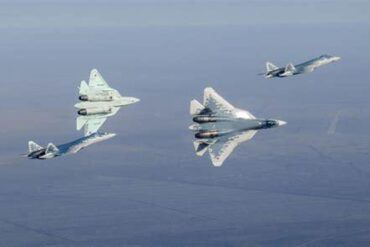
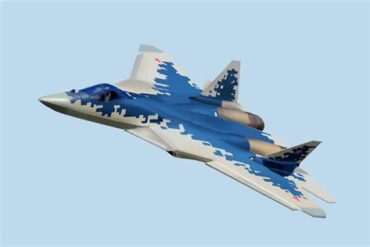
- Fifth-generation aircraft development like the Su-57 and future Su-75 “Checkmate” threatens to make the Su-35 obsolete in the coming decades.
Still, the jet remains a critical strategic asset in the Russian air force. It provides a capable and battle-tested bridge between aging Cold War hardware and next-generation capabilities still under development.
Conclusion: The Su-35’s Place in Russian Air Dominance
With approximately 114 operational units, the Su-35 Flanker-E is not only numerically significant but symbolically vital to Russia’s image as a global air power. Its deployment across active conflict zones and against modern air defenses speaks volumes about its design integrity and combat prowess.
Though it faces mounting headwinds—ranging from combat losses to geopolitical barriers in export markets—the Su-35 continues to play a frontline role in Russia’s military doctrine. As newer platforms like the Su-57 Felon gradually take on more responsibilities, the Su-35 will likely continue to serve for at least another decade, particularly in theaters where its range, agility, and multirole capability make it irreplaceable.
Ultimately, the Su-35 is more than a relic of Cold War design—it is a symbol of continuity, resilience, and Russian military ambition in the 21st century.