Delta Air Lines appears to be preparing for a return to Singapore, signaling a potentially significant new phase in the carrier’s Pacific expansion. According to comments attributed to Delta Chief Commercial Officer Joe Esposito, Singapore Changi Airport (SIN) is included in the airline’s future plans, although Delta has not yet announced a specific route, launch date, aircraft type, or schedule.
That distinction matters. Delta is considering Singapore, but a formal route announcement has not been made. Still, the prospect is notable because the airline has not operated its own service to Singapore since September 2019. A return would therefore represent more than another addition to the network. It would demonstrate how dramatically Delta’s strategy in Asia has changed since the carrier abandoned its former Tokyo Narita-centered model.
The potential Singapore return comes as Delta increasingly turns its attention toward markets across the Pacific. After years of concentrating substantial international growth on Europe, the airline now sees Asia as one of its clearest remaining opportunities. Recent and planned additions involving Shanghai, Seoul, Hong Kong, Manila and Tokyo illustrate that the shift is already underway rather than being merely a long-term ambition.
Delta Air Lines’ Singapore History Dates Back to Its Narita Hub
Delta’s previous Singapore operation was fundamentally different from the service the airline could operate today. Its final Singapore flight, on September 22, 2019, was a daily Boeing 767-300ER service linking Singapore with Tokyo Narita. The route reflected a network structure inherited largely from Northwest Airlines, whose extensive Narita operation once functioned as an Asian connecting hub.
When Delta and Northwest completed their merger in 2008, Narita was an unusually important part of the combined airline’s international network. Northwest had developed a broad system of flights connecting the United States with Japan and then linking Japan with destinations across Asia. This gave the airline a powerful way to funnel passengers through Tokyo.
Singapore was one of those destinations. But the model became increasingly difficult to justify as aircraft capable of flying longer distances made it easier to connect the United States directly with major Asian cities. At the same time, passengers traveling specifically to Tokyo increasingly preferred Haneda Airport, which is substantially closer to central Tokyo than Narita.
Delta eventually decided to abandon its Narita hub concept and consolidate its Tokyo operation at Haneda Airport. Singapore disappeared as part of that broader restructuring.
The competitive environment also worked against Delta. Singapore is a major aviation hub dominated by Singapore Airlines, while Star Alliance carriers provide an extensive network throughout Asia. Delta therefore faced a difficult proposition when trying to build demand through a secondary connection in Japan.
The airline no longer needs to approach Singapore in that way.
Korean Air Has Replaced Much of the Old Narita Strategy
One of the most important changes in Delta’s Asian strategy has been its relationship with Korean Air. Rather than rebuilding an enormous fifth-freedom network around Tokyo, Delta can now rely on Seoul Incheon as a major connecting point for passengers traveling between the United States and destinations throughout Asia.
Delta and Korean Air operate a joint venture that gives both airlines extensive opportunities to coordinate schedules, connect passengers and expand their combined presence across the Pacific. Delta has described the partnership as a central part of its Asian strategy, effectively providing connectivity that reduces the need for Delta to maintain the kind of regional network Northwest once operated from Narita.
That makes a prospective Singapore service much more straightforward. Delta can concentrate on serving the largest markets nonstop from its American gateways while using Seoul Incheon for destinations where nonstop service does not make commercial sense.
The strategy also reflects a broader transformation in the airline industry. Modern widebody aircraft can fly missions that would once have required intermediate stops, allowing airlines to build networks around demand rather than geography. For Delta, that means Seattle and Los Angeles can function as direct gateways into Asia without recreating the complicated architecture of the old Narita hub.
Asia Is Becoming Delta’s Next Major Growth Market
Delta’s renewed interest in Singapore must also be viewed against its rapidly expanding European operation. The airline has built an enormous transatlantic network supported by major partnerships with Air France-KLM and Virgin Atlantic. Europe remains strategically important, but Delta increasingly sees fewer major gaps that it can fill with its own aircraft.
Asia presents a different opportunity.
Delta has already demonstrated that it is willing to invest in the region again. The airline restored Los Angeles–Shanghai service in 2025 and expanded its presence in Seoul. It also returned to Hong Kong from Los Angeles in June 2026. Further growth is planned for Manila and Tokyo Narita in 2027.
These developments point toward a deliberate Pacific strategy rather than isolated route experiments. Delta is using its strongest West Coast gateways to reach markets where demand, corporate traffic and connecting opportunities can support long-haul flying.
Seattle Looks Like the Strongest Candidate for Singapore
If Delta eventually launches Singapore service, Seattle-Tacoma International Airport (SEA) appears to be the most logical starting point.
Delta has positioned Seattle as its premier Pacific gateway, giving the airline a substantial network of connecting flights across the western United States. That domestic feed is critical for a route as long and operationally demanding as Seattle–Singapore.
Los Angeles would offer an enormous local market, but Esposito’s comments reportedly ruled out Los Angeles as the starting point for Singapore. That leaves Seattle as the most compelling candidate.
There is also an important competitive signal already present at Seattle. Singapore Airlines operates nonstop Seattle–Singapore service, demonstrating that the market can sustain an extremely long transpacific connection. Current schedules show Singapore Airlines continuing to offer nonstop SEA–SIN service, underlining the route’s established position in the market.
For Delta, competing directly would be challenging but potentially attractive. Singapore is an important global business center, a major Southeast Asian hub and a destination with substantial premium-cabin demand.
The Airbus A350-900 Would Be the Logical Aircraft
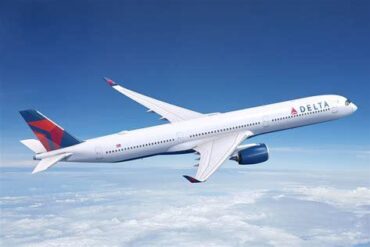
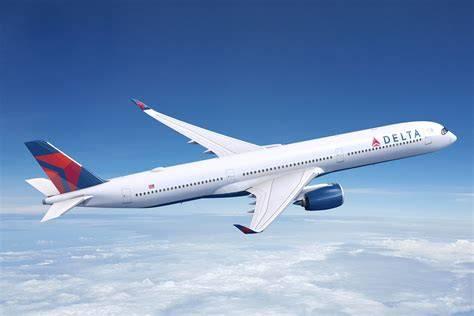
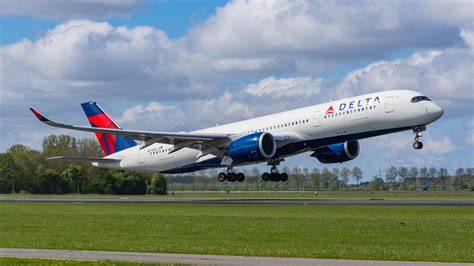
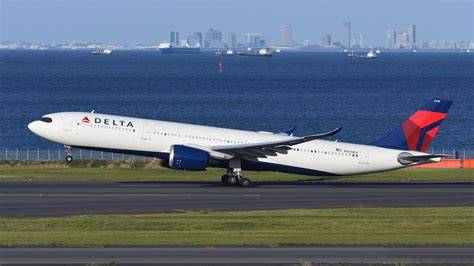
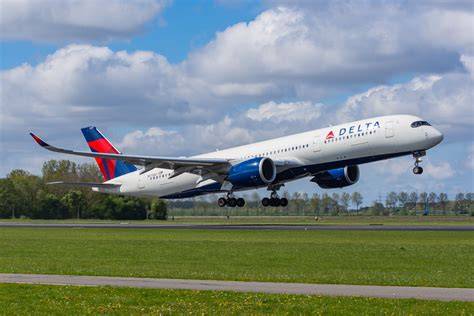
The Airbus A350-900 would be the most obvious aircraft for a future Delta Singapore route. Delta already uses the type extensively on its longest international services, giving the airline operational familiarity with the aircraft and its economics.
An A350-900 also provides the combination of range, cargo capacity, passenger comfort and fuel efficiency required for an exceptionally long route such as Seattle–Singapore. The aircraft would allow Delta to offer a modern premium-heavy cabin while maintaining sufficient capacity for the route’s demanding operational profile.
The newer A350-1000 presents another possibility. Delta is adding the larger variant to its fleet, and its additional capacity and range could make it technically well suited to Singapore. However, the A350-1000 is expected to play a more selective role on high-value trunk routes. Deploying the smaller A350-900 would therefore appear more consistent with the cautious approach appropriate for a new market.
A 2027 Launch Is Possible, but 2028 May Be More Realistic
The biggest unanswered question is timing.
Delta has not announced a Singapore route, so any launch date remains speculative. The airline already has several major Pacific projects ahead of it, including Los Angeles–Manila and Seattle–Tokyo Narita, both planned for 2027. Adding Singapore at the same time would place considerable demands on aircraft, crews and operational resources.
A summer 2027 launch is technically conceivable because Delta already operates aircraft capable of performing the mission. Nevertheless, the airline’s existing pipeline suggests that late 2027 would be an aggressive target, while 2028 could be a more realistic timeframe if Singapore advances from strategic intention to formal network planning.
The economics will ultimately determine the decision. Seattle–Singapore is an extraordinarily long flight, requiring strong year-round demand rather than simply attractive peak-season traffic. Delta would need sufficient premium-cabin revenue, cargo demand and connecting passengers to justify the aircraft utilization.
Singapore Would Confirm Delta’s Pacific Comeback
A Delta return to Singapore would carry significance well beyond one new route. It would show that the airline has moved decisively away from the old Narita-centric Asian network and toward a modern nonstop strategy built around Seattle, Los Angeles and the Korean Air partnership.
The potential service would also place Delta directly against one of the world’s strongest long-haul operators on a route already proven capable of supporting nonstop service. Singapore Airlines’ continued Seattle operation demonstrates that the market exists, while Delta’s expanding Pacific network provides a stronger foundation than the airline had when it abandoned Singapore in 2019.
For now, Singapore remains a plan rather than a confirmed route. But the direction is increasingly clear. Delta is looking across the Pacific again, and after rebuilding its presence in several major Asian markets, Singapore could become one of the most consequential additions to its next wave of international expansion.