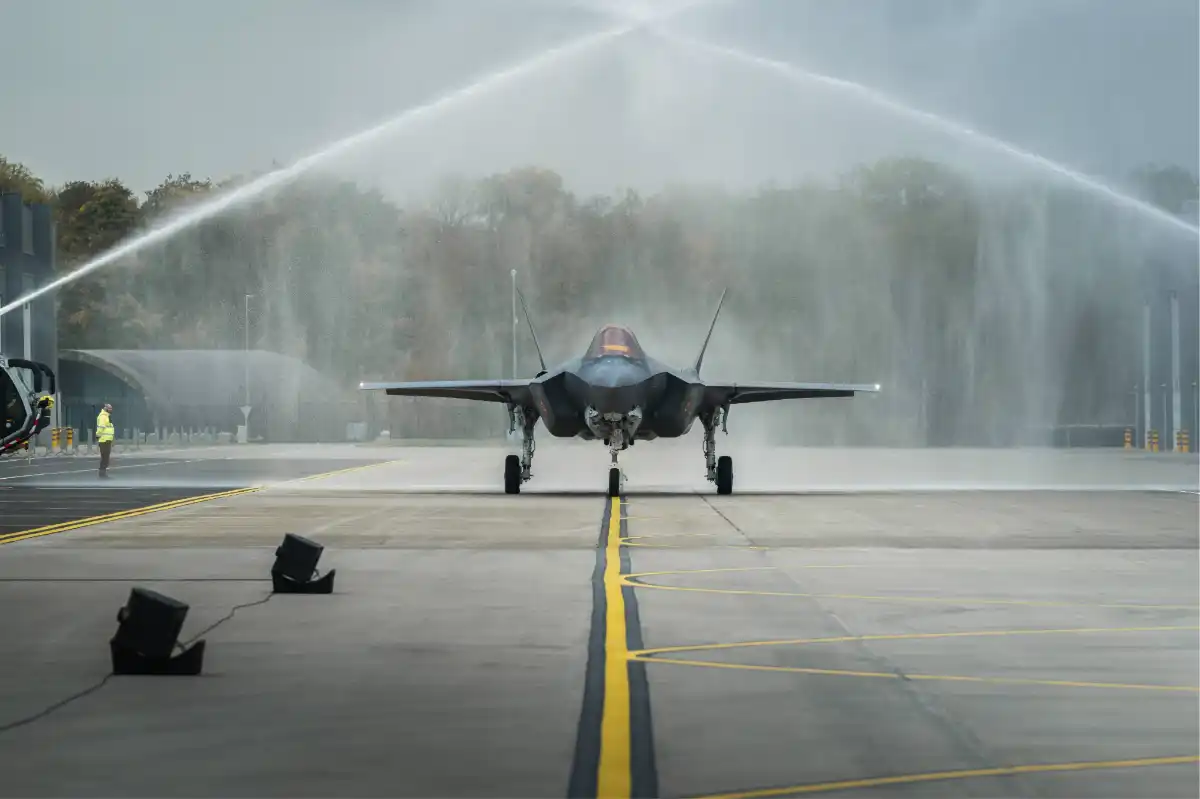
The Lockheed Martin F-35 Lightning II is transforming European air power, but purchasing the aircraft is only one part of the enormous investment required to operate it. Across NATO, air bases that once supported Cold War-era fighters are being rebuilt with new hardened shelters, maintenance facilities, security systems, runways, simulators, weapons infrastructure, and specialized support areas. In several cases, the infrastructure bill is reaching hundreds of millions of euros, while one German base is now facing a reconstruction cost measured in billions.
The reason is straightforward: the F-35 is not simply another fighter replacing an older aircraft on an existing parking ramp. Its low-observable design, advanced mission systems, specialized maintenance requirements, and NATO interoperability standards demand a much more sophisticated operating environment. Bases must also be prepared for the specific missions assigned to each country’s aircraft, including the alliance’s nuclear-sharing mission at selected facilities.
Europe’s F-35 expansion therefore represents a construction program almost as significant as the aircraft procurement itself. Belgium, Poland, Germany, and the United Kingdom are all spending heavily to create or expand Lightning II operating locations. While the scale and purpose of each project differ, together they demonstrate how deeply the F-35 program is reshaping NATO’s European infrastructure.
RAF Marham, United Kingdom: Expanding an Established F-35 Base
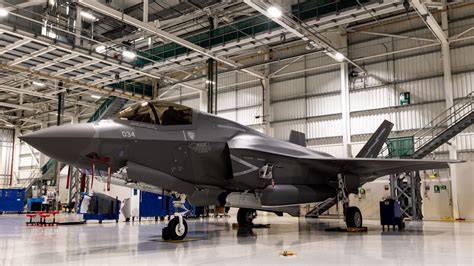
RAF Marham in Norfolk is the most mature F-35 operating location among the five bases discussed here. The United Kingdom began receiving its first F-35Bs there in 2018, when 617 Squadron, famously known as the Dambusters, became Britain’s first operational F-35 unit. The initial transformation was already a major undertaking. Project Anvil involved roughly £500 million of construction and rebuilt approximately 90 percent of the airfield’s operating surfaces while adding new maintenance, training, and mission-planning facilities.
The work at Marham is now entering another phase as Britain prepares to accommodate a larger Lightning Force. The base is being expanded for the Royal Navy’s 809 Naval Air Squadron, which will become another front-line F-35 unit. The additional infrastructure is also important because Britain has announced plans to acquire 12 F-35A aircraft, adding a conventional land-based variant to a force previously centered on the short-takeoff-and-vertical-landing F-35B.
The UK’s Defence Infrastructure Organisation confirmed a new construction package valued at £90 million excluding VAT, rising to as much as £108 million including VAT. The contract is scheduled to run from February 2026 through March 2029 and will provide the infrastructure required for 809 Squadron. Compared with some continental European projects, this is a relatively contained investment because Marham already possesses an established F-35 ecosystem.
That distinction matters. Britain is expanding an operating base rather than creating an F-35 facility almost from the ground up. Maintenance expertise, personnel, logistics arrangements, training infrastructure, and much of the specialized support network are already present. Marham therefore illustrates one side of Europe’s F-35 expansion: the cost of increasing capacity at a mature Lightning II hub rather than completely transforming an aging Cold War airfield.
Florennes Air Base, Belgium: Building a New F-35 Infrastructure Complex
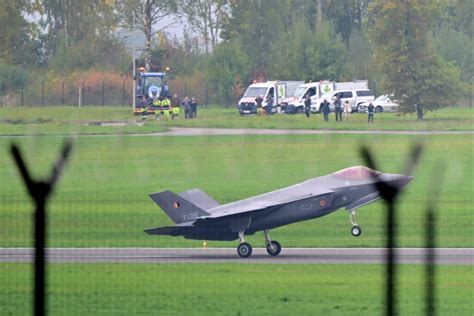
Belgium’s transition to the F-35 is requiring a far more extensive transformation at Florennes Air Base in Wallonia. The base began receiving F-35As in 2025 and is becoming one of the country’s two primary Lightning II locations. Much of its existing infrastructure dates from the 1950s and 1960s, creating a substantial gap between the requirements of modern fifth-generation fighters and the facilities originally built for earlier generations of aircraft.
Belgium ultimately decided to maintain both Florennes and Kleine-Brogel rather than consolidate its future F-35 fleet at one location. The decision gives the country geographically distributed fighter capacity, with aircraft divided between Wallonia and Flanders. That arrangement also means Belgium must invest in two substantial infrastructure programs rather than concentrating all of its spending at a single base.
The Florennes project covers almost 538,000 square feet, or about 50,000 square meters, of new infrastructure. A Belgian-Dutch-American consortium led by Jan De Nul, with Arcadis and Burns & McDonnell involved in the design work, is delivering the complex under a 10-year design-build-maintenance arrangement. The program includes 16 aircraft shelters, a six-aircraft maintenance hangar, four flight simulators, and a dedicated Quick Reaction Alert area.
Construction began in the summer of 2022, making the project a long-term transformation rather than a simple renovation. The scale of the new complex reflects the reality that an F-35 base needs far more than parking positions. The aircraft must be protected, maintained, mission-planned, serviced, trained for, and rapidly launched while operating inside NATO’s wider command and security architecture.
Florennes is therefore one half of Belgium’s roughly €600 million investment in infrastructure for its F-35 fleet. Its sister base at Kleine-Brogel has a similar physical scale but a substantially different strategic responsibility, which makes the two projects particularly revealing when examined separately.
Kleine-Brogel Air Base, Belgium: F-35 Infrastructure for NATO Nuclear Sharing
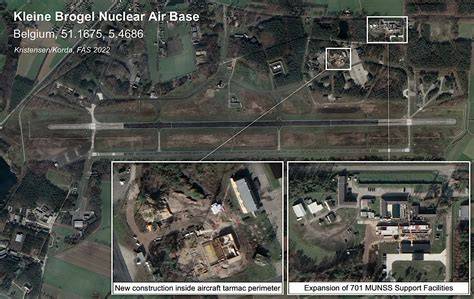
Kleine-Brogel in Limburg is receiving infrastructure broadly comparable to Florennes, but its mission gives the project another layer of complexity. The base is one of NATO’s European locations associated with the storage of US B61 nuclear bombs, making it part of the alliance’s nuclear-sharing architecture. That means its F-35 facilities must support not only conventional fighter operations but also exceptionally demanding security and weapons requirements.
Belgium’s combined investment for Florennes and Kleine-Brogel is approximately €600 million, with each base accounting for roughly €300 million. The Kleine-Brogel construction program broke ground in May 2024 and is scheduled for handover in 2027, approximately two years behind the Florennes project because Belgium chose to sequence the two major builds.
The physical requirements are substantial. Like Florennes, Kleine-Brogel is receiving an approximately 50,000-square-meter complex designed around the operational needs of the F-35A. But the nuclear role means security architecture becomes particularly important. Hardened facilities, controlled perimeters, specialized weapons infrastructure, and procedures supporting nuclear-certified operations all add complexity beyond that associated with an ordinary fighter base.
Belgium initially planned to operate 34 F-35As, with plans to expand the fleet to 45 aircraft through an additional order. As a result, the infrastructure being constructed today is not simply an accommodation project for the first aircraft. It is part of a longer-term effort to create the facilities required for Belgium’s future fighter force while preserving the country’s role within NATO’s nuclear-sharing arrangement.
Łask Air Base, Poland: A $700 Million F-35 Transformation on NATO’s Eastern Flank
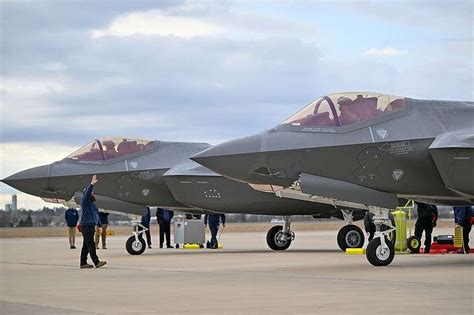
Poland’s Łask Air Base represents a different strategic requirement. Located approximately 380 kilometers from Belarus and about 530 kilometers from Kaliningrad, the base sits on NATO’s eastern flank and is being transformed to operate one of Europe’s newest F-35 fleets. Poland’s acquisition of 32 F-35As, associated with an approximately $4.6 billion aircraft order, is accompanied by a substantial investment in the infrastructure needed to support them.
The transformation at Łask began in 2022 and extended far beyond constructing new aircraft shelters. According to figures cited by Polish officials, preparing the base for F-35 operations cost approximately $700 million, or around 2.5 billion Polish zlotys. The work encompasses more than a dozen individual projects covering the operational, logistical, and utility requirements of a modern fifth-generation fighter base.
New facilities include an operations center and maintenance and repair complex, while the base’s energy, water, sewage, and fuel systems are also being upgraded. Security zones have been rebuilt, and the runway has undergone major reconstruction, including hardened surfaces, modern drainage, and de-icing capabilities. These details show why the infrastructure bill can approach a significant fraction of the aircraft acquisition cost.
Łask welcomed Poland’s first three F-35As in May 2026, and the base received US accreditation for F-35 operations in March of the same year. The arrival of the first aircraft marked the completion of a transformation that had begun years earlier, but it may not represent the end of the investment cycle. Polish officials have indicated plans for two additional F-35 squadrons beyond the existing 32-aircraft order, potentially creating another wave of construction requirements at Łask and other Polish bases such as Świdwin.
The project also illustrates how geography influences F-35 basing decisions. Poland’s aircraft are being introduced into a region where NATO’s eastern defense posture has become a major strategic priority. The infrastructure therefore has to support advanced aircraft operations while providing the hardened facilities, security, communications, and logistical resilience expected from a modern front-line air base.
Büchel Air Base, Germany: The Billion-Euro F-35 Nuclear Base Rebuild
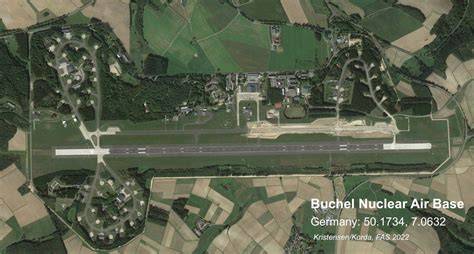
The largest infrastructure project on this list is at Büchel Air Base in Germany, where the F-35A is replacing the Luftwaffe’s aging Panavia Tornado in the country’s nuclear-sharing role. Büchel is the only German location associated with the storage of US B61 nuclear weapons and the only German air base certified to support nuclear-capable aircraft.
That mission makes the F-35 transition fundamentally different from a conventional fighter replacement. Germany cannot simply remove its Tornados and park F-35As in the same shelters. The entire environment surrounding the aircraft must be rebuilt to support modern fighter operations while maintaining the security and readiness requirements associated with NATO’s nuclear deterrent.
The reconstruction began with an estimated cost of roughly €700 million, but that figure has increased dramatically. The project is now expected to cost approximately €2 billion, with rising material prices, the complexity of highly secured construction, and shortages of skilled personnel among the factors cited for the increase.
The work includes new double-fenced security perimeters, hardened aircraft shelters, upgraded runways and taxiways, and modernization of the underground WS3 Weapon Storage and Security System used for nuclear weapons storage. These are not cosmetic improvements. They represent the physical infrastructure necessary to operate a fifth-generation fighter at one of NATO’s most sensitive European locations.
Germany ordered 35 F-35As through a Bundestag-approved package worth roughly €10 billion, with deliveries to Büchel expected to begin in 2027. The aircraft will gradually take over the role currently performed by the Tornado, creating a direct link between Germany’s fighter modernization program and the much larger reconstruction effort taking place at the airfield.
Büchel’s rising cost also demonstrates why the infrastructure side of the F-35 program can become so expensive. A modern fighter base must combine aircraft support facilities with communications, security, weapons storage, utilities, hardened structures, and specialized operational systems. When the base is also responsible for a nuclear mission, virtually every layer of that infrastructure carries additional requirements.
Why Europe’s F-35 Expansion Requires So Much Construction
The five projects reveal several different reasons behind Europe’s growing F-35 infrastructure bill. At Marham, Britain is expanding an already mature F-35 installation. At Florennes, Belgium is replacing decades-old facilities with a modern fifth-generation fighter complex. At Kleine-Brogel, a similar physical transformation is combined with nuclear-sharing requirements. Poland is building a highly capable F-35 operating base on NATO’s eastern flank, while Germany is rebuilding a nuclear-certified airfield on a scale that now approaches €2 billion.
The construction also extends beyond the visible aircraft shelters. F-35 operations depend on specialized maintenance spaces, mission-planning facilities, secure communications, simulators, fuel systems, weapons infrastructure, power supplies, drainage, security zones, and reliable runways and taxiways. The aircraft may attract the headlines, but these supporting systems determine whether an air base can actually generate sustained combat power.
Two additional European projects underline the breadth of the transformation. In the Czech Republic, Čáslav Air Base has received approval for an approximately €213 million runway and taxiway reconstruction ahead of the country’s planned F-35A acquisition. Meanwhile, Italy is investing €112.6 million at Trapani-Birgi to establish Europe’s first F-35 pilot training center outside the United States, creating another major piece of the European Lightning II support network.
The broader pattern is clear: Europe’s F-35 expansion is becoming an infrastructure program spread across multiple generations of airfields. Some bases are being upgraded, others are effectively being rebuilt, and nuclear-certified locations require an even more demanding combination of hardened construction and security infrastructure.
As additional European F-35s arrive, the pressure on NATO infrastructure will not disappear when the first aircraft are delivered. New squadrons require additional shelters, personnel facilities, maintenance capacity, simulators, weapons support, and resilient utilities. Poland’s potential future squadrons and Britain’s expansion at Marham already point toward continued construction after the first generation of projects is completed.
The F-35’s European expansion is therefore about much more than aircraft numbers. Billions of dollars, euros, and pounds are being invested in the physical foundations of fifth-generation air power, with each country adapting its bases to a different combination of operational, geographic, and alliance requirements. From Marham’s incremental expansion to Büchel’s multibillion-euro reconstruction, these projects show that bringing the F-35 to Europe requires rebuilding the airfields around the aircraft as much as acquiring the aircraft themselves.