When an airline signs for a new jet, the engine choice is supposed to be one of the few cards in its hand. General Electric, Rolls-Royce and Pratt & Whitney have spent most of the jet age fighting for every order, undercutting one another on fuel burn, maintenance costs and long-term support. Yet on four of the most recognizable airliners flying today, the Boeing 737 MAX, the Airbus A350, the Airbus A220 and the Embraer E-Jets E2, that card has quietly been removed from the deck. Carriers can negotiate the price of the aircraft, the delivery schedule and the cabin configuration. They cannot negotiate the engine. One manufacturer builds it, and only that manufacturer builds it.
This arrangement is known in the industry as sole-source engine selection, and it is not a quirk of one struggling program. It is a deliberate strategic choice made by some of the most commercially sophisticated manufacturers in the world, from Boeing’s decision to pull CFM International into the 737 family in 1980 to Airbus designing the A350 around a single Rolls-Royce powerplant. Understanding why that choice keeps getting made, and what it costs the airlines when it does, explains a great deal about how a modern jet is conceived, sold and eventually kept flying.
The logic begins decades before the first revenue passenger boards. A commercial aircraft program is a multi-billion-dollar bet on a twenty-to-thirty-year production run, and the engine is the single most influential component in the vehicle. It determines the aircraft’s fuel burn on the routes it must fly, its field performance on short runways, its noise footprint around airports with curfews, and its emissions profile against regulations that tighten with every rulemaking cycle. The engine is also, by a wide margin, the largest recurring cost for the operator after labor, because maintenance visits and hot-section overhauls recur for the entire life of the airframe. A manufacturer that treats the engine as a commodity to be bolted on at the end has already conceded most of the architectural decisions that make a program competitive.
How One Engine Saves Hard Money on Every Airframe
The first force pushing manufacturers toward a single source is the sheer cost of accommodating a second one. Engines are not interchangeable modules. They differ in diameter, length, weight, thrust rating, bypass ratio, accessory gearbox layout, bleed-air configuration and the way heat and vibration pass through the mounting structure into the wing. Fitting a second engine option onto one airframe means re-designing the nacelle and pylon, re-analyzing the wing loads, re-tuning the flight envelope protections, routing new wiring and fuel plumbing, and proving all of it again to regulators. Each alternative engine effectively becomes a second aircraft program grafted onto the first, something engineers politely call “installation work” and finance departments call “billable engineering months.”
A sole-source design eliminates that entire layer of duplicated work. The airframe team knows exactly which engine it is integrating from the first loft line, so the wing can be optimized around its specific inlet performance and exhaust flow, the landing gear can be sized around its actual weight, and the nacelle can be shaped for its fan cowl. Every kilogram saved in that optimization converts directly into fuel burn and payload, and every month cut from the integration schedule converts into time on the market before a competitor’s clean-sheet design arrives. For a narrowbody priced to sell in the thousands, those margins compound across the fleet.
The savings continue after entry into service. A single engine configuration gives the manufacturer one production line to plan around, one certification basis to maintain, one spare-parts catalog and one maintenance-training curriculum to standardize across every airline that buys the aircraft. Airbus has built a substantial competitive advantage on the A220, originally the Bombardier C Series, by designing it around the Pratt & Whitney PW1500G from the outset, so that every operator’s engineers, technicians and tooling are studying the same engine book on the same aircraft. Meanwhile, A320neo customers who chose the competing CFM LEAP-1A face a different engine, a different set of recurring inspections and a different maintenance planning manual than those who chose the PW1100G-JM, a genuine cost of choice.
The A350, A220 and E2: Four Programs, One Philosophy
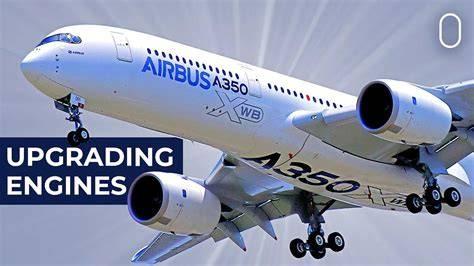
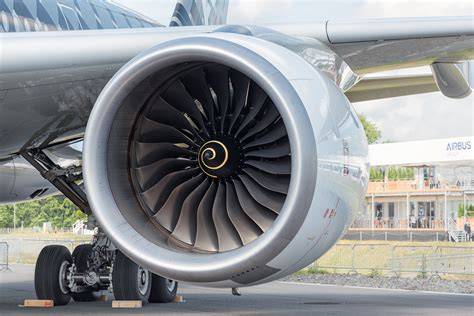
The Airbus A350 is the cleanest illustration of the strategy at work. Every A350 delivered has flown on Rolls-Royce Trent XWB engines, with the A350-900 powered by the Trent XWB-84 and the larger A350-1000 powered by the Trent XWB-97, producing roughly 84,000 lb of thrust and 97,000 lb respectively. Airbus did not offer a GE or Pratt & Whitney alternative, a deliberate divergence from the philosophy of its own A330 and A320 programs. The logic was architectural: the A350 was designed as a long-range widebody intended to consume significantly less fuel per seat than the aircraft it replaced, and the engine’s very high bypass ratio and wide-chord fan were integral to that promise rather than optional accessories to it. When you build the airframe around a compression ratio and a fan diameter, a competing engine with different numbers is no longer a plug-in option; it is a structural reconsideration.
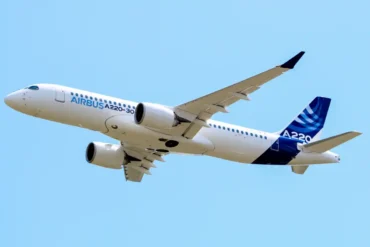
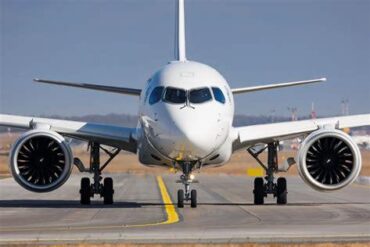
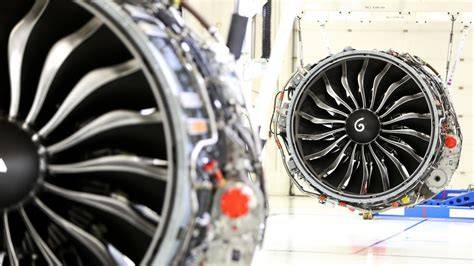
The same reasoning holds on the opposite end of the market. The Airbus A220 flies exclusively on the Pratt & Whitney PW1500G geared turbofan, whose distinctive architecture allows the fan and the low-pressure turbine to spin at different, individually optimized speeds, a design that improves propulsion efficiency without requiring turbines to survive fan-tip speeds. Pratt & Whitney earned FAA 180-minute ETOPS certification for the PW1500G in 2018, a milestone that mattered enormously for an aircraft intended to fly thin transatlantic routes. Embraer followed the same doctrine with the E-Jets E2 family: the E190-E2 and E195-E2 use the PW1900G family, while the smaller E175-E2 was designed around the PW1700G. In three distinct market segments and on two continents, the same conclusion held. None of these programs treats a second engine supplier as a serious commercial option, and not one has suffered in the market for lacking one.
What the Engine Maker Gets for Giving Up the Option War
For Rolls-Royce, Pratt & Whitney or CFM, landing an exclusive contract is a roughly thirty-year annuity. Every aircraft delivered carries a full set of engines, but the money that sustains a manufacturer comes after delivery: spare powerplants, replacement components, hot-section overhauls, repairs, technical support and the data services that now accompany every engine. An installed fleet is a captive customer base, and exclusivity means that base can never be poached by a rival that undercuts maintenance pricing on a competing engine option. When an airline orders a hundred A350s, Rolls-Royce is not merely selling two hundred engines; it is placing two hundred engines into an ecosystem that will call it back every few thousand flight cycles for decades.
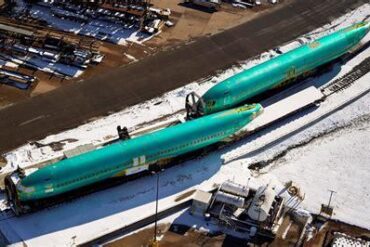
The Boeing 737 story makes the arithmetic vivid. On October 31, 1980, Boeing and CFM signed an agreement making the CFM56-3 the sole powerplant for the 737-300, -400 and -500 family, a deal the partners privately expected would generate sales of perhaps 400 aircraft. By the end of the Classic production run in 1999, Boeing had delivered 1,987 Classic 737s carrying 3,974 CFM56-3 engines, roughly five times the original assumption. Boeing then chose CFM again, exclusively, for the Next Generation 737, and again for the MAX, where the LEAP-1B was developed over a six-year program specifically for the airframe. Each generation compounded the last into the most successful commercial engine franchise in history, and CFM got there not by winning a competition on the MAX but by never having to enter one.
Boeing reaped a parallel harvest. It managed one engine partner rather than three through development, production and certification, coordinated a single set of technical requirements, and could promise airlines a standardized, well-understood powerplant that every airport in the world supports. The jet and the engine became one product line with one failure mode to manage and one supplier to hold accountable.
How a Single Supplier Becomes a Single Point of Failure
The costs of that concentration are hidden in calm markets and become unmissable when something breaks. With two certified engine options, a durability crisis at one supplier damages one part of the fleet while the other half keeps flying; an exclusive arrangement lets a single manufacturing defect reach every airframe an airline has ordered. When the sole supplier stumbles, the airframe manufacturer cannot simply tell the airline to install the competition’s engine, because no competitive installation exists, no certification basis exists and, in the A350’s case, no structural provisions exist. The fix is not a purchase order but a new aircraft program.
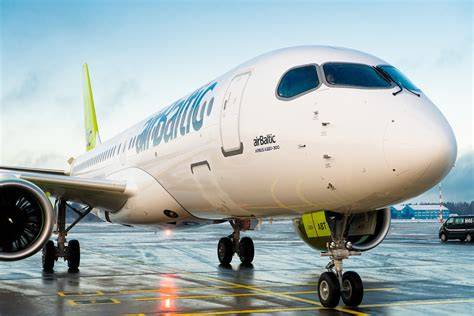
The Pratt & Whitney geared turbofan episode shows what that means for real networks. A manufacturing defect involving contaminated metal powder forced airlines worldwide to pull engines for inspection and send aircraft to parking aprons. Wizz Air reported 41 aircraft grounded in September 2024 from the inspections, while airBaltic, whose entire fleet is exposed to the same engine, was forced to cut capacity hard: it canceled 4,670 flights for summer 2025, axed 19 routes and reduced frequencies on 21 more. For airBaltic, the PW1500G is not one option among several; it is the only engine its A220s will ever carry, which means a supply chain problem inside a single supplier’s factory became a summer timetable emergency across an entire airline.
The same concentration risk attaches to the 737 MAX, whose entire global fleet depends on the LEAP-1B, and to the A350, whose operators depend on Rolls-Royce’s Trent XWB supply and overhaul capacity. Because the aircraft was designed around the engine, there is no engineering path to a rapid engine substitution, and every maintenance capacity shortfall at the supplier becomes a schedule issue for airlines and a delivery issue for the manufacturer. Engines cannot be sourced from a competitor the way a seat or an avionics box can, and this asymmetry is exactly why sole-source contracts are negotiated with brutally detailed performance, capacity and aftermarket guarantees rather than as simple supply orders.
The A320neo and 787 Show the Alternative Still Works
None of this amounts to a verdict that sole-source is better. The Airbus A320neo pairs the CFM LEAP-1A or the Pratt & Whitney PW1100G-JM, letting airlines split an order between suppliers and play one maintenance proposal against the other at contract renewal. The Boeing 787 likewise offers two engine families, the GEnx and the Rolls-Royce Trent 1000, and in their recent chapter of engine durability troubles the dual-source structure gave airlines a genuine option at the next fleet renewal. The case for offering multiple engines is the case for competitive tension, and the A320neo’s position as the best-selling jet in aviation history suggests it carries real commercial weight.
The pattern that emerges is that sole-source suits programs where architectural optimization matters most and where a compelling integrated product can beat rivals on fuel burn and field performance without offering engine choice. The A350, built to outclass previous-generation widebodies on economics, and the A220 and E2, built to open routes that did not previously exist, are all programs of that character. Programs conceived as broad-market replacements, such as the 737 and the A320, tend to preserve choice because airlines buying hundreds of them want a lever and rival suppliers want a fight.
Is Sole-Source Engine Selection Sustainable for the Next Generation?
The next generation of single-aisles may test the model more severely than anything so far. Future airframes are expected to arrive with far higher bypass ratios or open-fan architectures, which will bind the engine and airframe more tightly, not less, and increase the case for designing around one powerplant. At the same time, the maintenance crisis in geared turbofans has elevated spare engine capacity and component supply from a footnote to the central issue in engine procurement, and airlines now scrutinize a supplier’s production ramp and overhaul network as closely as its fuel burn. A manufacturer weighing exclusivity has to be confident not just that its chosen engine is the best performing, but that its supplier can produce tens of thousands of engines and service them for thirty years without a single defective batch cascading across entire fleets.
That balance is what every program of the past four decades has really been deciding. The Boeing 737 has flown exclusively on CFM engines from the Classic through the MAX, the A350 exclusively on the Trent XWB, and the A220 and E2 exclusively on Pratt & Whitney geared turbofans, each having chosen integration and long-term partnership over flexibility that its customers could have used in a crisis. For passengers the distinction is invisible until something breaks, and then it is not: the aircraft parked on a distant apron waiting for a single supplier’s engine is the visible price of a procurement decision made by engineers and salespeople long before anyone boarded. Whether the next generation of airliners orders that price again, or restores the engine choice airlines once took for granted, will shape not only what airlines fly but how they buy it.