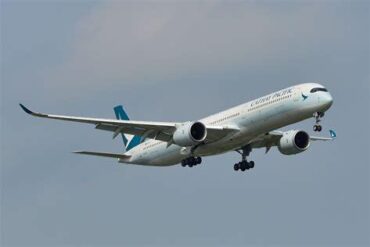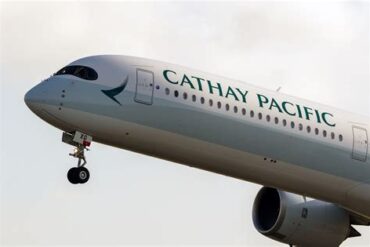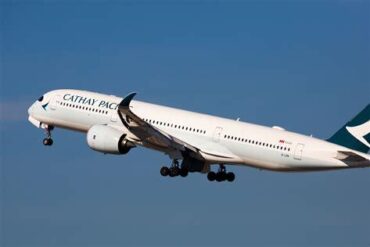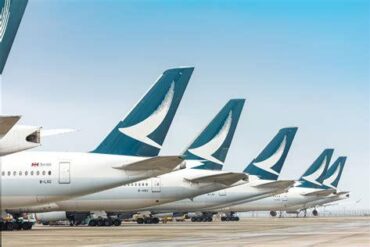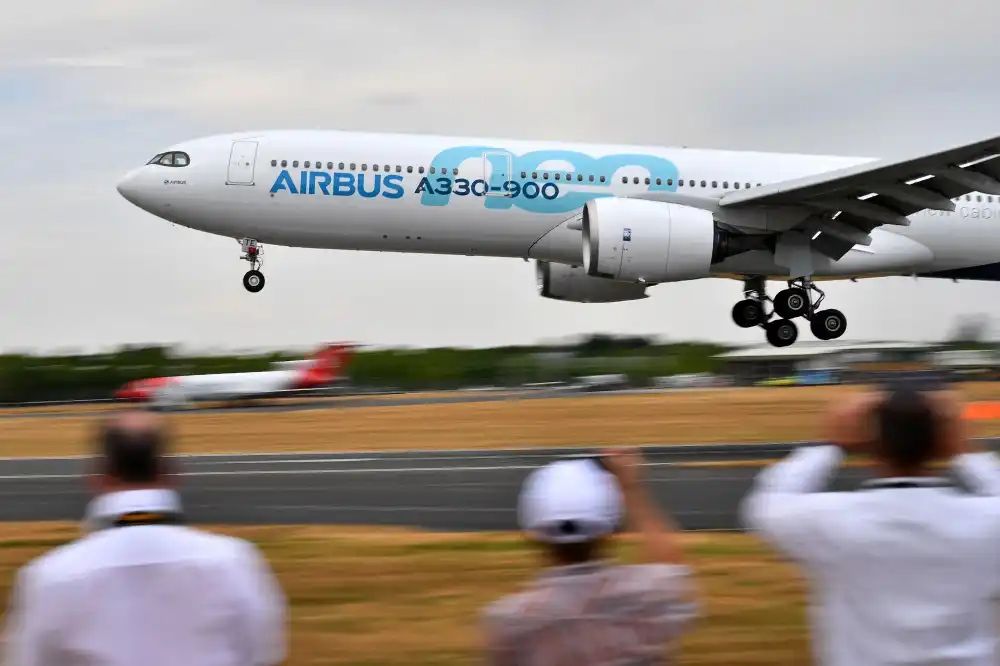
Airbus confirmed on Wednesday that the Cathay Group has placed firm orders for 11 additional A330-900neos and three more A321s, pushing its total commitment to the largest member of the A330neo family to 41 aircraft. The Hong Kong-based carrier already held 30 A330-900s on order before this latest tranche, and the incremental narrowbody deal raises its A321 order book from 27 to 30 frames.
The disclosure lands amid an intensifying order battle between Airbus and Boeing, both of which are working through substantial backlogs across their narrowbody and widebody programmes while continuing to court airlines for fresh commitments. For Cathay, the timing underscores how aggressively the group is protecting its growth pipeline while simultaneously planning to retire a widebody sub-fleet that first entered service with the airline more than two decades ago.
Cathay Pacific’s Expanded A330-900neo Order and Fleet Renewal Plan
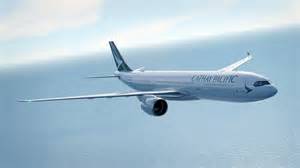
Alex McGowan, Cathay Pacific’s Chief Operations and Service Delivery Officer, framed the purchase as a two-track capacity move. The incoming A330-900neo jets will partly expand and upgrade the existing fleet, while other airframes in the batch are earmarked as replacements for older aircraft still flying in the group’s colours. That dual purpose matters because Cathay’s A330-300 fleet is ageing fast: the airline operates 43 older-generation A330-300s, six of which are currently listed as inactive, with an average age of 18.2 years. No A330-900neos have yet been delivered to Cathay, so the first of the 41 committed frames will mark the type’s debut with the carrier.
The A330neo is not the group’s only renewal front. Cathay has eight A350F freighters and 35 Boeing 777-9s on order, and the 777-9s are expected to eventually replace the oldest sub-fleet in the airline’s inventory, the Boeing 777-300, of which 14 remain active at an average age of 25.3 years. Adding the new commitments to Cathay’s previous 100 outstanding orders takes the group’s total order book to 114 aircraft.
Benoit de Saint-Exupéry on Airbus Fleet Efficiency and Capacity Flexibility
Benoit de Saint-Exupéry, Airbus’ EVP Sales, Commercial Aircraft, positioned the deal in fleet-commonality terms. He said that together the A330-900 and A321neo aircraft give the airline the flexibility to match capacity to demand, bringing versatility while benefiting from lower fuel burn and the efficiencies of a streamlined Airbus fleet. Airbus added that it was proud to support the Cathay Group through what it described as its exciting next stage of fleet renewal and growth.
That argument rests on the A321 backlog. Cathay currently flies 18 A321 aircraft, 17 of which are listed as active, and with all 30 orders still outstanding, the type is positioned to grow its footprint rather than merely sustain it.
Cathay Pacific A330 Routes: Taipei, Perth and the Intra-Asia Network
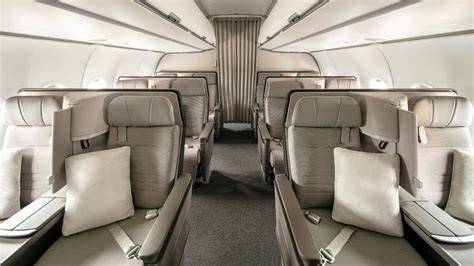
Despite carrying widebody proportions, Cathay Pacific’s A330s are deployed overwhelmingly on shorter legs. According to schedule data from Cirium, the type’s top route from Hong Kong (HKG) is to Taipei (TPE), a sector lasting under two hours. Apart from a single trip to Perth Airport (PER) and a handful of services to Cairns Airport (CNS), every A330 flight this year has stayed within Asia, a deployment pattern that explains why a relatively economical widebody suits Cathay’s regional network so well.
Cathay reserves its larger widebodies for long-haul duty. At London Heathrow (LHR) and John F. Kennedy International Airport (JFK), the carrier has operated the 777-300ER, the A350-900 and the A350-1000, while Frankfurt (FRA) and Los Angeles International (LAX) have seen only the 777-300ER this year.
Cathay Pacific Fleet Size and Airbus-Boeing Order Backlog Momentum
Cathay’s current fleet stands at 181 aircraft, of which 14 are inactive, according to data from ch-aviation. The average age of the fleet is just 3.6 years, a figure that reflects an unusually young inventory even by Asia-Pacific standards and one that the incoming A330-900neos and A321s will help maintain as the 18-year-old A330-300s and 25-year-old 777-300s cycle out.
The order also feeds a wider picture of how the two planemakers are competing for widebody and narrowbody traction. Airbus cannot deliver on the promise of lower fuel burn unless its order book supports production through the decade, and Boeing’s 777-9 remains central to Cathay’s future long-haul plan even as the group deepens its Airbus relationship. Neither manufacturer has finished booking demand from carriers eager to lock in delivery slots before ageing airframes force retirement decisions, which is why both continue to announce incremental commitments from established customers.
For Cathay specifically, the arithmetic now reads clearly: 41 A330-900neos and 30 A321s from Airbus, eight A350Fs, and 35 777-9s from Boeing. The group has built a renewal roadmap that covers its regional widebody workhorse, its narrowbody feeder capacity and its long-haul flagship in a single coordinated cycle, and Wednesday’s order adds 11 more reasons to believe the A330neo has become the backbone of that plan.