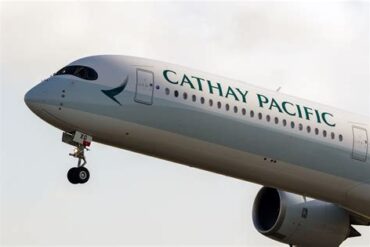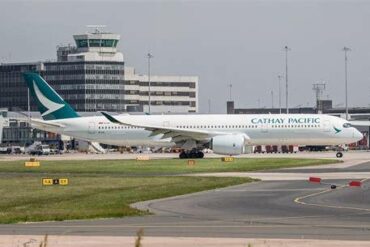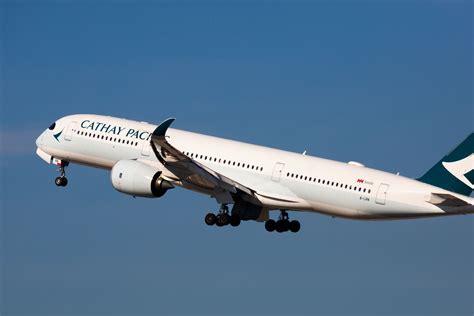
Passengers aboard a Cathay Pacific flight from Brisbane to Hong Kong experienced terrifying moments after severe turbulence violently shook the aircraft during the final stage of the journey, leaving ten people injured and forcing eight to seek hospital treatment after landing. The incident unfolded aboard Cathay Pacific flight CX156, operated by an Airbus A350-900, as the long-haul service approached Hong Kong International Airport early Saturday morning.
The turbulence struck suddenly while cabin crew were serving meals, turning an otherwise routine overnight flight into a scene of chaos. Food trays, drink containers, and personal belongings were reportedly thrown into the air as the aircraft abruptly dropped in altitude, causing panic among passengers and injuries among crew members moving through the aisles.
Cathay Pacific later confirmed that six cabin crew members and four passengers sustained minor injuries during the incident. Emergency medical teams boarded the aircraft immediately after it landed safely in Hong Kong at approximately 6:45 a.m. local time.
According to Airport Authority Hong Kong, firefighters, paramedics, and ambulance personnel had already been placed on standby before the aircraft touched down, allowing responders to move quickly once the Airbus arrived at the gate.
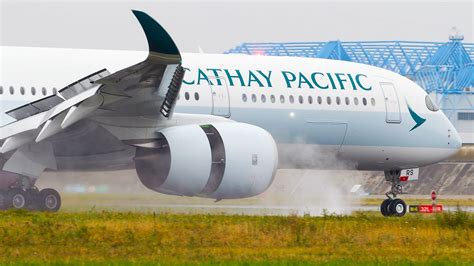
Passengers Describe Sudden Mid-Air Drop Like A Theme Park Ride
Several passengers compared the violent motion to a sudden freefall on an amusement park drop tower. One traveler described the sensation as if the aircraft had “instantly fallen out of the sky,” saying screams erupted throughout the cabin as unrestrained objects flew through the air.
The turbulence reportedly hit without warning, leaving little time for flight attendants to secure themselves. Because meal service was actively underway, cabin crew were particularly exposed, pushing carts through aisles and assisting passengers when the aircraft encountered the severe atmospheric disturbance.
Images shared online after the flight showed debris scattered across the cabin floor, including overturned meal trays, napkins, and spilled beverages. One widely circulated photograph captured an injured flight attendant being transported on a stretcher while wearing a cervical collar, highlighting the physical impact of the event.
Despite the intensity of the turbulence, Cathay Pacific confirmed there was no structural damage to the aircraft and no operational disruptions following the incident.
In a statement, the airline said medical personnel assessed affected passengers and crew immediately after arrival and provided appropriate assistance. Eight individuals were later transferred to North Lantau Hospital in Tung Chung for additional evaluation and treatment, while two others received medical attention at the airport.
Why Cabin Crew Face Greater Danger During Turbulence
While turbulence can be frightening for everyone onboard, cabin crew consistently face the highest injury risk during sudden severe events. Unlike seated passengers who may already have seatbelts fastened, flight attendants are often standing, walking, or handling heavy service carts when turbulence strikes unexpectedly.
That vulnerability becomes especially dangerous during meal service. Hot beverages, metal carts, and unsecured equipment can instantly become hazardous projectiles inside the confined aircraft cabin.
Aviation safety experts note that most injuries linked to turbulence occur not because aircraft are structurally endangered, but because people inside the cabin are unrestrained when abrupt vertical movement happens. Even moderate turbulence can throw standing crew members into ceilings, seats, or galley equipment.
Pilots typically warn cabin crews before entering anticipated turbulence zones, but the most dangerous disturbances frequently develop with little or no radar indication. Clear-air turbulence, which occurs without visible storm clouds, remains particularly difficult to predict.
Passengers seated with seatbelts securely fastened generally avoid serious injuries even during violent turbulence episodes. Airlines worldwide therefore advise travelers to keep their seatbelts fastened whenever seated, regardless of whether the illuminated seatbelt sign is switched on.
Similar Turbulence Incidents Raise Industry Concerns
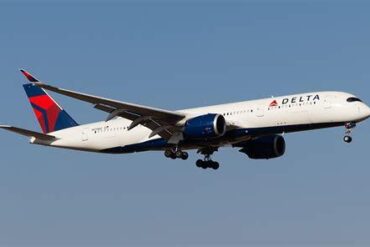
The Cathay Pacific incident closely mirrors several high-profile turbulence events reported across global aviation over the past year. In one widely discussed case involving a Delta Air Lines flight from Salt Lake City to Amsterdam, severe turbulence hurled passengers and service carts into the air, injuring dozens and forcing an emergency diversion to Minneapolis.
Passengers from that Delta flight described sensations nearly identical to those reported aboard CX156, comparing the aircraft movement to an extreme roller coaster plunge. Meal service had also just begun during the Delta incident, once again placing cabin crew in the highest-risk positions.
These repeated patterns have intensified discussion within the aviation industry about turbulence preparedness and onboard safety procedures. Airlines continue reviewing operational protocols designed to reduce injuries during sudden atmospheric disruptions, particularly during service periods when crews are most exposed.
Modern aircraft such as the Airbus A350 are engineered to withstand turbulence far beyond levels typically encountered in commercial aviation. However, even when aircraft remain fully airworthy, violent cabin movement can still create dangerous conditions for those onboard.
Climate Change And The Growing Turbulence Debate
Scientists and aviation researchers increasingly warn that climate change may be contributing to stronger and more frequent turbulence events at cruising altitudes. Rising global temperatures are believed to be altering jet stream behavior and atmospheric wind patterns, creating conditions more favorable for unstable air currents.
Several recent academic studies suggest clear-air turbulence in particular could intensify significantly over the coming decades, especially along heavily traveled long-haul routes across Asia, Europe, and North America.
For airlines, this evolving reality creates operational challenges that extend beyond passenger comfort. Severe turbulence incidents can result in injuries, emergency diversions, operational delays, and growing insurance costs.
For passengers, the message remains straightforward: keeping a seatbelt fastened while seated remains one of the simplest and most effective protections against unexpected turbulence injuries.
On Cathay Pacific flight CX156, that small precaution appears to have made a major difference. While the turbulence transformed the cabin into a chaotic scene within seconds, those securely seated largely escaped serious harm, while crew members working the aisles absorbed the brunt of the incident.