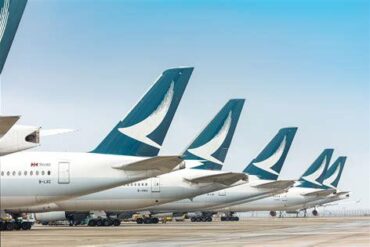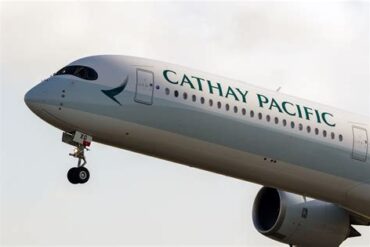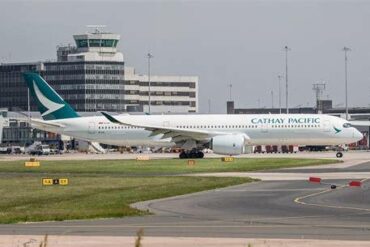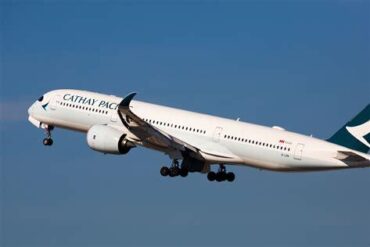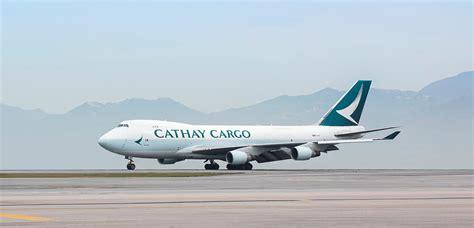
At the heart of Hong Kong International Airport (HKG), the Cathay Pacific Cargo Hub stands as a pulsating nerve center of global trade. Sprawling across 246,000 square meters, this state-of-the-art facility is more than just a logistics marvel — it is a live, breathing barometer of the world’s economic pulse. Every day, from cold-chain pharmaceuticals to luxury wines and high-tech gadgets, the relentless flow of goods through Cathay’s cargo terminals speaks volumes about consumption trends, market demands, and the underlying tremors of geopolitical instability.
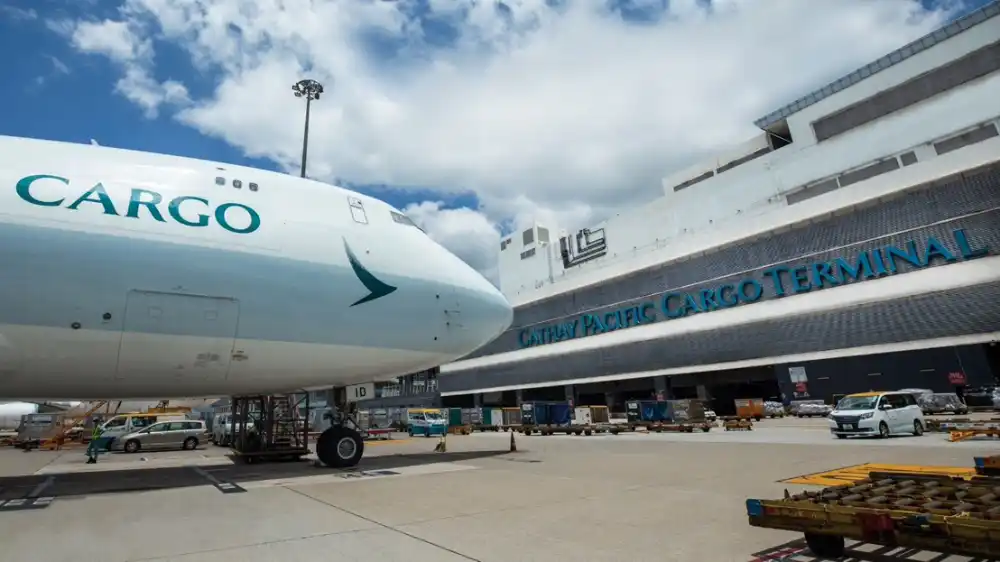
The World’s Busiest Air-Cargo Hub: Why Hong Kong Matters
Hong Kong International Airport is not just another airport — it is the world’s busiest air-cargo hub, moving staggering volumes of high-value freight. Cathay Pacific, the city’s flagship airline, is the single largest contributor, handling over 1.7 million tonnes annually. While air cargo represents less than 1% of global trade by weight, it accounts for a massive 35% of global trade value, underscoring its critical role in the fast-moving supply chain.
This is where urgency meets value. From Italian supercars to artworks in Cadogan Tate crates, and Golden Lily mangoes from the Philippines to Château d’Arche wine, Cathay’s cargo terminal is a high-stakes interchange of time-sensitive, valuable commodities. Its operations mirror global appetites — when the world’s purchasing wanes, so does Cathay’s freight flow. In this way, air cargo volume becomes an early warning system for economic slowdowns.
Economic Insight in Every Pallet
Cathay’s cargo traffic isn’t random; it’s rhythmic. The kinds of goods shipped, their origins, and destinations reflect consumer confidence, industrial momentum, and trade policy effects. For instance, the recent dip in US-bound shipments from China is directly tied to tariff policies under the Trump administration. By eliminating de minimis exemptions on goods under $800 — a key advantage exploited by platforms like Shein and Temu — US-bound air cargo from China dropped by at least 25%.
This single policy change cascaded through the entire logistics ecosystem, forcing a recalibration in cargo strategies. Cathay Cargo, under the direction of Tom Owen, adapted swiftly. Instead of clinging to shrinking lanes, the airline pivoted toward emerging markets like India and Southeast Asia, rerouting their goods through Hong Kong to North America. This adaptability showcases the airline’s non-asset-heavy advantage — they don’t own factories, they own planes. And planes can change direction far more easily than ocean freighters.
The Typhoon Test: Weathering Natural and Political Storms
The physical resilience of the Cathay Cargo hub was recently tested by Super Typhoon Ragasa, a level-10 storm that brought operations to a halt for two full days. Yet, even in the face of nature’s fury, the warehouse rebounded with extraordinary energy. Activity levels surged as teams raced to clear backlogs, underscoring a key trait of high-performance logistics: operational elasticity.
But storms don’t only come from the skies. Geopolitical instability and trade wars continue to churn unpredictably. At the Routes World conference in Hong Kong, Ronald Lam, CEO of Cathay Group, emphasized that the unpredictability of tariffs has created a unique market behavior — a rush ordering phenomenon. As trade conditions shift without warning, companies place accelerated orders to avoid impending cost hikes. This urgency aligns perfectly with air cargo’s strengths: short lead times and global reach.
Pandemic Lessons: Agility in the Face of Crisis
During the COVID-19 pandemic, while passenger traffic collapsed globally, cargo operations surged. Cathay and other airlines quickly converted passenger planes into freighters, stacking cargo where passengers once sat. It was a remarkable display of operational agility, and for some carriers, it was cargo revenue that kept their balance sheets afloat.
This crisis taught the industry an important lesson: strategic flexibility beats rigid forecasting. As Cathay’s executives often repeat, the ability to pivot — even mid-air — separates winners from those who falter. The same doctrine is being applied today in the face of US-China trade tensions, currency fluctuations, and fuel price volatility. Long-term planning remains crucial, but the edge comes from being ready to change course at a moment’s notice.
From Shein to Supercars: A Window Into Consumption Trends
The diversity of cargo handled at Cathay’s hub is another layer of insight into global economics. When fashion shipments from platforms like Shein dip, it’s a signal that low-cost discretionary spending is weakening. When high-value items like supercars or medical tech increase, it points toward capital investment or healthcare urgency.
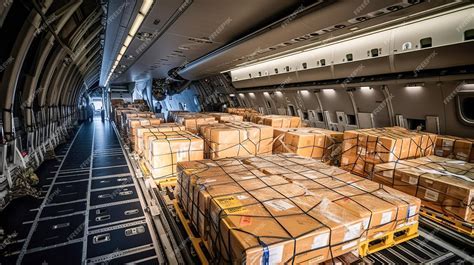
In a single snapshot of Cathay’s warehouse, you might spot:
- A crate of iPhones destined for Southeast Asia
- Insulin shipments bound for hospitals in North America
- Luxury watches heading for private clients in the Gulf
- Industrial robotics from Japan rerouted to new factories in Mexico
Each item tells a story about what markets are buying, where capital is flowing, and which regions are gaining or losing economic influence.
Rebalancing the Global Trade Map
Cathay’s shifting flight routes are a geographic reflection of economic rebalancing. As trade friction with China escalates, we see increased cargo volumes from India, Vietnam, Thailand, and Malaysia, rerouted through HKG before heading to the US and Europe. These changing patterns indicate the gradual regional diversification of manufacturing — a megatrend that will redefine global supply chains in the years to come.
For Cathay Pacific, being headquartered in Hong Kong offers strategic advantages:
- Proximity to multiple emerging manufacturing bases
- Seamless connection to mainland China’s Pearl River Delta
- World-class infrastructure and customs efficiency
- 24/7 operations and robust tech integration
The Future of Air Freight: Data, Speed, and Sustainability
As Cathay looks ahead, the cargo division is embracing digital transformation. Investments in AI-driven inventory tracking, blockchain-enabled documentation, and predictive logistics are expected to make air cargo not only faster but smarter. These tools can help optimize loading efficiency, reduce idle time, and increase visibility across the supply chain — crucial in a world where disruption is the norm.
But there’s also growing pressure on sustainability. Air cargo is carbon-intensive, and stakeholders are demanding cleaner operations. Cathay is investing in next-gen fuel alternatives, optimizing flight paths, and exploring electric ground handling equipment to reduce its carbon footprint.
The trade-off between speed and sustainability will define the next chapter of air cargo. For now, the premium paid for air freight is justified by its precision and time advantage. But in the long run, innovation will have to reconcile these two imperatives.
Conclusion: Cathay Pacific’s Cargo Hub Is a Global Pulse Point
To watch Cathay Pacific’s cargo hub in action is to witness the state of the global economy in real time. It’s a place where policy decisions, consumer habits, trade routes, and technological progress converge. From typhoon-induced backlogs to rerouted flights from Vietnam, every movement across the tarmac reflects larger global shifts.
In this era of uncertainty, one truth remains constant: those who adapt, win. Cathay Pacific’s cargo division exemplifies this ethos — ready to reroute, rebuild, and rebound, all while moving the world’s most essential goods across the sky at near the speed of thought.