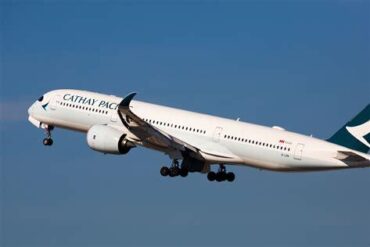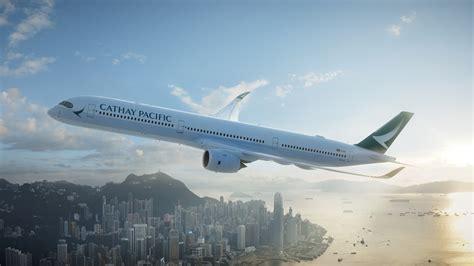
Founded in 1985 as Dragonair and later rebranded as Cathay Dragon, this once-prominent Hong Kong-based regional airline symbolized both the ambitions and complexities of operating within Asia’s dynamic aviation landscape. As a wholly owned subsidiary of Cathay Pacific, it navigated a market shaped by regulatory constraints, aggressive expansion, strategic partnerships, and eventually, the economic fallout of the COVID-19 pandemic. Cathay Dragon’s trajectory from niche regional player to award-winning airline and eventual dissolution in 2020 is a microcosm of the challenges facing mid-tier carriers in a volatile industry.
Founding Amid Restriction: The Origins of Dragonair (1985–1989)
Dragonair was officially established on 24 May 1985 by entrepreneur Chao Kuang Piu, a textile magnate who saw potential in Hong Kong’s aviation space beyond the existing monopoly of Cathay Pacific. The airline received its Air Operator’s Certificate in July 1985, and its maiden flight took off from Hong Kong to Kota Kinabalu, Malaysia. Early operations included charter services to Phuket and six secondary Chinese cities, signaling a clear intent to serve the underutilized regional market.
By 1987, Dragonair had earned the distinction of being the first Hong Kong airline to join IATA, yet it remained hemmed in by Hong Kong’s strict “one-route-one-airline” policy. This de facto barrier prevented Dragonair from competing head-to-head with Cathay on prime routes, forcing the newcomer to focus heavily on mainland Chinese cities, a niche Cathay had previously neglected.
Consolidation and Expansion: The 1990s Evolution
The 1990s began with a seismic shift in Dragonair’s corporate structure. In January 1990, Cathay Pacific, Swire Group, and CITIC Pacific acquired a combined 89% stake, bringing the fledgling airline under strategic control. This allowed Dragonair to finally access the lucrative Beijing and Shanghai routes. It also marked a pivotal expansion in fleet capability with the leasing of Lockheed L-1011 TriStar aircraft.
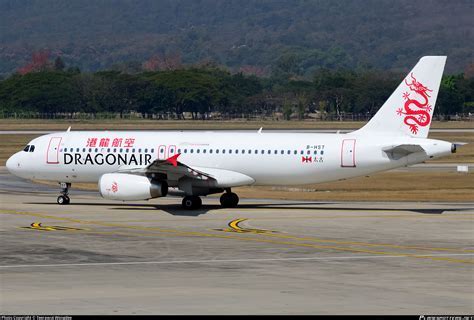
By 1993, Dragonair had inducted its first Airbus A320, growing to six aircraft by the year’s end. The introduction of the Airbus A330 in 1995 enabled longer-range services, positioning Dragonair for broader ambitions. The acquisition of a Hong Kong Stock Exchange listing in 1997 saw China National Aviation Corporation (CNAC) take over as the largest shareholder with a 43% stake, setting the stage for future mainland alignments.
Dragonair played a symbolic role during the transition from Kai Tak to Chek Lap Kok Airport, with Flight 841 being the last commercial flight to land at Kai Tak on 5 July 1998.
Strategic Growth and Cargo Dominance (2000–2004)
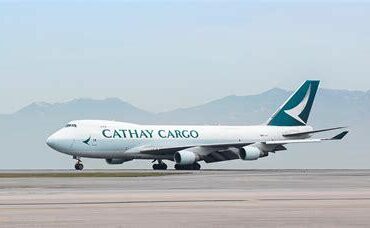
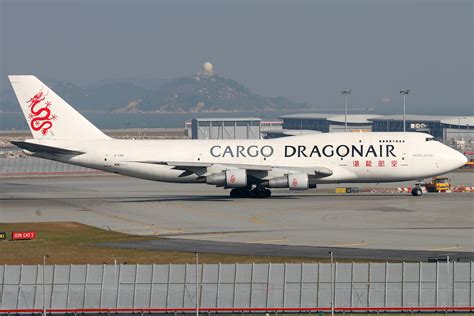
Dragonair entered the new millennium with renewed focus, this time on freight. It launched its first all-cargo service in 2000 with a leased Boeing 747-200F, followed by the acquisition of 747-300 freighters. Destinations quickly expanded to Osaka, Xiamen, Taipei, and Nanjing. Simultaneously, passenger services grew with new routes to Bangkok, Tokyo, and plans for Sydney, Manila, and Seoul.
By mid-2004, Dragonair operated five cargo 747s alongside a fleet of 26 Airbus passenger aircraft, making it one of the most influential cargo players in the region. However, competition with its part-owner Cathay Pacific intensified, especially over access to mainland China routes, leading to mounting internal strategic conflict.
Cathay Pacific Acquisition and the Loss of Autonomy (2005–2009)
The tug-of-war ended on 28 September 2006, when Dragonair became a wholly owned subsidiary of Cathay Pacific. Despite retaining its own AOC and branding, the merger led to significant restructuring: around 5% of the workforce faced retrenchment or transfer, and many of Dragonair’s profitable freight operations were absorbed or canceled. The planned fleet of nine 747 freighters never materialized; existing aircraft were returned or handed over to Cathay by 2010.
While Dragonair retained operational autonomy in theory, in practice it became increasingly dependent on its parent. Cathay now controlled Dragonair’s route approvals, aircraft acquisition, and strategic direction, effectively neutralizing a once-competitive sibling.
Rebranding, Alliances, and Modernization (2007–2016)
A gradual assimilation followed. Dragonair’s Elite loyalty program was merged into Cathay’s Marco Polo Club in 2007, and the airline joined the Oneworld alliance as an affiliate later that year. By 2008, the airline had introduced The Arrival lounge at Hong Kong International Airport and merged several back-end subsidiaries, such as HIAS into HAS, to streamline operations.
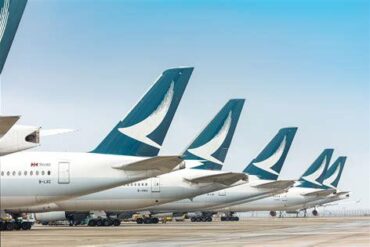
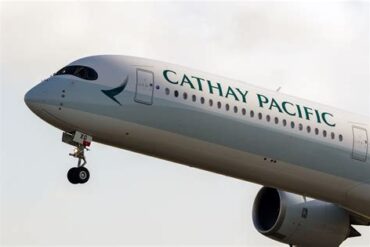
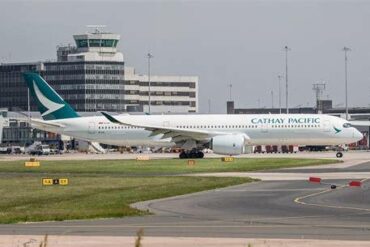
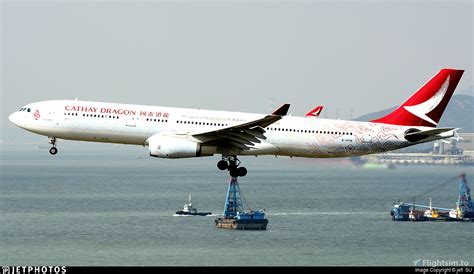
In January 2016, Cathay Pacific announced a full rebranding of Dragonair to Cathay Dragon, in line with a strategy to unify brand architecture. The updated livery retained elements of the Dragonair legacy while adopting Cathay Pacific’s signature tail logo and a light maroon fuselage. Despite these cosmetic changes, Cathay Dragon remained operationally distinct, with its own crew, service standards, and fleet management.
Fleet Composition and Service Model
At its peak, Cathay Dragon operated a fleet of 35 aircraft, including:
- 10 Airbus A320-200s
- 7 Airbus A321-200s
- 18 Airbus A330-300s, with 2 more on order
- 16 Airbus A321neos on future order
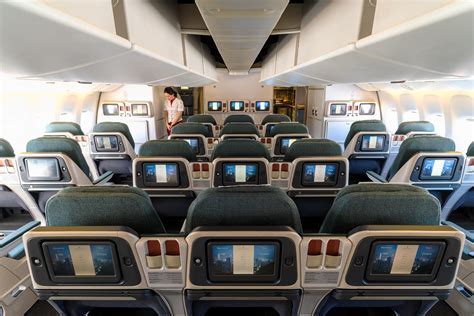
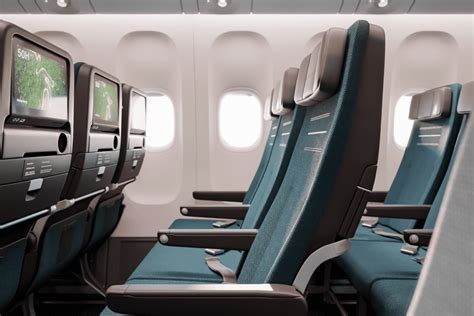
Aircraft were configured in two-class cabins, offering Business and Economy seats. In 2013–14, the entire fleet underwent interior refurbishment to align with Cathay Pacific’s standards, including new seating, StudioKA AVOD entertainment systems, in-seat USB charging, and power outlets.
Service offerings were localized, with regional culinary dishes and multi-language announcements tailored for markets in China, Japan, Korea, and Southeast Asia. On short-haul sectors, some aircraft operated with Economy Class only, emphasizing low-cost operational efficiency.
Route Network and Codeshare Strategy
Cathay Dragon’s network covered 47 destinations, including 22 cities in mainland China—a testament to its original strategic niche. Its codeshare partnerships reflected its affiliation with the Oneworld alliance, including agreements with:
- Cathay Pacific
- Air China
- Air Canada
- American Airlines
- Malaysia Airlines
- Qantas
- Finnair
- Bangkok Airways
- Shenzhen Airlines
- S7 Airlines
This broad interline and codeshare web allowed Cathay Dragon to function as a feeder airline, directing passengers to Cathay Pacific’s long-haul services from Hong Kong.
A Decorated Legacy of Regional Excellence
Despite its turbulent ownership history, Cathay Dragon accrued significant accolades. Among them:
- Skytrax Best Airline China (2002–2007)
- Skytrax Best Regional Airline – Asia (2008–2013)
- TTG Travel Awards Best Regional Airline (2010–2014)
- Business Traveller China Best Economy Class (2005–2015)
- Yazhou Zhoukan Asian Excellence Brand (2010)
Such recognition affirmed the airline’s strong brand equity and consistent service performance in the region.
COVID-19 and the Sudden Termination (2020)
On 21 October 2020, Cathay Pacific announced the immediate closure of Cathay Dragon as part of a sweeping corporate restructuring in response to the COVID-19 crisis. With international air travel at a historic low, Cathay opted to consolidate its short-haul operations under the HK Express low-cost brand. Cathay Dragon’s 2,500+ employees, including cabin crew and pilots, were either laid off or reassigned.
Most of Cathay Dragon’s aircraft were transferred to Cathay Pacific or stored, and select A320s and A321s were moved to HK Express, which would now serve many of the regional routes once operated by Dragonair.
Legacy of an Aviation Pioneer
Cathay Dragon, once known as Dragonair, leaves behind a storied legacy of regional aviation leadership, business adaptability, and cultural resonance. It played a crucial role in opening Hong Kong’s skies to mainland Chinese cities, laid the foundation for Cathay Pacific’s modern regional strategy, and consistently delivered award-winning service despite organizational instability.
Its rise and fall not only echo the volatility of the Asian aviation market but also the fragility of mid-size carriers operating under the shadow of larger airline conglomerates. For many frequent travelers in Asia, Cathay Dragon was more than just a feeder airline—it was a trusted brand that symbolized efficient, comfortable, and culturally nuanced regional travel.