The week began with chaos inside one of Asia’s busiest aviation hubs when a passenger launched a destructive outburst at Hong Kong International Airport (HKG), smashing self-service facilities in a violent early-morning rampage. Viral footage circulating across social media platforms shows the man wielding a metal pole, striking digital kiosks repeatedly as stunned travelers and airport staff looked on. The incident, which unfolded around 6:00 a.m. local time inside Terminal 1, ended with police intervention and the suspect taken into custody.
Authorities later confirmed the perpetrator to be a 35-year-old British tourist, whose actions caused visible structural damage to airport property and briefly heightened security tensions within the terminal. While no passenger injuries were reported, the spectacle of shattered screens and scattered debris created a jarring start to the day for travelers moving through one of the world’s most technologically advanced airports.
Rampage Erupts Inside Terminal 1 Check-In Zone
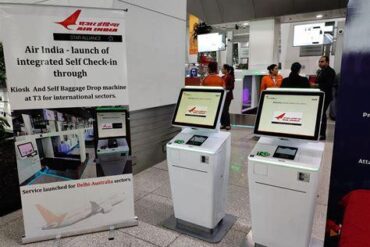
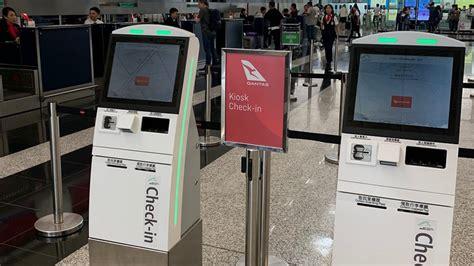
Eyewitness accounts and surveillance clips place the incident at the Aisle J check-in counters, a busy self-service zone designed to streamline passenger processing. These kiosks, typically relied upon for printing boarding passes and baggage tags, became the primary targets of the man’s aggression.
According to statements released by the Airport Authority Hong Kong, security personnel and staff responded rapidly once the destruction began. Verbal warnings were issued, urging the individual to stop before further property damage occurred. When he failed to comply, airport security escalated the situation to police, who moved in and detained him.
Investigators estimate that approximately 10 self-check-in kiosks sustained heavy damage during the outburst. In addition to the machines, the suspect also struck nearby counters and protective railings, amplifying the scale of destruction within the check-in hall.
Frustration With Airport Technology Turns Violent
For frequent flyers, self-service kiosks are a familiar convenience—digital gatekeepers promising speed and autonomy. Yet they are not immune to glitches, user errors, or system slowdowns. Aviation psychologists often note that airports heighten emotional volatility: sleep deprivation, time pressure, and travel anxiety form a combustible mix.
In this case, what may have begun as routine frustration escalated into criminal destruction of airport infrastructure. While minor disputes with machines are commonplace—tapping screens harder, muttering at scanners—the leap to physical violence marked a rare and extreme breach of public order inside a controlled aviation environment.
The symbolism is striking: a lone traveler attacking the very automation designed to accelerate modern mobility. It underscores how aviation efficiency systems, while operationally beneficial, can become lightning rods for passenger stress when expectations collide with technical friction.
Drug Possession Charge Compounds Legal Trouble
The suspect’s legal situation worsened following his arrest. Police detained him at the airport’s bus terminal, where a search uncovered four Viagra pills in his possession. Under Hong Kong law, the medication is classified within regulated pharmaceutical controls and requires a valid doctor’s prescription.
Because no prescription was presented, authorities cited suspicion of possession of “Part 1 poisons,” an offense that carries significant penalties. The legal consequences can include a maximum fine of HK$100,000 (approximately $12,800 USD) and a prison sentence of up to two years.
Reports indicate the tourist had been in Hong Kong since November 2025 and was scheduled to depart the city on the morning the rampage occurred. Instead of boarding a flight home, he entered police custody—his travel plans replaced by a criminal investigation.
Operational Impact Remained Minimal
Despite the spectacle and property damage, the operational machinery of Hong Kong International Airport proved resilient. Flight tracking data revealed only minor disruptions across the day’s schedule.
Aviation analytics from FlightAware showed:
- Three inbound flight cancellations
- Fifty-five arrival delays
- Disruption affecting roughly 9% of inbound operations
Crucially, these delays were not directly attributed to the kiosk attack. As inbound flights originate elsewhere, their punctuality is influenced by departure airport conditions rather than terminal incidents in Hong Kong.
Outbound services fared even better. Departure boards remained largely stable, and Hong Kong did not register on major disruption rankings for the day. Data from Flightradar24 assigned the airport a departure delay index of just 1.8 out of 5, signaling low risk of cascading delays. By evening, the arrival delay index dropped further to 0.5, reinforcing how quickly normalcy returned.
Security Response and Infrastructure Resilience
Airports are engineered with layered contingency systems—physical, technological, and procedural. When localized incidents occur, rapid isolation prevents broader operational paralysis. The swift containment of this rampage illustrates the effectiveness of integrated aviation security protocols.
Damaged kiosks were cordoned off, passenger flow rerouted, and manual check-in counters absorbed the temporary surge. For travelers moving through the terminal later that day, the disruption registered more as a curiosity than a crisis.
Infrastructure resilience is not accidental. Major hubs like HKG design redundancy into passenger processing systems precisely to withstand equipment failures, cyber incidents, or physical damage. Even a violent episode involving multiple machines proved insufficient to derail airport throughput.
A Viral Moment in the Age of Aviation Surveillance
The incident’s rapid spread online highlights the omnipresence of cameras in modern transit spaces. Between CCTV networks and smartphone recordings, disruptive acts inside airports rarely remain private for long.
Within hours, clips of the destruction accumulated millions of views, transforming a localized criminal act into a global spectacle. This phenomenon reflects a broader reality: aviation hubs function not only as transport nodes but as highly visible public theaters, where behavioral extremes are quickly documented and broadcast.
For airport authorities, viral exposure carries dual implications—reputational risk on one hand, but also transparency demonstrating swift enforcement on the other.
Conclusion: Order Restored After Morning Turmoil
By day’s end, Hong Kong International Airport had largely erased the physical and operational scars of the morning’s violence. Repairs were underway, flights moved on schedule, and passenger flows normalized.
The episode stands as a stark reminder that even within hyper-regulated travel environments, human volatility can erupt without warning. Yet it also demonstrates the robustness of airport systems designed to absorb shocks—whether mechanical, logistical, or behavioral—without halting the global choreography of flight.
In the strange ecosystem of modern aviation, where millions move daily through steel, glass, and algorithmic precision, it sometimes takes only one individual with a metal pole to reveal both the fragility—and the resilience—of the system beneath.