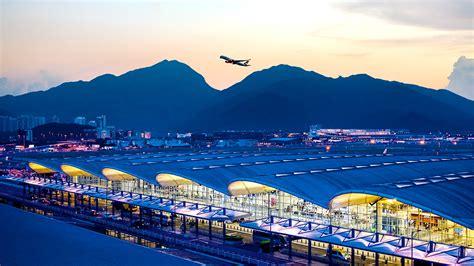
Nestled on the man-made island of Chek Lap Kok, Hong Kong International Airport (IATA: HKG, ICAO: VHHH) is more than just a transportation hub—it’s a global artery pulsing with trade, tourism, and economic vitality. Opened on 6 July 1998, this iconic airport not only redefined the skyline of Hong Kong’s western territories but also set new benchmarks in aviation engineering, cargo logistics, and global connectivity.
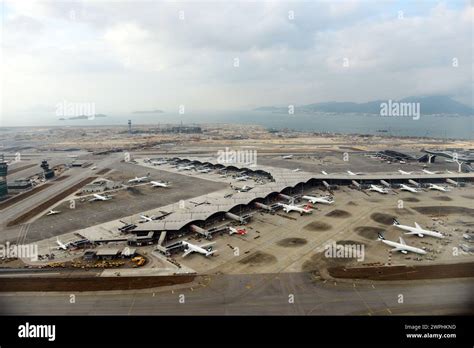
Strategically located in the New Territories, HKG connects Hong Kong to over 180 destinations through 100+ airlines, establishing itself as one of the world’s most connected and high-volume air gateways. Its contribution to Hong Kong’s economy is immense—by 2018, the airport alone accounted for US$33 billion, representing 10.2% of the city’s GDP.
From Kai Tak to Chek Lap Kok: A Historic Shift in Aviation Infrastructure
The creation of Hong Kong International Airport marked a seismic transition from the older Kai Tak Airport, notorious for its single runway wedged between high-rise buildings in Kowloon City. With rising noise complaints (averaging over 105 dB(A)) affecting 340,000 residents, and chronic delays due to spatial limitations, the urgency for a new airport became a critical national infrastructure priority.
The answer lay offshore. In 1974, planners identified the tiny island of Chek Lap Kok as an ideal site. The Airport Core Programme—a sprawling project that included the new airport, the Tsing Ma Bridge, tunnels, rail links, and urban development—reclaimed 12.48 square kilometers of land. This added almost 1% to Hong Kong’s total land area.
Designed by Mott Connell in collaboration with British Airports Authority, Foster and Partners, and Ove Arup, the terminal was engineered with glass façades designed to withstand typhoon-force winds. Construction, however, faced hurdles, including financial delays caused by uncertainty over Hong Kong’s handover to China. Ultimately, agreements with Beijing cleared the way, and operations commenced on 6 July 1998, following a formal inauguration by Jiang Zemin.
Operational Prowess: A 24/7 International Hub
Today, HKG is fully operational 24 hours a day, ranking among the world’s most efficient airports. It is a major hub for:
- Cathay Pacific
- HK Express
- Hong Kong Airlines
- Greater Bay Airlines
- Air Hong Kong (cargo)
It also serves as a pivotal cargo center for UPS Airlines and a regional focus city for Air China and China Eastern Airlines. In 2024 alone, it recorded:
- 53.05 million passengers (up 34.3% YoY)
- 363,000 aircraft movements (up 31.6%)
- 4.94 million metric tonnes of cargo (up 14.0%)
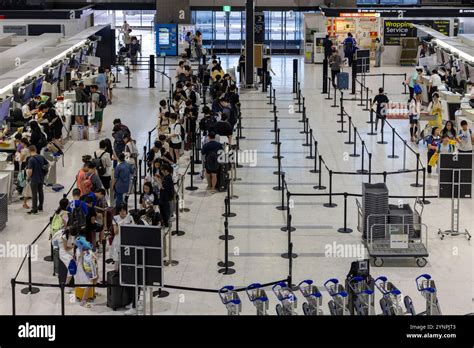
HKG’s resilience was demonstrated again in 2010 when it overtook Memphis International Airport as the world’s busiest cargo airport—a title it maintains today despite disruptions during the 2020 pandemic.
Architectural Marvel: Layout, Terminals, and Advanced Infrastructure
Spanning over 1,905 hectares (7.36 sq mi), the airport complex is built on Chek Lap Kok and Lam Chau, connected to Tung Chung and the broader Lantau Island region. It includes three runways, each measuring 3,800 meters, enabling continuous high-capacity operations.
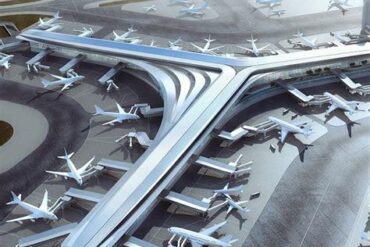
Terminal 1, covering 570,000 m², is one of the world’s largest airport terminals. It includes 77 jet bridge gates and 11 virtual gates where passengers are bused to aircraft. The terminal underwent enhancements in 2021 to create “Green” and “Orange” zones, segregating flights to Mainland China from other international services during the COVID-19 pandemic.
A major infrastructure highlight is the Sky Bridge, opened in November 2022—a 200-meter-long, 28-meter-high, glass-lined walkway connecting Terminal 1 to the T1 Satellite Concourse (T1S). This bridge is tall enough to allow an Airbus A380 to pass underneath, and eliminates the need for shuttle buses between concourses.
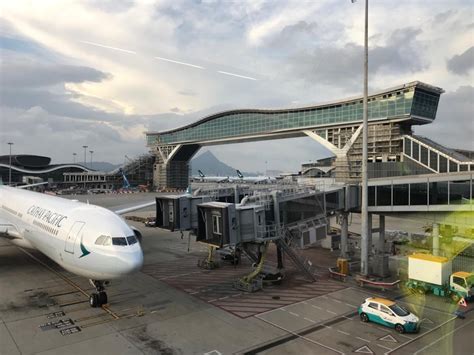
The Midfield Concourse, opened in December 2015, lies between the two main runways and adds 20 aircraft stands, three of which can accommodate A380s. It was designed by Mott MacDonald and Arup, with construction executed by Gammon Construction.
Terminal 2, launched in 2007 with SkyPlaza, was originally a check-in-only facility with no arrival gates. It was closed in November 2019 to make way for the Three-Runway System, and is set to reopen in 2025 after extensive expansion.
Master Plan 2030: Future-Proofing a Global Gateway
To meet long-term demands, the Airport Authority Hong Kong developed Master Plan 2030, outlining two strategic growth paths:
- Enhanced Two-Runway System: Capable of 420,000 movements/year, 74 million passengers, and 6 million tonnes of cargo, at an estimated cost of HK$23.4 billion (2010 prices).
- Three-Runway System: A more ambitious plan involving reclamation of 650 hectares north of the existing island. This system supports 620,000 flight movements, 97 million passengers, and 8.9 million tonnes of cargo annually by 2030. Estimated cost: HK$86.2 billion with an ENPV of HK$912 billion (2009 prices).
The Third Runway, referred to as the North Runway, became operational in July 2022, while the original North Runway (now the Centre Runway) was reconfigured and reopened in November 2024. The expansion also includes a new T2 Concourse, a new automatic people mover (APM), and a state-of-the-art baggage handling system.
Global Network: Unrivalled Connectivity in Passenger and Cargo Services
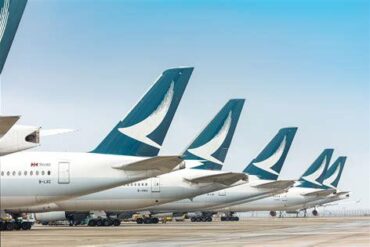
Hong Kong International Airport boasts one of the most extensive airline networks globally. Flagship carrier Cathay Pacific connects to destinations like London–Heathrow, New York–JFK, Los Angeles, Frankfurt, Zurich, Sydney, and Tokyo, while low-cost and regional carriers like HK Express and Greater Bay Airlines expand coverage across East and Southeast Asia.
Cargo operations remain elite. With partners including Cathay Cargo, Cargolux, DHL Aviation, FedEx Express, and Qatar Airways Cargo, HKG links to major freight destinations like Frankfurt, Dubai, Shanghai, Singapore, Los Angeles, and Anchorage.
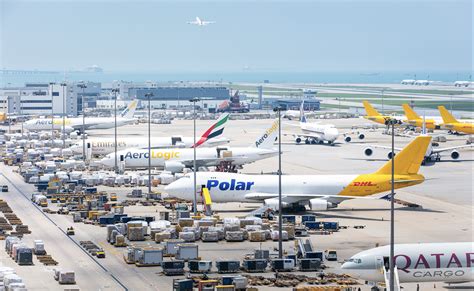
These capabilities have made Hong Kong not only a transit point but a critical logistics hub for global e-commerce and perishable goods, pharmaceuticals, and high-value electronics.
Challenges and Recovery: Technical Hurdles and Political Unrest
The early years of HKG’s operation were marred by technical failures. On opening day, the Flight Information Display System (FIDS) crashed. A crucial cargo database was deleted, leading to mass disruption. Freight was manually processed and, at one point, Kai Tak’s cargo terminal had to be reopened temporarily. The public backlash was swift, with critics labeling it a “ninth-class airport.” However, systems were soon stabilized, and operational standards rapidly improved.
During the 2019–2020 Hong Kong protests, the airport again found itself at the center of disruption, with demonstrators occupying terminals and leading to the cancellation of over 160 flights. Despite these incidents, the airport’s resilience and swift recovery strategy restored its global standing.
SkyCity and Beyond: Urban Integration and Tourism Growth
Beyond aviation, HKG has evolved into an integrated urban and commercial hub. Adjacent to the airport lies SkyCity, housing the SkyCity Marriott Hotel, the Nine Eagles Golf Course, and AsiaWorld-Expo, a major convention and event venue. The SkyPier ferry terminal, opened in 2009, enhances cross-border connectivity to Macau and Mainland China.
These projects have expanded the airport’s function from a transit point to a tourism, business, and lifestyle destination, leveraging Hong Kong’s strategic location in the Greater Bay Area.
Conclusion: A Defining Symbol of Asia’s Economic Pulse
Hong Kong International Airport represents far more than transportation—it is a living embodiment of Asia’s dynamism, resilience, and innovation. With its powerful infrastructure, ambitious future plans, and commitment to service excellence, HKG remains a vital cog in the machinery of global commerce and travel.
As we look toward 2030 and beyond, Hong Kong’s aviation frontier stands firmly positioned not just as a gateway to China, but as one of the most pivotal international airports in the world.