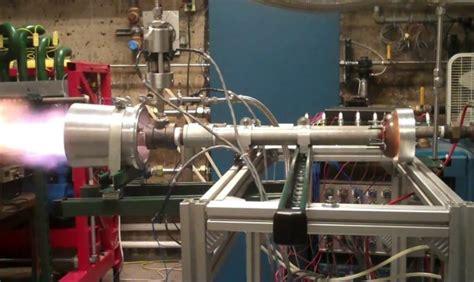
A pulse detonation engine (PDE) is an advanced propulsion system that uses detonation waves to combust fuel and oxidizer, creating thrust. Unlike traditional jet engines, which rely on subsonic combustion, the PDE operates on supersonic detonation, providing an opportunity for far greater efficiency and speed. This innovative technology has the potential to revolutionize high-speed air travel, from hypersonic aircraft to space propulsion systems, though it remains in the early stages of development.
Understanding the Basics of Pulse Detonation Engines
At the core of a PDE is the concept of detonation combustion, where the fuel and oxidizer mixture is ignited at a supersonic speed, creating an explosive shock wave. The detonation wave rapidly compresses the fuel mixture, increasing its pressure and temperature before it exits the engine’s nozzle, generating thrust. This detonation process occurs at almost constant volume, which is far more thermodynamically efficient than traditional open-cycle combustion methods, such as those found in gas turbines.
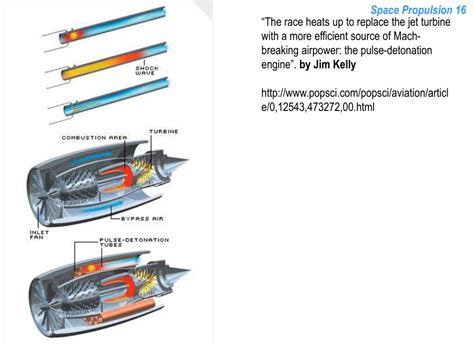
Unlike traditional engines, PDEs do not require complex moving parts like compressors or turbines. This simplicity could lead to lighter, more cost-effective engines, reducing the overall weight and complexity of aircraft. However, the key challenges include the efficient mixing of fuel and oxidizer, autoignition prevention, and the integration of the system with the aircraft’s inlet and nozzle.
The History and Development of PDE Technology
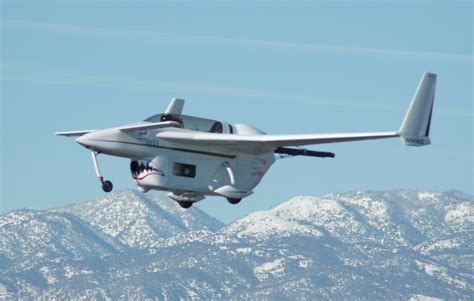
The concept of pulse detonation propulsion has existed since the 1940s, with early research focusing on the feasibility of using detonative combustion for propulsion. Despite many theoretical studies, it wasn’t until 2008 that the first aircraft powered by a PDE successfully flew at the Mojave Air & Space Port. The aircraft, a heavily modified Long-EZ, known as Borealis, demonstrated the potential of PDE technology in flight, though it was limited to low-speed flight.
This flight was a pivotal moment in PDE research, proving that the technology could be integrated into an aircraft without causing structural issues from the intense detonation waves. However, the primary appeal of the PDE lies in its potential for hypersonic flight speeds, far exceeding the capabilities of current jet engines.
The U.S. Air Force Research Laboratory (AFRL) and Innovative Scientific Solutions Inc. played a key role in advancing PDE development. Subsequent projects, like Blackswift, aimed at achieving Mach 6 speeds, have further pushed the boundaries of this technology. However, Blackswift was canceled in 2008 due to challenges in the integration and performance of the engine.
PDE Operation and Mechanics
The basic operation of the PDE is closely related to the pulse jet engine, which operates on the principle of intermittent combustion. In a pulse jet, a fuel-air mixture is ignited in an open chamber, generating a shock wave that pushes the exhaust gases out of the nozzle, creating thrust. Similarly, in a PDE, a detonation wave is used to combust the fuel mixture at supersonic speeds, resulting in a more efficient energy conversion process.
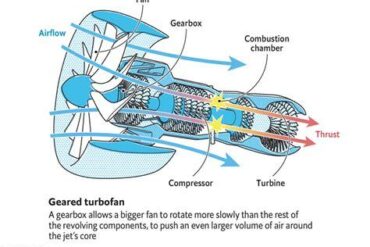
Key advantages of the PDE include its ability to operate with no moving parts, reducing mechanical complexity and increasing efficiency. The detonation process also provides a constant volume combustion, which allows the engine to achieve better thermodynamic performance compared to traditional turbofans or turbojets. This could potentially lead to significant fuel savings and reduced emissions in commercial aviation.
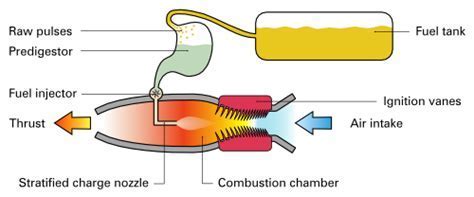
However, the challenges of PDE technology are not insignificant. Achieving detonation initiation in a relatively short space is critical for effective propulsion, but this process can be difficult to control. The fuel-oxidizer mixture must be perfectly timed, and the detonation wave must be initiated at the precise moment to avoid autoignition or inefficient combustion.
Key Challenges in PDE Development
Several hurdles stand in the way of achieving widespread implementation of pulse detonation engines. Among the most pressing issues are:
- Detonation initiation: Achieving a consistent detonation across the combustion chamber is a technical challenge, as the shock wave must be initiated and sustained with high precision.
- Noise and vibration: The intense detonation waves generate significant noise, often described as sounding like a jackhammer, and cause severe vibration, which can pose structural challenges for aircraft.
- Mixing of fuel and oxidizer: To ensure an efficient detonation, the fuel and oxidizer must be homogeneously mixed, which is difficult to achieve in the turbulent airflow of a PDE.
- Integration into existing aircraft: Designing a PDE that can be easily integrated into existing aircraft frames without compromising the structure or aerodynamics is another significant challenge.
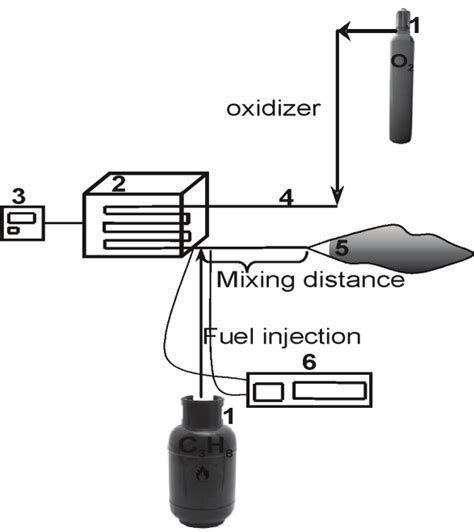
Despite these challenges, recent advancements have shown that PDEs can be used for high-speed, long-range flight. The potential applications for PDE technology include hypersonic aircraft and space propulsion systems, which could revolutionize both military and commercial aviation.
Applications and Future Prospects of PDE Technology
The most promising application of pulse detonation engines is in high-speed, long-range reconnaissance aircraft. With the ability to reach speeds greater than Mach 5, PDE-powered aircraft could potentially outrun current missile defense systems and provide significantly longer range than traditional turbofan-powered aircraft.
In addition to military applications, PDEs are being considered for space propulsion, particularly in the context of spaceplanes and space tourism. In July 2021, Japan’s space agency JAXA successfully tested a pulse detonation rocket engine in space aboard a S-520 sounding rocket, marking a significant milestone in the use of PDEs for spaceflight.
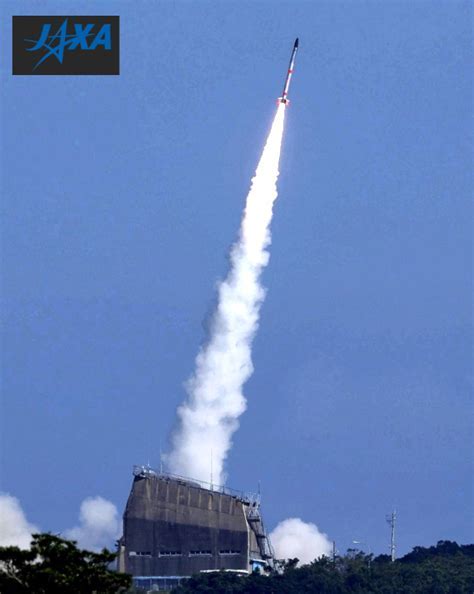
Moreover, the potential for PDEs to operate in both atmospheric and space environments is another advantage. Since they do not rely on atmospheric oxygen for combustion, PDEs can operate in space, providing a new avenue for propulsion in space missions.
While commercial applications are still a long way off, the success of the Borealis flight and the JAXA rocket test suggest that pulse detonation propulsion is not just theoretical, but a realistic future technology. The potential benefits—ranging from fuel efficiency to the possibility of hypersonic flight—make PDE technology a highly attractive area of research.
Conclusion: The Road Ahead for Pulse Detonation Engines
While pulse detonation engines are still in the development phase, the progress made so far has been promising. The theoretical benefits of PDEs, including their high efficiency and the potential to reach hypersonic speeds, make them a revolutionary technology in the field of aerospace propulsion. However, significant challenges remain, particularly in terms of detonation initiation, fuel mixing, and structural integration.
As research continues and more testbed engines are developed, the likelihood of PDEs becoming a key part of future aircraft and spacecraft grows. If these challenges can be overcome, the pulse detonation engine could reshape the landscape of aviation and space exploration for years to come.