In a remarkable leap forward for aerospace propulsion, Venus Aerospace has unveiled a revolutionary new engine capable of achieving hypersonic speeds right off the runway — a feat once considered the realm of science fiction. This breakthrough is powered by the Rotating Detonation Rocket Engine (RDRE), a radically different propulsion system that utilizes continuous detonation rather than traditional combustion. Unlike anything used in commercial or military aviation today, this engine may fundamentally reshape high-speed air travel and orbital access.
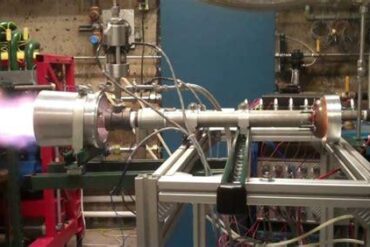
The RDRE was successfully tested at Spaceport America in New Mexico, where engineers from Venus Aerospace confirmed both high thrust levels and combustion stability under conditions mimicking atmospheric hypersonic flight. With this test, the company validated the core architecture of a technology it claims could make Mach 5+ travel routine and runway-accessible.
What Makes the RDRE a Game-Changer for Aerospace Propulsion
Unlike conventional jet engines that rely on deflagration combustion—a slow, controlled burn—the RDRE leverages detonation waves to ignite fuel at supersonic speeds inside a circular combustion chamber. This creates shockwaves that perpetuate themselves, requiring less fuel and producing dramatically higher thrust-to-weight ratios. While detonation-based engines have been the subject of theoretical research for decades, Venus Aerospace is among the first to realize a working, scalable prototype with flight-capable design characteristics.
This fundamental change in the combustion process offers a host of performance benefits:
- Higher thermal efficiency, meaning more of the fuel’s energy is converted into thrust.
- Smaller engine size relative to output, reducing aircraft weight and increasing payload potential.
- Simplified architecture with fewer moving parts, potentially lowering maintenance costs.
- Reusable design that doesn’t require complex ground infrastructure or rocket staging.
NASA and the U.S. Air Force have both explored RDREs in laboratory settings, but Venus Aerospace’s success in scaling the technology to real-world performance levels is a pivotal moment. The engine remained stable under full-scale operation and delivered results consistent with what is needed for sustained hypersonic cruise.
From Test Stand to Tarmac: The Path to Hypersonic Access
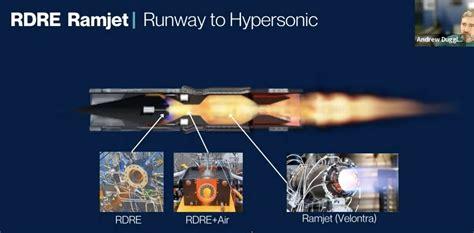
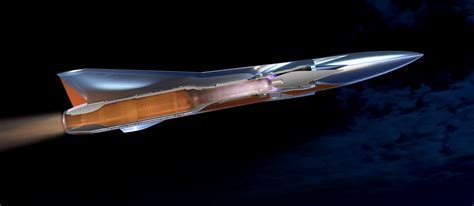
Venus Aerospace’s vision is as bold as it is specific: a hypersonic aircraft that operates from existing airports and reaches space or crosses continents in minutes. At the center of this ambition is the V2RD propulsion system, a hybrid of the RDRE and a detonation-based ramjet engine. This platform will allow seamless transition from takeoff to hypersonic flight, bypassing the complex multi-stage rocketry used in traditional orbital launches.
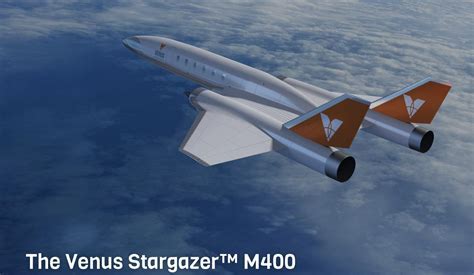
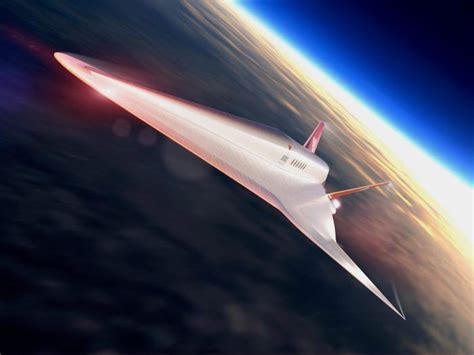
Their developmental aircraft, the Venus Stargazer M4, is being designed around this propulsion model. Unlike other hypersonic platforms that rely on rocket boosters or high-altitude airdrops, Stargazer will be able to taxi and take off from standard runways, climb through subsonic and supersonic flight envelopes, and enter hypersonic cruise above Mach 5.
This is a paradigm shift — moving away from orbital-class vehicles that require vast launch complexes toward airliner-like hypersonic craft with rapid turnaround and operational flexibility. The implications stretch across industries:
- Defense: Rapid global strike capabilities, reconnaissance, and deployment without geopolitical constraints on launch bases.
- Commercial aviation: Ultra-fast passenger travel that could shrink global travel times from hours to minutes.
- Space access: Reusable hypersonic vehicles that could serve as first stages for orbital delivery systems.
Engineering the Future: How Detonation-Based Propulsion Works
The RDRE’s functionality depends on a continuous loop of detonation — a chain reaction sustained by injecting fuel and oxidizer into a ring-shaped chamber. A detonation wave travels around the ring at supersonic speed, compressing and igniting incoming fuel in a repeating cycle. Unlike pulsed detonation engines, the RDRE operates continuously, providing smoother thrust and greater scalability.
The benefits over conventional rocket and jet propulsion are both thermodynamic and operational. Detonation enables energy to be released more efficiently due to the near-instantaneous pressure spike, improving the engine’s total specific impulse. Additionally, the compact nature of the design opens up integration possibilities that were previously unfeasible for flight vehicles aiming to be both fast and runway-ready.
Venus Aerospace has also focused on reusability and miniaturization, factors that are critical for commercial viability. Their engine is being tested to meet aerospace lifecycle demands, ensuring that it can endure multiple missions without costly overhauls.
Challenges Ahead: Engineering, Regulation, and Real-World Integration
While Venus Aerospace has made significant strides, hypersonic flight remains a highly complex challenge. One major hurdle is thermal management — at speeds above Mach 5, surface friction with the atmosphere generates temperatures that can melt standard alloys. The company is reportedly working with advanced materials and active cooling solutions to address these issues.
Stability at hypersonic speeds is another engineering challenge. Aircraft must be designed to maintain control under high dynamic pressures and variable atmospheric densities, especially as they transition through different speed regimes.
Then there are the regulatory and geopolitical barriers. Hypersonic aircraft capable of crossing continents in minutes would necessitate new airspace management systems, international treaties, and safety standards. There is also a strong military interest in these technologies, meaning that export controls and security protocols will likely shape how and where the technology is deployed.
Nevertheless, Venus Aerospace has already positioned itself as a front-runner in the hypersonic propulsion race, having accomplished what many believed was years away: a working, flight-scalable RDRE tested under relevant conditions.
A Commercial Hypersonic Era? Venus Aerospace May Be First Off the Ground
While the world has been watching players like Boom Supersonic, Hermeus, and Stratolaunch, Venus Aerospace has quietly but methodically built a technological foundation that bypasses many limitations of its competitors. Its focus on detonation-based propulsion and runway compatibility could be the key to not just flying fast, but flying fast accessibly.
This could result in the creation of commercial hypersonic routes that use existing airport infrastructure — an entirely new class of travel that blends the best of aviation and spaceflight. From executive transcontinental hops to rapid orbital delivery systems, Venus’s RDRE technology might prove to be the most versatile and impactful aerospace innovation in decades.
The Road Ahead: Flight Testing and Market Realization
Venus Aerospace plans to move from static engine testing to flight demonstrations within the next 24 to 36 months. The success of these tests will determine the trajectory of the RDRE-powered Stargazer program and its potential entry into civilian and defense service.
For now, Venus has captured the attention of both industry experts and government agencies. If their upcoming test flights match the promise of their ground-based achievements, the world may soon witness the dawn of hypersonic aviation from familiar airports — not exotic launch pads.
And in that future, the distance between London and Tokyo might not be 12 hours, but 90 minutes — with a boarding pass, not a rocket.