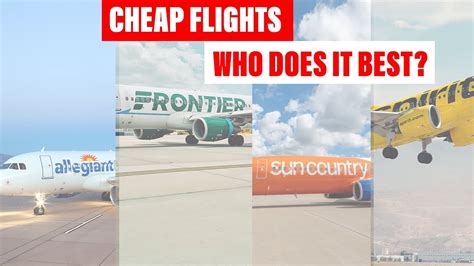
In a bold, strategic coalition, five leading U.S. low-cost carriers—Allegiant, Avelo, Frontier, Spirit, and Sun Country—have officially launched the Association of Value Airlines (AVA), a lobbying force headquartered in Washington, D.C., aimed at reshaping the national air travel landscape. As legacy carriers like American, Delta, United, and Southwest continue to wield political and market dominance through the established Airlines for America (A4A) group, the formation of AVA signals a historic power shift within the aviation industry.
A New Power Bloc in U.S. Aviation Policy
The AVA emerges not just as a trade association but as a collective voice for the low-fare air travel sector, seeking direct influence over federal, executive, and state-level aviation policy. With a combined customer base of over 96 million passengers annually and a financial footprint contributing approximately $196 billion to the U.S. GDP, these budget airlines are no longer fringe players but central to the fabric of modern air travel.
This coalition emphasizes its mission: preserving affordability and access to air travel across socioeconomic lines. Unlike the full-service models that cater heavily to business travelers and high-yield routes, AVA’s members champion an approach that strips down amenities in favor of ultra-competitive pricing, resulting in an estimated $23 billion in annual consumer savings.
Why AVA, and Why Now?
The timing of the AVA’s formation is far from coincidental. Post-pandemic economic turbulence has struck budget carriers disproportionately hard. While legacy airlines leaned on federal bailouts, diversified revenue, and premium services to bounce back, low-cost carriers faced soaring fuel prices, labor shortages, and reduced consumer tolerance for no-frills experiences.
Leading the AVA is interim executive director Chris Brown, a former FAA official and aviation legal advisor in Congress. His regulatory acumen will be instrumental in navigating the group’s interactions with lawmakers, especially as the AVA pushes for regulatory equity, airport slot access, and policy shifts that prevent anti-competitive mergers or pricing practices.
Spirit Airlines: A Bankruptcy Story with a Comeback Arc
Spirit Airlines, one of AVA’s flagship members, underscores the necessity of such an alliance. In November 2024, Spirit filed for Chapter 11 bankruptcy, citing a staggering $1.2 billion loss driven by escalating operating costs and reduced demand. By March 2025, Spirit had emerged from bankruptcy with a revitalized business strategy focused on passenger satisfaction and loyalty.
Key to its recovery is the enhancement of its Free Spirit loyalty program, now offering tiered benefits and exclusive rewards for frequent travelers. In a move that contrasts its bare-bones image, Spirit also revealed plans to introduce a premium seat class, signaling a shift toward hybrid service models that retain low fares while expanding appeal.
Other AVA Members Maneuver for Market Share
The AVA is not merely a reactive body—it’s a strategic front for forward-thinking adaptation across its member airlines. Frontier Airlines, famed for its ultra-low-cost strategy, is investing heavily in route expansion, particularly into underserved regional airports. Its network growth is designed to outmaneuver incumbents by offering cheaper, direct flights where full-service airlines have reduced frequency.
Sun Country, traditionally focused on leisure routes, is now eyeing cargo operations and vacation packages as part of a revenue diversification strategy. Its goal: to insulate itself from the seasonal volatility that has historically plagued budget carriers.
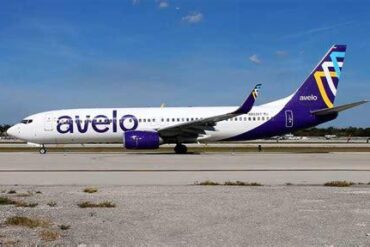
Allegiant and Avelo, though newer to the national stage, are leaning into point-to-point travel models, bypassing congested hub airports and streamlining turnaround times. Their nimble operational frameworks give them the ability to serve destinations abandoned by legacy players due to low profitability margins.
Legacy Carriers: The Giant in the Room
Standing in opposition is Airlines for America (A4A), the long-established lobbying voice of the Big Four. A4A prioritizes infrastructure, global competition, and technological innovation—but critics argue that its policies often favor incumbents and limit market access for smaller competitors. Slot allocation, airport gate monopolies, and congestion pricing are just a few areas where AVA plans to press for regulatory overhaul.
Moreover, consumer advocates have long criticized large carriers for opaque pricing structures, last-minute fee add-ons, and variable customer service standards. AVA intends to exploit this dissatisfaction by lobbying for transparent fare regulation and promoting its member airlines as the people’s carriers, built around simplicity and cost-effectiveness.
Political Strategy and Long-Term Goals
With an aviation-savvy executive director, AVA is expected to shape its advocacy using a data-driven, economically sound argument: that enabling low-cost carriers to thrive will stimulate consumer spending, encourage tourism, and expand job creation in smaller markets.
In particular, AVA will lobby on:
- Airport access equity – fighting for more gate availability and landing rights.
- Infrastructure funding – ensuring smaller airports benefit from FAA allocations.
- Slot reform – advocating for a fairer distribution of takeoff and landing permissions at high-traffic airports.
- M&A oversight – pushing for stricter review of airline mergers that reduce competition.
This calculated approach goes beyond cost-cutting; it aims to transform the aviation policy ecosystem, where too often regulatory inertia favors the established giants.
Public Perception and Market Psychology
Beyond Capitol Hill, AVA will engage in public-facing campaigns to reframe how consumers view low-cost airlines. While “budget” has often been equated with “low quality,” the AVA aims to reposition its members as smart, efficient, and consumer-centric alternatives in an era of rising ticket prices and unpredictable service.
By investing in better communication, loyalty perks, and incremental service improvements, AVA members hope to bridge the gap between affordability and passenger satisfaction. They are actively working to reverse negative perceptions, aiming to make low-cost travel a badge of smart budgeting rather than a compromise.
The Road Ahead: Can AVA Tip the Scales?
Success for AVA depends not only on regulatory wins but also on internal execution. Each member airline must maintain operational efficiency, pursue incremental service upgrades, and remain responsive to consumer expectations without sacrificing their fundamental pricing model.
If AVA manages to influence slot allocations, improve access to secondary airports, and curtail anti-competitive behavior from dominant players, the landscape of U.S. air travel could become more democratized and diversified than ever before.
Ultimately, the AVA represents not just a lobbying entity, but a new philosophy of air travel—one that prioritizes accessibility over exclusivity, choice over monopoly, and efficiency over extravagance. In doing so, it may succeed in redefining what it means to fly in America.