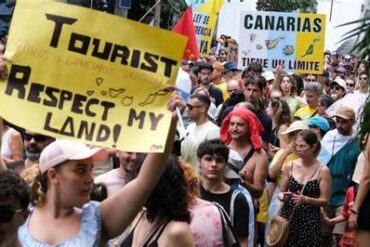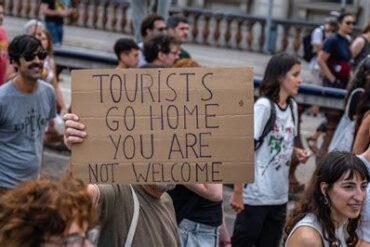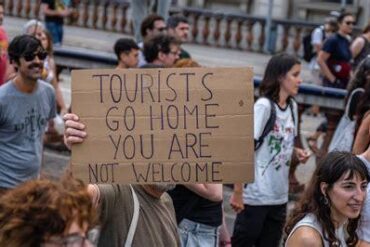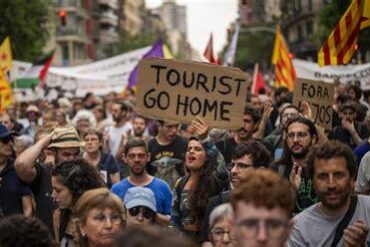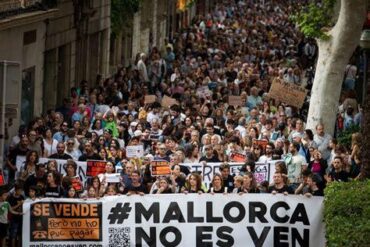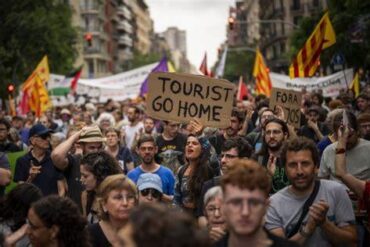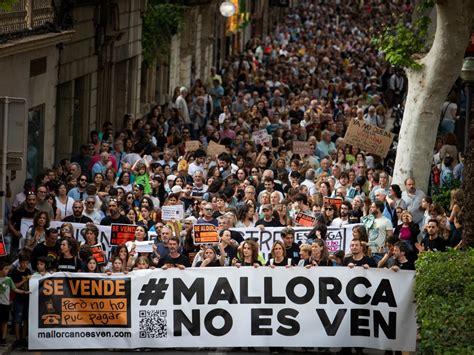
In a surprising turn of events, Barcelona and Mallorca have stepped into the spotlight, not for their stunning beaches or vibrant nightlife, but for a powerful anti-tourism protest that has garnered attention across Europe. Joining forces with Venice, Lisbon, the Canary Islands, and Tenerife, locals have taken to the streets armed with colorful water guns—not for fun, but as a poignant symbol of their growing frustration with the overwhelming tide of tourism that is reshaping their communities. The visuals of residents dousing tourists with water while brandishing placards proclaiming, “One more tourist, one less resident,” encapsulate a deep-seated discontent that has reached a boiling point.
The recent protests are more than just playful antics; they are a serious call to action against what many perceive as a tourism crisis threatening the cultural and social fabric of these regions. As Spain, Italy, and Portugal grapple with the implications of an ever-increasing number of visitors, the question arises: What is really happening to the travel industry in these countries?
The Impact of Overtourism on Local Communities
As summer 2025 approaches, millions of travelers are flocking to the Mediterranean, drawn by the allure of sun-soaked beaches and rich history. However, the surge in tourism comes at a steep price. In Barcelona, rising rents—attributed largely to the influx of short-term rentals—have driven long-time residents out of their homes. Reports indicate that rents have soared by more than 30% in some neighborhoods, transforming once-vibrant localities into tourist-centric zones filled with souvenir shops and fast food establishments. The traditional character of these areas is increasingly under threat, as local businesses struggle to survive amidst the commercialized landscape.
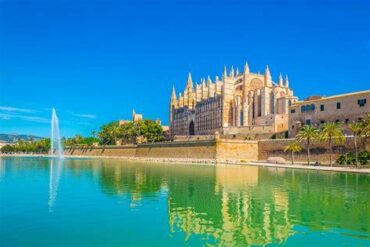
The situation in Mallorca mirrors that of Barcelona. Islanders have expressed their discontent over crowded beaches and traffic congestion, leading to a united front in protests demanding systemic change. The use of water guns, while seemingly whimsical, serves as a stark reminder of the desperation felt by locals who see their way of life being eroded by mass tourism.
A Broader Movement Against Overtourism
The protests in Barcelona and Mallorca are part of a larger trend seen in cities like Venice and Lisbon, where residents are voicing similar frustrations. Venice, often referred to as a living museum, has been transformed into what many locals describe as a hollowed-out theme park. The city has implemented measures such as charging day-trippers an entry fee to combat the overwhelming number of visitors. Lisbon is also grappling with its own tourism challenges, as the rapid increase in tourist numbers threatens to overshadow the local culture and economy.
These protests reflect a growing movement across southern Europe, as locals demand that their voices be heard in the conversation about tourism management. With the travel industry booming—Spain alone welcomed over 94 million international visitors last year—there is mounting pressure on governments to enact policies that prioritize residents’ rights and local integrity.
Government Responses and Future Implications
In response to the rising tide of discontent, governments in Spain, Italy, and Portugal are beginning to take action. In Barcelona, officials are phasing out short-term rentals by 2028, a move aimed at curbing the housing crisis exacerbated by platforms like Airbnb. Earlier this year, the city ordered Airbnb to remove 66,000 listings for violating local regulations, a significant step toward reclaiming neighborhoods for residents.
Italy has also begun to tighten regulations, particularly in tourist-heavy cities like Venice, where there are efforts to limit hotel construction and restore balance to local economies. Meanwhile, Portugal is encouraging diversified tourism strategies that promote lesser-known regions to alleviate pressure on major cities like Lisbon and the Algarve.
Despite these measures, experts caution that without comprehensive housing policies and economic diversification, the solutions may only scratch the surface of the issue. The protests signify a critical turning point for the tourism sector in these regions, as locals seek to reclaim their cities from the grip of mass tourism.
The New Face of Tourism in Southern Europe
As we move further into 2025, the narrative surrounding tourism in Spain, Italy, and Portugal is shifting. This summer, travelers can expect a more regulated environment, as cities implement new fees and restrictions to manage visitor flow. Venice’s day-tripper tax and potential port fees in Santorini are just the beginning of a broader trend toward sustainable tourism practices that respect both visitors and residents.
Travelers are being encouraged to engage with local cultures meaningfully—prioritizing slow travel, supporting family-owned businesses, and exploring off-the-beaten-path destinations. The emphasis is now on fostering authentic experiences rather than mere photo opportunities. Travelers are urged to embrace a new ethos of tourism that values the preservation of local culture and community well-being.
A Call to Action for Travelers
For those planning to visit these iconic Mediterranean destinations, it’s essential to approach travel with a mindset of respect and responsibility. Engaging with local communities, participating in sustainable tourism practices, and being mindful of the impact of one’s presence are paramount. It is no longer just about enjoying the sights; it’s about contributing positively to the places we visit.
As the summer unfolds, the interplay between tourism and local life in Barcelona, Mallorca, Venice, Lisbon, and beyond will be closely watched. The protests signify a pivotal moment in the ongoing dialogue about tourism’s role in shaping the future of these beloved destinations. Only through cooperative efforts between residents, governments, and travelers can a balanced, sustainable approach to tourism be achieved—one that honors the rich cultural heritage and vibrant communities that define southern Europe.
Conclusion
In conclusion, the colorful protests in Barcelona and Mallorca reflect a broader resistance against the negative impacts of overtourism that is rippling through southern Europe. With tensions rising and calls for meaningful change echoing across cities like Venice and Lisbon, the travel industry faces a critical juncture. The call for sustainable, respectful tourism is more urgent than ever, as communities strive to reclaim their identities in the face of overwhelming tourist pressure. As travelers, we hold the power to shape the future of these destinations by embracing a new approach to exploration—one that prioritizes authenticity, community, and sustainability.