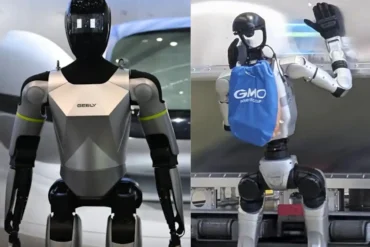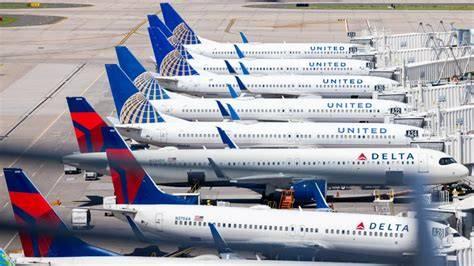
United Airlines and Delta Air Lines have become the latest major carriers to prohibit passengers from bringing humanoid robots onto their aircraft, expanding restrictions beyond traditional baggage rules. The policies prevent travelers from transporting human-like robotic devices in both carry-on luggage and checked baggage, reflecting growing concerns about how advanced robotics should be handled within commercial aviation.
The restrictions mark a significant shift in airline policies as consumer robotics technology continues to develop. Unlike small electronic gadgets or conventional robotic devices, humanoid robots combine complex mechanical systems, large batteries, and human-like designs that create unique challenges for airport security teams, baggage handlers, and flight crews.
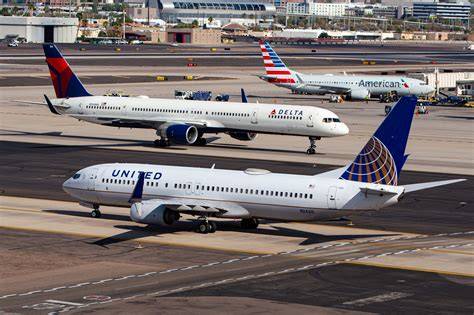
United Airlines has adopted one of the strictest approaches, banning humanoid robots from all flights regardless of their intended purpose or method of transportation. The airline’s guidance classifies these devices as prohibited items, meaning passengers cannot place them in the cabin, checked luggage, or transport them through standard cargo channels.
Delta Air Lines has introduced a similar restriction, stating that robots designed to resemble or imitate humans or animals are not accepted as either cabin baggage or checked luggage. The airline clarified that the policy applies regardless of the robot’s size, appearance, movement capabilities, or intended use.
Why Airlines Are Restricting Human-Like Robots
The decision by United and Delta is not based on a specific safety incident involving a flight emergency. Instead, airlines are responding to the practical difficulties created by increasingly advanced robotic technology. Humanoid robots are fundamentally different from ordinary consumer electronics because they contain moving parts, complex structures, and powerful battery systems.
Traditional baggage procedures are designed around predictable categories such as laptops, cameras, mobility devices, and small electronic products. Humanoid robots do not fit easily into these existing classifications. Their articulated arms and legs, unusual shapes, and ability to move independently create questions about storage, securing methods, and emergency procedures.
Lithium-ion batteries are another major consideration. Aviation authorities and airlines already maintain strict rules for battery-powered devices because damaged or improperly handled batteries can create fire risks. Larger robotic systems may require additional evaluation due to their battery capacity and mechanical components.
Airlines must also consider how these devices would behave during normal flight operations. A robot placed in an aircraft cabin could potentially interfere with passenger movement, emergency evacuation routes, or crew procedures. Meanwhile, storing a large humanoid machine in the cargo hold raises questions about packaging, restraint, and handling requirements.
The Southwest Airlines Incident That Triggered Wider Debate
The growing discussion around humanoid robot restrictions intensified after a humanoid robot was transported on a Southwest Airlines flight. The incident attracted public attention because it highlighted uncertainty about how airlines should classify advanced robotic devices.
Following the event, Southwest Airlines moved to prohibit humanoid and animal-like robots from future flights. The airline’s decision encouraged other carriers to review their own policies and establish clearer guidelines for passengers and airport employees.
For airlines, creating a direct ban eliminates confusion at check-in counters and security checkpoints. Instead of evaluating each robotic device individually, employees can apply a straightforward rule that reduces operational uncertainty.
The development follows a broader pattern in aviation history. Airlines have previously introduced restrictions on emerging technologies such as hoverboards, smart luggage, and high-capacity batteries when those products created new safety considerations. Humanoid robots represent the latest example of aviation policies adapting to rapidly changing consumer technology.
Delta’s Temporary Ban Leaves Room for Future Changes
Although Delta has prohibited humanoid robots, the airline describes its policy as temporary. This suggests that future changes could occur as robotics technology matures and industry standards become clearer.
Delta explained that robots designed to resemble or imitate humans or animals are not considered assistive devices and do not meet the definition of trained service animals. The distinction is important because some passengers may rely on robotic technology for assistance, entertainment, research, or business purposes.
At the same time, the current restrictions do not affect all robotic products. Smaller consumer devices, including robotic toys and household robots, may still be allowed if they comply with existing airline requirements for batteries and electronic equipment.
This separation allows airlines to maintain established procedures for common technology while preventing uncertainty surrounding large, human-like machines.
Aviation Policies Continue To Evolve With New Technology
The restrictions introduced by United Airlines and Delta Air Lines demonstrate how quickly aviation rules must adapt as technology advances. Commercial airlines operate within a highly regulated environment where even small changes in passenger equipment can require careful evaluation.
Humanoid robots combine several challenging elements at once: advanced electronics, artificial intelligence, mechanical movement, and energy storage systems. Their growing availability means airlines are likely to continue reviewing whether existing baggage frameworks remain suitable.
For passengers, the current message is clear: humanoid robots are not accepted on United and Delta flights, while smaller robotic devices that meet standard electronic and battery requirements may still be permitted.
As robotics companies continue developing more realistic and capable machines, airlines and regulators will likely face additional questions about transportation, safety standards, and passenger use. The latest restrictions show that commercial aviation is once again adapting to the arrival of a new category of technology.