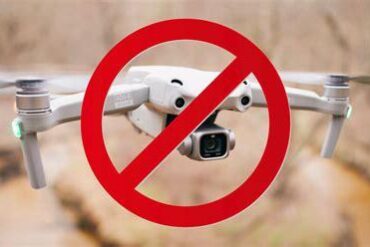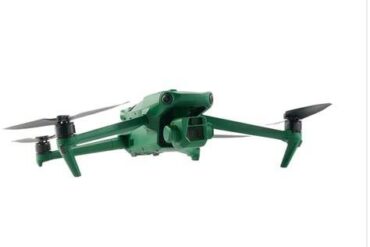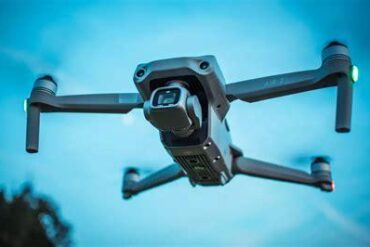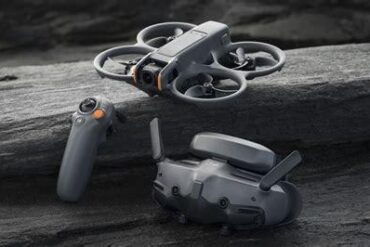
DJI drones, ubiquitous across the skies of the United States, are facing an existential crisis. The Chinese tech titan, which dominates the global drone market, is under the microscope as Washington weighs a potential national security risk that could result in a full-fledged ban by the end of 2025. While DJI drones soar over American cities, forests, and farmlands—assisting first responders, filmmakers, and hobbyists alike—their future in the U.S. has never been more uncertain.
The heart of the issue lies within a clause in the 2025 National Defense Authorization Act. Passed in late 2024, this legislation stipulates that unless DJI passes a national security review by the end of 2025, the company will be automatically banned. Yet no U.S. agency has been assigned to carry out that critical review. The legislative ambiguity leaves DJI in a precarious limbo, teetering on the brink of exclusion from its most lucrative market.

A Giant Under Threat: DJI’s Market Dominance
Founded in 2006 by Frank Wang in a Hong Kong dorm room, DJI (Da-Jiang Innovations) quickly rose to global prominence. Headquartered in Shenzhen, the company now commands around 70% of the global drone market, far surpassing competitors like Autel, Parrot, and Skydio. In North America, DJI has long been the go-to choice for professionals and amateurs alike due to its high-performance drones at relatively affordable prices.
Its drones are staples for:
- Law enforcement and emergency services, helping in search and rescue operations
- Fire departments, aiding in wildfire management
- Surveying and construction industries, providing aerial imagery and measurements
- Cinematographers, who rely on DJI’s stable and high-quality footage
This market grip makes DJI’s potential ban particularly disruptive. Replacing its drones with U.S.-made alternatives would not only cost more but also risk delays and capability gaps.
Legislation Without Execution: The Looming FCC Ban
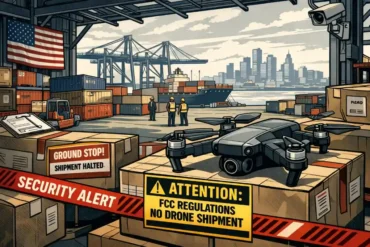
At the core of the threat is an administrative vacuum. The National Defense Authorization Act calls for a national security assessment of DJI and other Chinese drone companies like Autel. If no agency completes this review within a year, the companies will be automatically added to the FCC’s Covered List, effectively blacklisting them from U.S. telecommunications infrastructure. This would block future DJI sales, updates, and FCC certifications, rendering their drones obsolete in the U.S. market.
Representative Michael Guest, chairman of the Border Security and Enforcement Subcommittee, confirmed the gravity of this mechanism: “Restricting DJI is a justified and necessary action to protect U.S. security interests.” Yet no agency has accepted the responsibility to conduct the review, raising questions about due process and fairness.
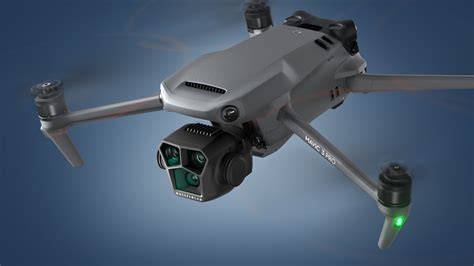
Security Allegations: Data, Surveillance, and Espionage Concerns
At the heart of the ban debate are long-standing national security concerns. Critics allege that DJI drones, through their software and data transmission protocols, could be used by the Chinese government to gather intelligence or conduct surveillance on critical U.S. infrastructure. These fears are not new.
In 2020, a French cybersecurity firm reverse-engineered DJI’s Android app, discovering it could collect location data and update itself without user consent. A peer-reviewed 2023 study further revealed vulnerabilities in DJI’s Wi-Fi system that could allow hackers to seize control of drones using off-the-shelf tools.
DJI has repeatedly denied these claims, arguing that:
- No Chinese government officials sit on its board
- It has never received data requests from Chinese authorities
- It offers a “local data mode” to prevent internet-based transmissions
Nevertheless, the specter of Chinese state influence continues to shadow DJI. The company’s fate could serve as a litmus test for how the U.S. treats other Chinese tech firms, especially amid ongoing trade tensions and the broadening scope of what constitutes “national security.”
Lobbying Blitz and Public Engagement
To counteract the legislative headwinds, DJI has launched an aggressive lobbying and public outreach campaign. Since 2019, the company has spent nearly $7 million lobbying U.S. lawmakers, partnering with firms like Liberty Government Affairs, which also represents Chinese fast-fashion brand Shein. DJI’s lobbying spending surged following Congress’s initial restrictions on Pentagon drone purchases.
DJI has also:
- Co-founded the Drone Advocacy Alliance, opposing bans based on country of origin
- Partnered with U.S.-based drone firms like Blue Nose Aerial Imaging and Dronelink
- Mobilized over 60,000 messages to lawmakers opposing the Countering CCP Drones Act
- Engaged with public agencies and drone users on Reddit, YouTube, and Instagram
The company’s messaging centers on transparency, third-party security audits, and compliance with Western cybersecurity standards. DJI hopes these measures will persuade lawmakers to take a “fair and evidence-based” approach before making any final decision.
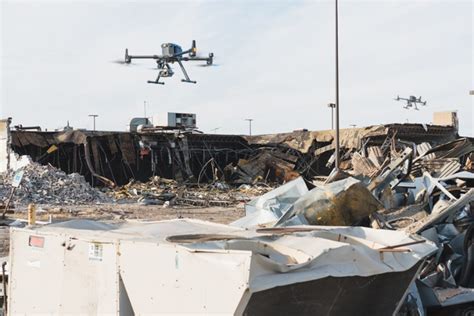
A Fractured Industry: Allies and Adversaries
The DJI ban debate has split the American drone industry. On one side are DJI’s partners and users, who argue that its drones are irreplaceable in terms of price-to-performance ratio. On the other side are U.S. drone manufacturers and politicians who emphasize national security.
U.S. drone firms have formed the Partnership for Drone Competitiveness, with members like Skydio and Brinc. They argue:
- DJI benefits from unfair subsidies from the Chinese government
- Relying on foreign drones jeopardizes U.S. security
However, the issue is nuanced. Some of these American companies source components from China themselves, weakening their claims of technological independence.
Tariffs, Delays, and Market Disruption
Amid growing tensions, the U.S. and China agreed in early 2025 to a temporary 90-day tariff truce. U.S. tariffs dropped from 145% to 30%, and China reduced tariffs from 125% to 10%. Even so, DJI has already raised prices in response to earlier trade restrictions. Some shipments have reportedly been blocked by U.S. customs, and new products like the Mavic 4 Pro have been held back from the U.S. market, forcing enthusiasts to look to Canada or Mexico for purchases.
The broader market implications are severe. The global drone industry is projected to hit $57.8 billion by 2030, and losing access to the U.S. could drastically curtail DJI’s growth trajectory.
Echoes of TikTok and the Expanding Definition of National Security
DJI’s case mirrors that of TikTok, another Chinese tech firm accused of potential espionage. While a nationwide TikTok ban appears unlikely after intense lobbying and user backlash, DJI’s hardware-based presence may not escape as easily.
Elsa Kania of the Center for a New American Security underscores a key shift: “The concept of national security is becoming more expansive, and industries that were once purely commercial are now seen through a strategic lens.”
This broader redefinition has affected companies like Huawei, BYD, and even semiconductor firms, which are increasingly entangled in geopolitical rivalries.
What’s Next for DJI?
For DJI, time is of the essence. With no agency stepping up to conduct the mandated review, the company risks being blacklisted not because of wrongdoing, but due to bureaucratic inertia. Its leaders are appealing directly to U.S. officials, encouraging them to begin the assessment process and allow for a proper evaluation.
In a March letter, a senior DJI executive wrote, “We welcome this scrutiny.” Yet without formal proceedings, the company’s goodwill may not be enough.
DJI’s journey from a college dorm room in Hong Kong to the forefront of global drone innovation may soon be stalled by political and legal forces beyond its control. As the end-of-year deadline approaches, lawmakers, users, and competitors must grapple with the question: Is banning DJI really about security, or is it about something else entirely?