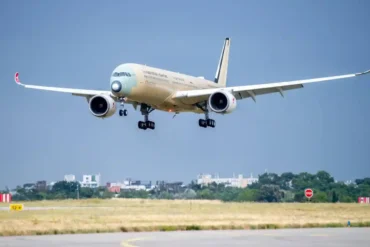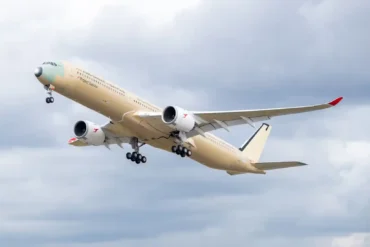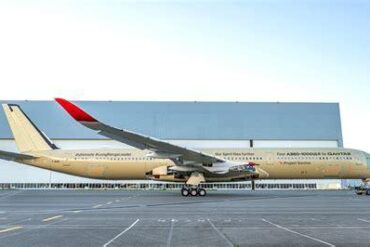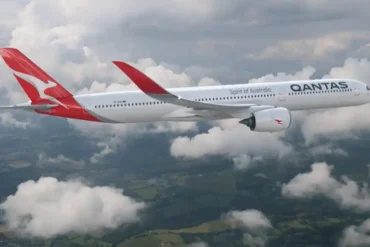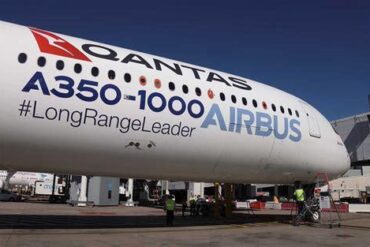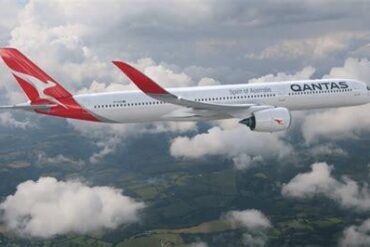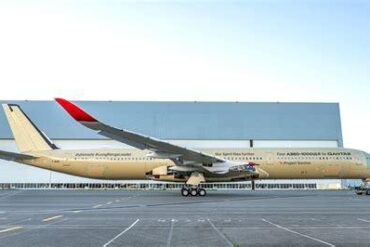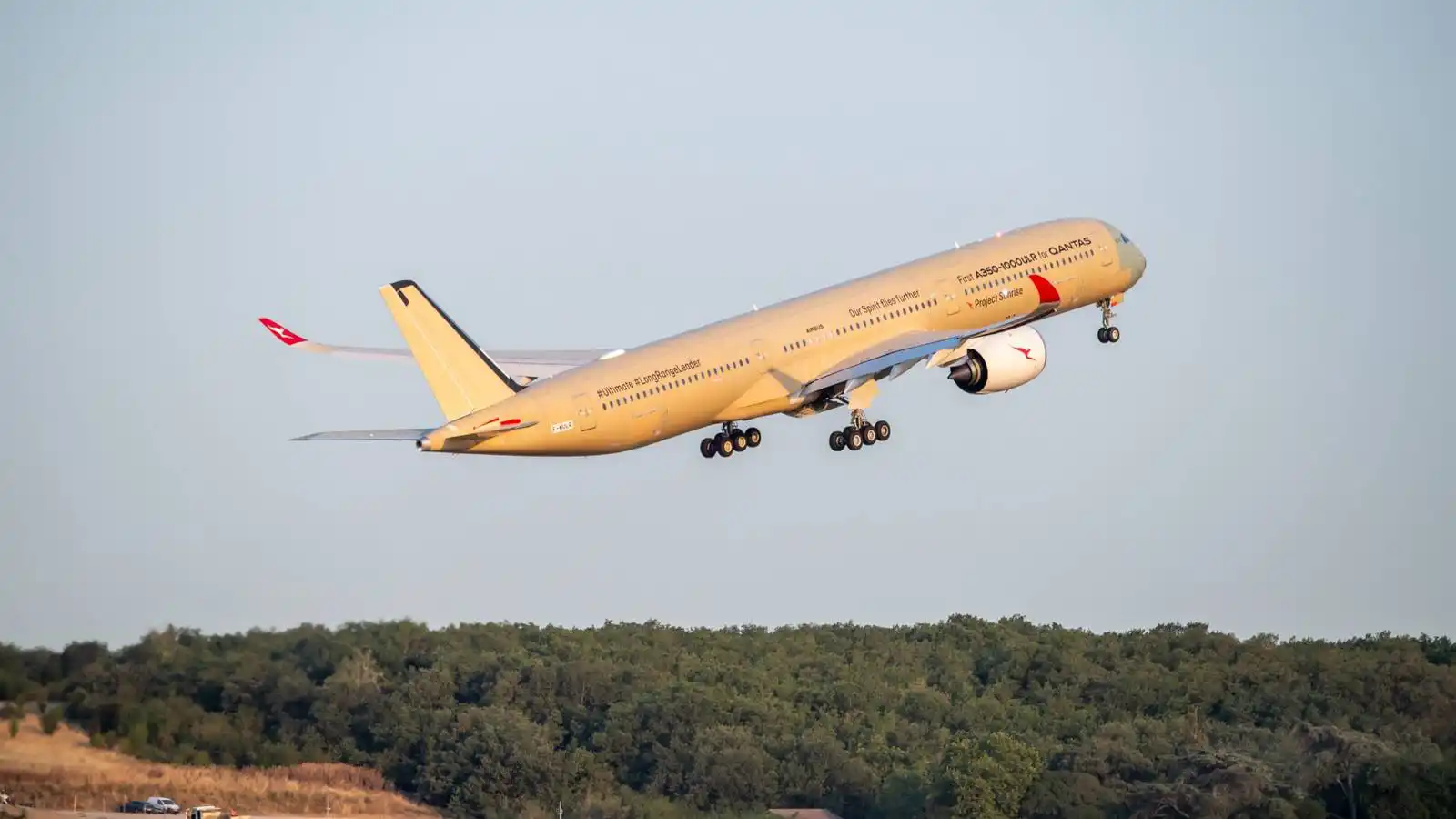
The Qantas Airbus A350-1000ULR has embarked on one of the most ambitious flight-test missions in commercial aviation history, completing a remarkable eastbound journey from Melbourne to Toulouse that pushed the limits of modern ultra-long-range aircraft capability. Instead of following the shorter westbound route back to Airbus facilities in France, the aircraft took the “long way round,” flying across the Pacific Ocean and toward the northern hemisphere in a nonstop endurance test lasting more than 22 hours.
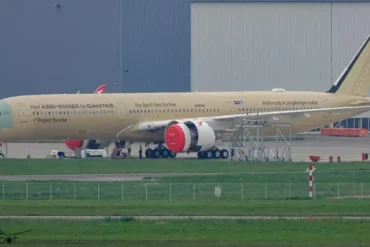
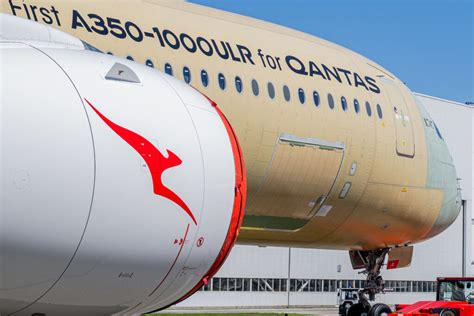
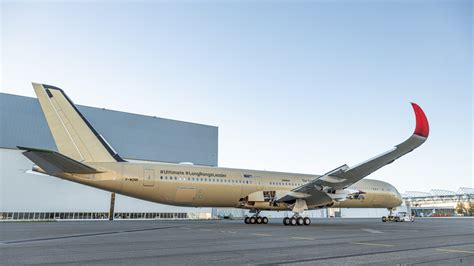
The aircraft, carrying the test registration F-WULR, is the first example of the specially developed A350-1000ULR variant created for Qantas’ ambitious Project Sunrise program. The mission followed a previous milestone flight from Toulouse to Melbourne, which attracted worldwide attention after becoming one of the most tracked flights on aviation monitoring platforms.
A Record-Breaking Airbus A350-1000ULR Flight Test Mission
According to flight tracking data, the A350-1000ULR departed Melbourne Airport at 5:27 PM local time and immediately began a very different return journey compared with its previous flight path. Rather than heading northwest across Asia and the Indian Ocean, the aircraft turned northeast over the Pacific, crossing the International Date Line near Tonga before continuing toward French Polynesia.
The estimated nonstop flight duration reached approximately 22 hours and 18 minutes, making it one of the longest test flights ever performed by a commercial widebody aircraft. The flight operated under the callsign AIB35LR, with Airbus test pilots and two Qantas pilots onboard to collect valuable operational data.
This extensive mission was designed to evaluate aircraft performance, fuel efficiency, cabin systems, crew procedures, and passenger experience factors during the extremely long flights planned for Qantas’ future nonstop routes. Such testing is essential because Project Sunrise flights will require aircraft to operate safely and efficiently on routes connecting Australia with destinations such as London and New York.
Why the Eastbound Route Matters for Project Sunrise
The return flight was not simply a demonstration of range. It represented a complex evaluation of how the aircraft behaves during different long-haul scenarios. The outbound Toulouse-to-Melbourne test flight followed a more traditional route across Europe, the Middle East, Asia, and the Indian Ocean, completing the journey in just over 19 hours.
The eastbound return created a completely different challenge. Flying across the Pacific requires careful planning because of limited diversion options, changing weather patterns, and the need to optimize fuel reserves. The aircraft’s performance during this mission provides Airbus and Qantas with critical information about operating conditions that could influence future ultra-long-haul services.
The A350-1000ULR is based on Airbus’ proven A350-1000 platform but incorporates modifications specifically designed for exceptional range capability. Qantas has worked closely with Airbus to create an aircraft capable of connecting Australia directly with major global cities without traditional stopovers.
Qantas’ Special 238-Seat A350-1000ULR Configuration
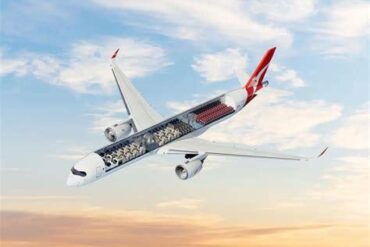
Unlike standard high-density long-haul aircraft layouts, Qantas’ A350-1000ULR fleet will feature a premium-focused cabin designed around passenger comfort during flights lasting more than 20 hours.
The aircraft will contain 238 seats across four cabins, including six first-class suites, 52 business-class flatbeds, 40 premium-economy recliners, and 140 economy seats. This lower-density configuration allows Qantas to provide additional space, improved amenities, and features designed specifically for ultra-long-range travel.
The airline believes that passenger wellbeing will become increasingly important as nonstop flights continue to expand. The A350-1000ULR cabin will include dedicated areas intended to encourage movement, relaxation, and improved comfort during extremely long journeys.
Qantas Project Sunrise Moves Toward 2027 Launch
Qantas currently has 12 Airbus A350-1000ULR aircraft on order, with the fleet expected to become the foundation of its next-generation international network. The aircraft will eventually receive Australian registrations, while the current test aircraft remains under its French registration during the certification process.
The first customer aircraft is scheduled to arrive ahead of the planned launch of nonstop Sydney-London services, which Qantas expects to begin selling in 2027. The airline has named the first aircraft “Vega,” continuing its tradition of giving special names to important fleet additions.
Project Sunrise represents one of the biggest changes in modern airline network planning. By eliminating intermediate stops on some of the world’s longest routes, Qantas aims to reduce travel times while creating a more direct connection between Australia and major international markets.
A New Era of Ultra-Long-Haul Aviation
The 22-hour Airbus A350-1000ULR test flight demonstrates how far commercial aviation technology has advanced. Modern composite structures, efficient Rolls-Royce engines, advanced aerodynamics, and improved cabin systems are allowing airlines to consider routes that were once impossible.
For Qantas, this aircraft is more than a new fleet addition. It represents a strategic investment in the future of global travel and Australia’s connection with the world. As the testing program continues, every long-distance mission brings the airline closer to introducing a new era of nonstop aviation.
The “long way round” flight from Melbourne to Toulouse was not merely a journey across oceans. It was a preview of how the next generation of aircraft could redefine the boundaries of commercial air travel.