For decades, the sheer geography of Australia shaped global aviation. Flying from Sydney to London or New York meant accepting a long procession of stopovers, airport lounges, overnight hotel stays, and jet lag that seemed almost unavoidable. Travelers crossing hemispheres became accustomed to treating transit hubs like Singapore, Dubai, or Los Angeles as mandatory pauses in an exhausting journey.
Qantas is now attempting to rewrite that reality entirely.
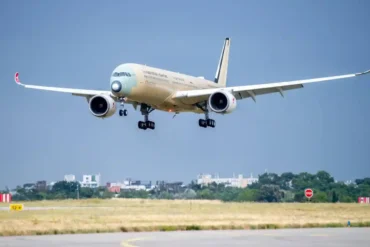
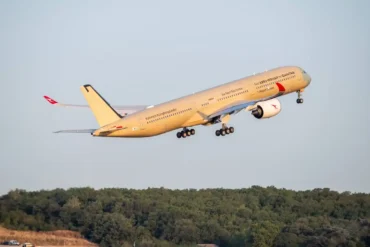
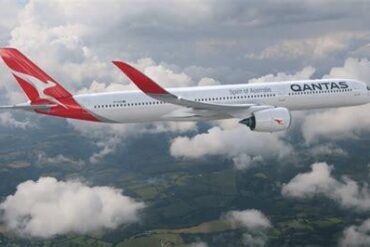
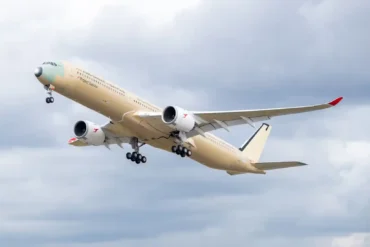
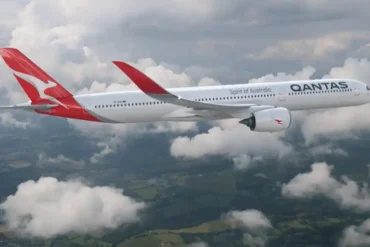
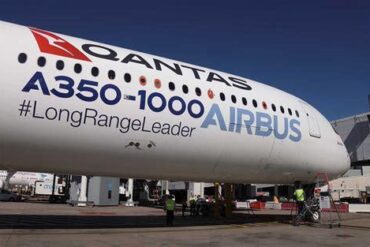
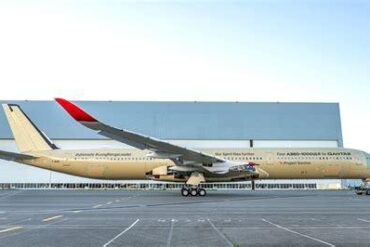
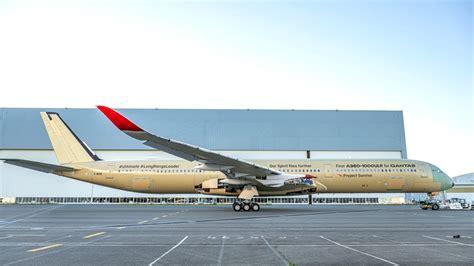
Through its ambitious Project Sunrise initiative, the Australian flag carrier plans to operate the world’s longest nonstop commercial flights using a specially modified Airbus A350-1000ULR. These aircraft are designed to remain airborne for as long as 22 hours, connecting Sydney directly with London and New York without a single intermediate landing. The idea once sounded almost impossible outside experimental aviation circles. Today, it is rapidly becoming commercial reality.
The implications stretch far beyond aviation marketing. A nonstop flight lasting nearly an entire day changes aircraft engineering, fuel economics, passenger psychology, cabin design, airline competition, and even the strategic importance of global transit hubs. The Airbus A350-1000ULR is not simply a longer-range airplane. It represents a radical shift in how airlines think about distance itself.
By combining advanced aerodynamics, fuel optimization, lightweight composite structures, and carefully engineered passenger wellbeing systems, Qantas and Airbus are attempting to overcome one of commercial aviation’s final frontiers.
The Aircraft Designed To Fly Nearly A Full Day
The standard Airbus A350-1000 is already among the most capable long-haul aircraft ever built. Airlines across the world use it on premium intercontinental routes because of its efficiency, quiet cabin, and impressive range. Yet the version built for Qantas pushes the platform into an entirely different category.
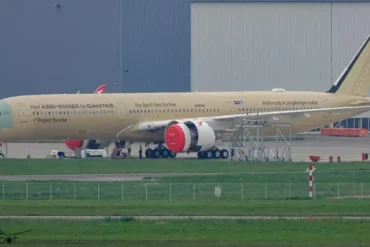
The A350-1000ULR — short for Ultra Long Range — has been engineered specifically for endurance. Airbus modified the aircraft to carry substantially more fuel while maintaining operational safety and passenger comfort over extraordinary distances.
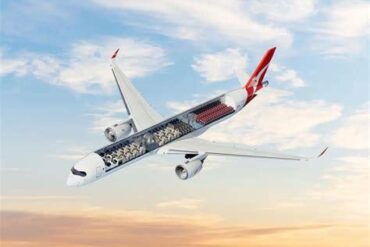
One of the most critical additions is a permanent rear-center fuel tank integrated into the airframe. This modification adds approximately 20,000 liters of extra fuel capacity without sacrificing valuable cargo space beneath the cabin floor. Altogether, the aircraft can hold roughly 176,000 liters of fuel, dramatically increasing the distance it can travel before refueling becomes necessary.
That enormous fuel load pushes the aircraft’s maximum takeoff weight to around 322 tonnes. At departure, the aircraft becomes extraordinarily heavy, requiring structural reinforcement throughout the landing gear and wings. Airbus also optimized the wing design with taller aerodynamic winglets that reduce drag and improve fuel efficiency during long cruise segments.
Every engineering change serves one central purpose: extending endurance while minimizing fuel burn.
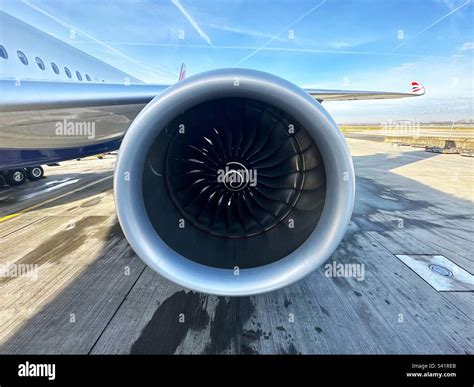
Under the wings sit two Rolls-Royce Trent XWB-97 engines, each capable of generating approximately 97,000 pounds of thrust. These engines are among the most efficient large turbofans currently operating in commercial aviation. Compared with previous-generation long-range aircraft, they reduce fuel consumption dramatically while delivering the power necessary to lift a fuel-heavy aircraft into the sky.
Efficiency matters enormously on flights approaching 22 hours. Fuel saved during the early stages of flight directly determines how much operational flexibility remains later in the journey. On routes this long, every kilogram matters.
How Long Could The Airbus A350-1000ULR Actually Stay Airborne?
The headline figure surrounding Project Sunrise is the possibility of 22-hour flights. Technically, the aircraft could remain airborne for slightly longer under ideal conditions. However, aviation rarely operates under ideal conditions for extended periods.
The A350-1000ULR’s theoretical range sits near 10,000 nautical miles, or roughly 18,520 kilometers. In practical airline operations, though, range calculations involve far more than simply measuring the distance between two airports.
Weather plays a massive role.
Flights between Australia, Europe, and North America encounter complex atmospheric conditions across the Indian Ocean, Pacific Ocean, and polar regions. Powerful jet streams can either accelerate aircraft significantly or force engines to work harder against strong headwinds. A route that looks achievable on paper may suddenly require additional fuel reserves because of changing upper-atmosphere winds.
International regulations also require aircraft to carry reserve fuel beyond planned consumption. Pilots must have enough fuel available to divert to an alternate airport and remain airborne for additional holding time if necessary. These safety margins are non-negotiable.
As a result, the scheduled flight durations for Project Sunrise services will likely remain closer to 20 or 21 hours rather than the aircraft’s absolute maximum endurance capability.
Still, even that figure is astonishing in the context of commercial aviation history.
Just a generation ago, a 20-hour passenger flight belonged firmly in the realm of theoretical aerospace discussions. Today, airlines are preparing to sell tickets for exactly that experience.
Why Qantas Removed More Than 100 Seats
One of the most surprising aspects of the Qantas A350-1000ULR configuration is its unusually low passenger count.
A conventional Airbus A350-1000 typically carries between 350 and 410 passengers depending on airline layout choices. Qantas will configure its ultra-long-range aircraft with only 238 seats.
That reduction is not a luxury indulgence alone. It is an operational necessity.
Weight determines everything in ultra-long-haul aviation. More passengers mean more baggage, more catering supplies, more water, more onboard equipment, and ultimately more fuel required to transport all of that mass across vast distances.
Every additional kilogram reduces achievable range.
To ensure nonstop flights between Sydney and London remain operationally viable even during adverse weather conditions, Qantas intentionally reduced cabin density. The airline prioritized fuel capacity and range reliability over maximizing passenger volume.
The resulting cabin layout focuses heavily on premium seating:
- Six first-class suites
- Fifty-two business-class suites
- Forty premium economy seats
- One hundred forty economy seats
The configuration reveals the airline’s commercial strategy immediately. Qantas is targeting high-yield premium travelers rather than mass-market volume.
Corporate executives, affluent leisure travelers, and time-sensitive passengers form the ideal customer base for Project Sunrise. For these travelers, avoiding transit delays, overnight stopovers, immigration lines, and missed connections carries enormous value.
Saving several hours while traveling directly between major financial centers becomes worth paying a substantial premium.
The Extraordinary Challenge Of Passenger Survival And Comfort
Engineering an aircraft capable of flying for 22 hours is only half the challenge.
The larger question is whether passengers can tolerate such flights physically and psychologically.
Sitting inside a pressurized metal tube for nearly an entire day places unusual stress on the human body. Fatigue, dehydration, muscle stiffness, sleep disruption, and circulation problems all become significantly more pronounced during ultra-long-haul operations.
Qantas therefore approached Project Sunrise as both an aerospace project and a scientific wellness experiment.
The airline worked closely with researchers from the Charles Perkins Centre to study how prolonged flying affects the body. Their findings directly shaped cabin design decisions aboard the A350-1000ULR.
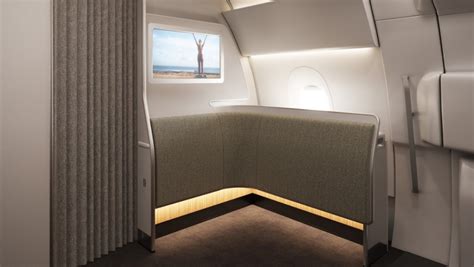
Perhaps the most innovative feature is the dedicated wellbeing zone located between cabins. Instead of maximizing seat count, Qantas created an open communal space where passengers can stretch, hydrate, and move throughout the journey.
The zone includes:
- Guided exercise displays
- Stretching support structures
- Hydration stations
- Open standing areas
This may sound minor, but movement becomes critically important during flights lasting close to an entire day. Even brief periods of mobility can reduce fatigue and improve circulation substantially.
The cabin environment itself also differs dramatically from older aircraft generations.
Traditional airliners maintain cabin pressure equivalent to roughly 8,000 feet above sea level. Over long durations, that reduced oxygen level contributes heavily to exhaustion and dehydration. Thanks to its carbon-fiber composite fuselage, the A350 can safely maintain a lower cabin altitude near 6,000 feet.
Passengers absorb more oxygen, retain moisture more effectively, and experience less physiological strain during flight.
Humidity levels are also higher than on older aircraft, helping combat dry skin, irritated eyes, and dehydration that often accompany long-haul travel.
How Lighting Becomes A Weapon Against Jet Lag
Crossing multiple time zones within a single flight creates enormous disruption to human circadian rhythms. A traveler departing Sydney may experience daylight for what feels like an impossibly long stretch before suddenly arriving in London or New York on an entirely different biological schedule.
Qantas and Airbus therefore invested heavily in adaptive cabin lighting systems.
The aircraft uses advanced LED technology capable of generating millions of color combinations. Throughout the journey, lighting changes gradually to mimic natural sunrise and sunset cycles aligned with the destination time zone.
Warm amber tones transition into cooler blue shades over carefully planned intervals. These subtle adjustments influence melatonin production inside the body, helping passengers prepare biologically for their arrival location.
The approach transforms lighting into an active wellness tool rather than simple cabin decoration.
It is one of the clearest examples of how Project Sunrise blends aerospace engineering with human physiology.
Ultra-long-haul flying is no longer simply about building aircraft capable of crossing greater distances. It is increasingly about making those distances survivable in commercial terms.
The Economics Behind A 22-Hour Flight
Despite the technological achievement, ultra-long-haul flights remain financially complicated.
A nonstop Sydney-to-London service sounds efficient from a passenger perspective, but operational economics tell a more nuanced story.
During the early portion of the flight, the aircraft burns enormous amounts of fuel simply carrying the fuel needed later in the journey. This creates an inherent efficiency paradox. The plane departs extraordinarily heavy, consuming substantial energy before gradually becoming lighter over time.
Fuel prices therefore become critically important.
When global oil prices rise sharply, the operating cost of ultra-long-haul services can increase dramatically. Because these flights already require massive fuel loads, even moderate price spikes create significant financial pressure.
This explains why Qantas designed the cabin around premium revenue generation.
Business-class and first-class passengers contribute disproportionately large revenue relative to the space they occupy. By dedicating substantial cabin real estate to premium suites, the airline hopes to offset the enormous operational costs associated with flying nonstop across half the planet.
The pricing structure will likely reflect that reality.
Project Sunrise tickets are expected to command premiums approximately 20% to 30% higher than traditional one-stop itineraries. For business travelers, that premium may feel acceptable. For families or leisure travelers, it could become harder to justify.
That divide may ultimately define the long-term market for ultra-long-haul operations.
Why Many Travelers Still Prefer Stopovers
The romantic appeal of flying nonstop between distant continents is undeniable. Yet not every passenger actually wants to remain inside an aircraft for 20 consecutive hours.
A significant percentage of leisure travelers still prefer stopovers.
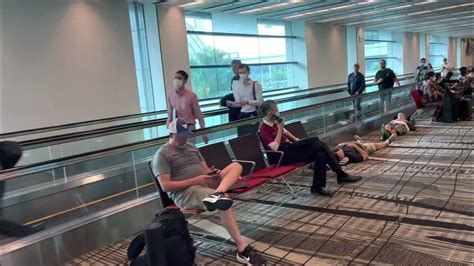
For some, a transit break offers psychological relief. Walking through an airport terminal, taking a shower, eating a meal on solid ground, or spending several hours in a hotel can make intercontinental travel feel less physically punishing.
Transit hubs have also evolved dramatically over the past two decades. Airports like Singapore Changi, Doha Hamad, and Dubai International transformed layovers into experiences rather than inconveniences.
Passengers now encounter:
- Rooftop swimming pools
- Luxury transit hotels
- Wellness spas
- Fine dining
- Gardens and entertainment zones
- Premium lounge facilities
For budget-conscious travelers especially, accepting a short stopover in exchange for lower airfare remains highly attractive.
A family of four could save thousands of dollars by choosing a one-stop itinerary instead of a premium-priced nonstop Project Sunrise ticket.
That economic reality ensures traditional hub carriers will remain formidable competitors even as ultra-long-haul flights expand.
The Strategic Battle For The Kangaroo Route
Beyond technology and passenger comfort, Project Sunrise represents an aggressive competitive move by Qantas.
For decades, airlines based in the Middle East and Southeast Asia dominated travel between Australia and Europe. Emirates, Qatar Airways, Singapore Airlines, and Etihad built powerful business models around connecting passengers through massive global hubs.
Australia’s geographic isolation worked against its national carrier.
Passengers traveling from Sydney or Melbourne to Europe often found faster, cheaper, or more convenient connections through Dubai, Singapore, or Doha than through Qantas-operated routes.
Project Sunrise aims to reclaim that market.
By eliminating stopovers entirely, Qantas hopes to persuade premium travelers to return to nonstop Australian-operated services. The strategy focuses less on price competition and more on convenience, time savings, and exclusivity.
Direct flights between Sydney and London or New York become prestige products aimed at travelers who value efficiency above all else.
If successful, the model could reshape airline network strategies globally.
Rather than funneling passengers through giant centralized hubs, airlines may increasingly explore direct connections between distant city pairs previously considered commercially impossible.
The traditional hub-and-spoke system would not disappear overnight, but ultra-long-range aircraft could gradually weaken its dominance in premium markets.
The Future Of Ultra-Long-Haul Aviation
Project Sunrise represents more than an ambitious airline experiment. It signals the beginning of a new era in commercial aviation.
Aircraft manufacturers continue pursuing lighter materials, more efficient engines, sustainable aviation fuels, and advanced aerodynamic designs. As those technologies improve, routes once considered absurdly long become increasingly practical.
The Airbus A350-1000ULR may therefore become the first of many aircraft designed specifically for extreme endurance.
Future generations of ultra-long-haul aircraft could eventually connect city pairs such as:
- Sydney to Paris
- Melbourne to Frankfurt
- Brisbane to Chicago
- Auckland to Rio de Janeiro
The psychological map of the world changes when flights spanning half the globe become routine.
For passengers, the experience may remain physically demanding. Twenty hours inside an aircraft cabin will never feel casual. Yet commercial aviation has consistently expanded the boundaries of what travelers consider normal.
There was once a time when crossing the Atlantic nonstop seemed extraordinary. Later, nonstop Pacific crossings appeared revolutionary. Today, both are standard parts of global transportation.
Qantas’ Airbus A350-1000ULR now pushes aviation into its next frontier — a future where almost any two major cities on Earth may eventually be linked in a single uninterrupted journey.
And remarkably, the aircraft designed to accomplish that mission could stay airborne for nearly an entire day.