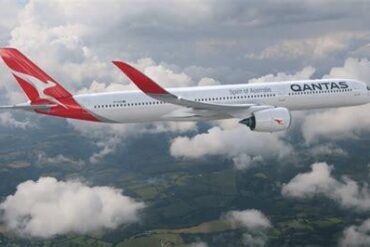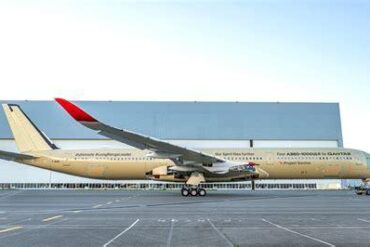
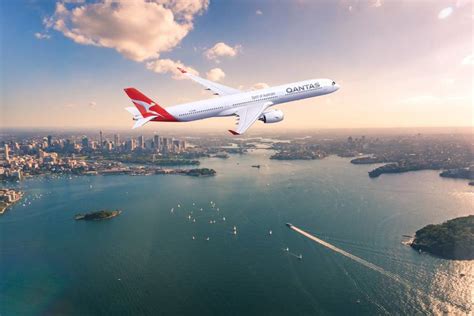
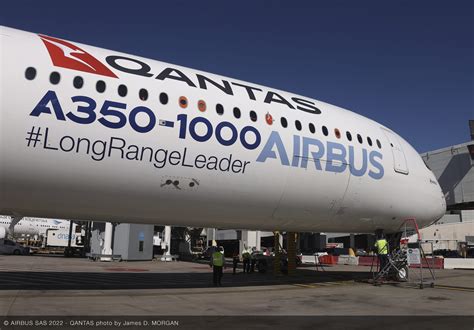
Flying non-stop for 20 hours across the globe is no longer an ambition of the distant future. With Qantas’ Project Sunrise, the legendary Australian airline is set to redefine long-haul air travel by introducing what is poised to be the world’s longest commercial flight, connecting New York and London directly to Sydney. Slated to begin in 2027, this ambitious endeavor leverages the newly modified Airbus A350-1000, equipped to handle ultra-long-haul distances while delivering next-generation comfort, design, and wellness features.
Project Sunrise: A Historic Leap in Aviation
Qantas’ Project Sunrise has long captured the attention of aviation enthusiasts and frequent flyers alike. Its promise? To cut down total travel time by eliminating layovers and to offer a flight experience tailored to the unique physiological and psychological demands of 20-hour non-stop travel. With routes spanning between Sydney and major global hubs like New York and London, the project isn’t just a technical feat—it’s a holistic reimagining of the airborne journey.
Central to this reimagining is the Airbus A350-1000, a widebody aircraft renowned for its fuel efficiency and range. Qantas has customized this aircraft with not just endurance in mind, but luxury, ergonomics, and wellness as foundational principles.
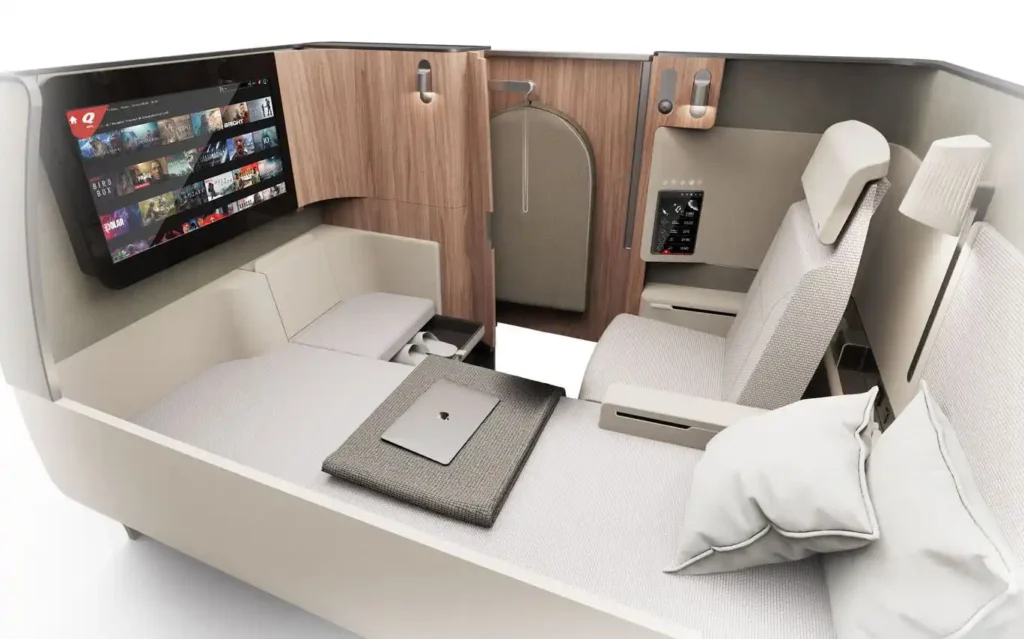
First-Class Cabins: Private Sanctuaries at 40,000 Feet
The first-class experience aboard Qantas’ A350 rivals private aviation standards. There are only six first-class suites, making this class an ultra-exclusive environment. Each suite is enclosed with over 4-foot-high walls and a sliding privacy door, ensuring maximum personal space.
Inside, passengers enjoy a fully flat 6-foot bed, a reclining armchair, and a 32-inch ultra-high-definition screen equipped with Bluetooth audio for personal device connectivity. The work and dining area, capable of accommodating two people, makes it equally suitable for productivity and leisure. Added to this is a full-length wardrobe, offering a boutique-hotel-like atmosphere high above the clouds.
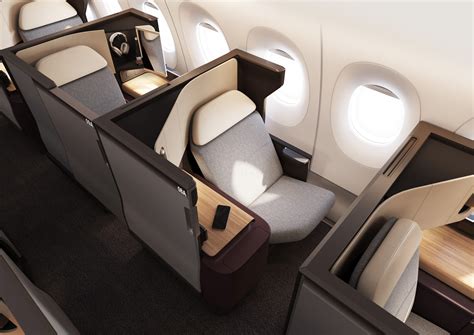
Business Class: Spacious Elegance Meets Utility
For those who seek luxury without the exclusivity of first class, the business class cabin offers a compelling alternative. Each 25-inch-wide seat is housed in its own semi-enclosed shell, offering a cocoon of comfort and privacy. The seat converts into a flatbed stretching over 6 feet, ideal for restful sleep during the long journey.
Business class passengers enjoy an 18-inch entertainment screen, a side shelf for storage, multiple USB-C and universal outlets, and direct aisle access for every seat. The cabin’s refined lighting and material palette evoke a calm, subdued elegance—a tranquil escape from the duration of the journey itself.
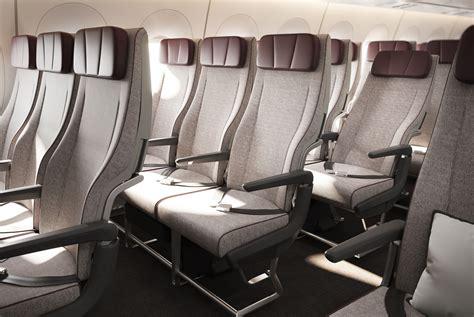
Premium Economy: Comfort and Accessibility in Balance
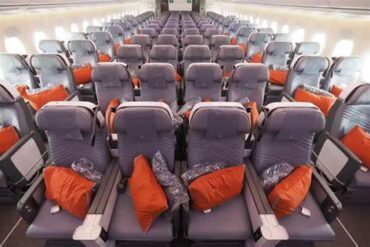
Positioned between economy and business, premium economy offers significantly upgraded features while remaining more affordable. Seats offer a 40-inch pitch, winged headrests, and an extendable calf rest, ensuring enhanced lower body circulation during the flight.
Entertainment is served via a 13.3-inch screen, and each seat has USB-C charging ports, three storage pockets, and easy access to cabin amenities. While privacy is limited compared to business class, premium economy’s generous legroom and ergonomic design offer substantial comfort for extended travel.
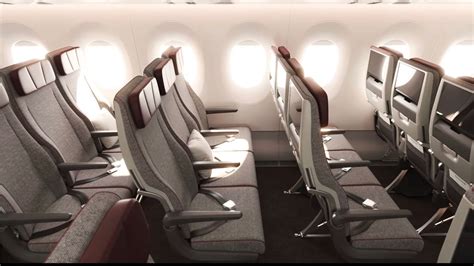
Economy Class: Compact Yet Considerate Design
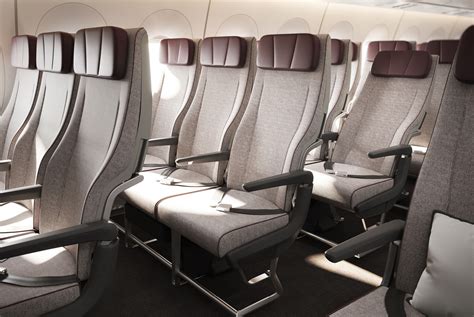
Though far removed from the opulence of first class, the economy class on the A350-1000 is far from an afterthought. Qantas has paid close attention to passenger needs, especially considering the length of the journey. Seats offer a 33-inch pitch—more generous than many competitors—and feature a six-way adjustable headrest to support various sleeping positions.
Each seat is equipped with a 13.3-inch high-definition screen, a fold-down shelf for devices or small items, and optimized seat padding for long-haul comfort. While flatbeds are absent, the inclusion of high-quality entertainment and mindful ergonomics suggests Qantas hasn’t neglected the more budget-conscious traveler.
Wellness Zone: A Revolutionary In-Flight Amenity
Perhaps the most forward-thinking feature of the Project Sunrise aircraft is its dedicated Wellness Zone. Designed for all passengers regardless of ticket class, this unique space focuses on physical activity, mental relaxation, and hydration. The wellness area includes padded leaning walls, a movement space for light stretching, and a self-serve hydration and nutrition bar.
Qantas has collaborated with medical and scientific institutions to ensure that this feature addresses real physical needs on ultra-long flights—combating circulation issues, reducing jet lag, and enhancing the overall passenger experience.
Technological Enhancements and Sustainability Commitments
Beyond cabin features, Qantas’ A350s come equipped with advanced cabin pressure systems, higher humidity levels, and improved air filtration to reduce fatigue and discomfort. Ambient lighting systems dynamically adjust to mimic the natural daylight of destination time zones, supporting circadian alignment and reducing jet lag.
On the sustainability front, Project Sunrise is embedded in Qantas’ larger push toward net zero emissions by 2050. These aircraft utilize more efficient Rolls-Royce Trent XWB engines and lightweight cabin materials, while also being compatible with sustainable aviation fuel (SAF). Qantas has pledged to incorporate SAF on 10% of its fuel supply by 2030.
Who This Flight Is For
The world’s longest flight is clearly designed with a stratified passenger experience in mind. Business travelers looking for time efficiency, luxury seekers desiring private sanctuaries, and economy fliers determined to skip layovers all stand to benefit in different ways.
While premium offerings elevate the onboard experience to private jet-level luxury, the inclusion of wellness features and generous economy dimensions ensures a broad accessibility. For travelers prioritizing speed, comfort, and health during long-haul journeys, this flight represents a paradigm shift.
The Final Approach
As we approach 2027, anticipation builds around whether Qantas’ Project Sunrise will not only achieve its ambitious engineering goals but also set a new gold standard in aviation comfort. With cutting-edge design across all cabin classes, a revolutionary wellness zone, and a firm commitment to sustainability, this flight could very well reshape what passengers expect from ultra-long-haul travel.
What once was a test of endurance may soon become a seamless, even pleasurable experience—a rare feat in the world of modern aviation.