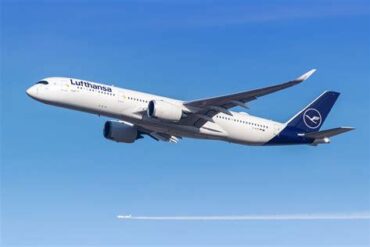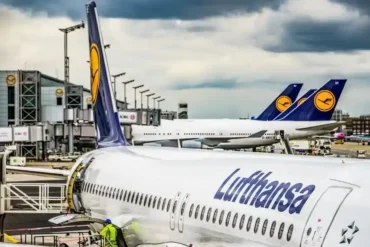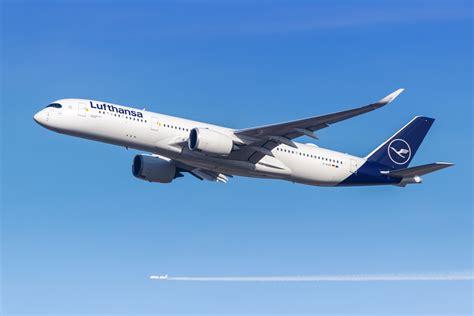
Lufthansa’s long-haul strategy has entered a decisive phase as the Airbus A350 increasingly becomes the backbone of the airline’s intercontinental network. Since the first aircraft joined the fleet in December 2016, Lufthansa has steadily expanded its use of the type, positioning it as one of the most important widebody aircraft in the company’s modern history. By 2026, the German flag carrier operates 31 Airbus A350-900 aircraft, with another 14 scheduled for delivery and additional orders placed for 15 larger Airbus A350-1000s.
The scale of this commitment highlights how crucial the aircraft is for Lufthansa’s future operations. Once all deliveries are completed, the airline’s A350 fleet will reach 60 aircraft, making it the largest twin-aisle fleet in the Lufthansa Group. The aircraft’s reputation for exceptional fuel efficiency, advanced aerodynamics, and long-range performance makes it ideal for linking Europe with destinations across Asia, North America, and beyond.
Much of Lufthansa’s Airbus A350 fleet operates from Munich Airport, the airline’s secondary hub after Frankfurt. Munich’s geographic location provides excellent access to Asia and North America, and the airport’s modern infrastructure allows Lufthansa to efficiently deploy the A350 on some of its longest and most strategically important routes. Although the airline occasionally bases A350 aircraft in Frankfurt, Munich remains the operational heart of the fleet.
Interestingly, despite the aircraft’s remarkable capabilities, Lufthansa rarely pushes the A350-900 to its absolute range limits. Instead, the airline focuses on routes that balance long distance with strong passenger demand and operational reliability. Even on shorter long-haul flights, the A350’s low fuel burn and efficient cabin layout make it an economically compelling choice.
Munich to Singapore: Lufthansa’s Longest Airbus A350 Route
Among Lufthansa’s entire Airbus A350 network, the route connecting Munich Airport (MUC) and Singapore Changi Airport (SIN) stands as the airline’s longest in 2026. Covering a great-circle distance of 5,433 nautical miles (10,062 kilometers), the flight represents one of the most significant intercontinental links between Europe and Southeast Asia.
The service typically operates five to seven times per week, reflecting strong demand from both business travelers and long-haul leisure passengers. Lufthansa schedules approximately 12 hours and 15 minutes for the flight from Munich to Singapore, while the return journey usually takes closer to 13 hours, depending on winds and routing conditions.
Singapore is also a key destination within the Star Alliance network, which strengthens the strategic value of the route. Lufthansa’s flights complement those operated by Singapore Airlines, which also deploys Airbus A350 aircraft on the same city pair. Meanwhile, Lufthansa continues to maintain an additional Singapore connection from Frankfurt using the Boeing 747-8, offering travelers multiple routing options.
In operational terms, the Munich–Singapore route showcases the A350’s ability to deliver high efficiency on ultra-long sectors without sacrificing passenger comfort. The aircraft’s quieter cabin, improved air circulation, and larger windows make the long journey noticeably more comfortable compared with previous-generation aircraft.
Japan Connections: Munich to Tokyo and Osaka
Japan represents another cornerstone of Lufthansa’s long-haul A350 network. The airline operates daily service between Munich and Tokyo Haneda Airport, a route spanning approximately 5,066 nautical miles (9,381 kilometers).
Despite being shorter than the Singapore flight in pure distance, the Tokyo service often experiences longer flight times due to geopolitical factors affecting global aviation routes. The ongoing restrictions on Russian airspace force airlines to take longer paths over Central Asia or the Arctic, adding significant distance and time to eastbound flights.
As a result, Lufthansa schedules about 12 hours and 20 minutes for the journey from Munich to Tokyo, while the return flight to Germany can stretch to 14 hours and 25 minutes. These extended durations illustrate how airspace constraints continue to reshape long-haul flight planning across Eurasia.
Closely following Tokyo in distance is Lufthansa’s service from Munich to Osaka Kansai International Airport. At 5,001 nautical miles (9,261 kilometers), it remains one of the airline’s longest A350 routes in Asia.
Japan’s strong economic ties with Germany help sustain these routes. Major industries such as automotive manufacturing, technology, and engineering generate a steady flow of business travelers, while tourism between the two countries continues to grow steadily.
Frankfurt’s Asian A350 Network
Although Munich dominates Lufthansa’s A350 operations, the airline also deploys several aircraft from Frankfurt Airport, particularly on routes to East Asia. These services help balance capacity across the airline’s two primary hubs.
One of the most prominent routes is Frankfurt to Hong Kong, which spans roughly 4,951 nautical miles (9,169 kilometers). Hong Kong remains a major financial center and cargo hub, making it an essential destination for both passenger and freight traffic.
Another important connection is the Frankfurt–Shanghai route, covering 4,794 nautical miles (8,878 kilometers). Shanghai’s role as China’s commercial capital ensures steady demand for premium travel, especially in Lufthansa’s business class cabins.
In addition to these routes, Lufthansa operates the Airbus A350 between Frankfurt and Seoul, further strengthening the airline’s presence in Northeast Asia.
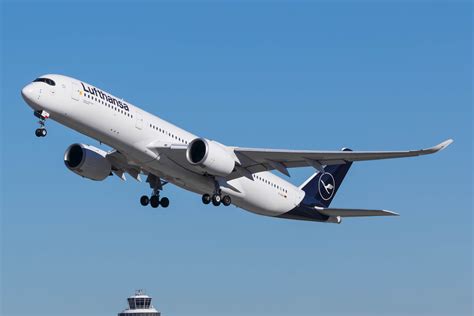
These Asian routes demonstrate how Lufthansa strategically spreads A350 capacity across its hubs to maintain network flexibility. While Munich handles many of the longest routes, Frankfurt remains essential for connecting Germany’s financial center with major Asian markets.
North America and Latin America: A350 Expansion Across the Atlantic
For Lufthansa, North America remains the largest long-haul market, and the Airbus A350 plays a growing role in serving cities across the continent. Many of these routes originate from Munich, where the aircraft’s efficiency and passenger comfort help Lufthansa compete against both European and North American carriers.
Surprisingly, Lufthansa’s longest A350 route to the Americas does not go to the United States. Instead, it connects Munich with Mexico City International Airport, spanning 5,324 nautical miles (9,860 kilometers).
The route typically operates three times per week and requires roughly 12 hours and 50 minutes westbound, with the return flight taking approximately 11 hours and 10 minutes due to favorable winds.
Mexico City presents unique operational challenges because of its high-altitude airport, which reduces aircraft performance during takeoff. The Airbus A350’s powerful engines and efficient aerodynamics help mitigate these limitations, making it a suitable aircraft for the route.
South America: Munich to São Paulo
Another key long-haul destination is São Paulo Guarulhos International Airport, Lufthansa’s primary gateway to Brazil. The route covers 5,311 nautical miles (9,837 kilometers), making it the airline’s longest Airbus A350 route to South America.
Flights to São Paulo typically take about 12 hours and 20 minutes, while the return leg to Munich averages 11 hours and 25 minutes. Brazil’s status as the largest economy in Latin America ensures consistent demand from both corporate travelers and the large European diaspora.
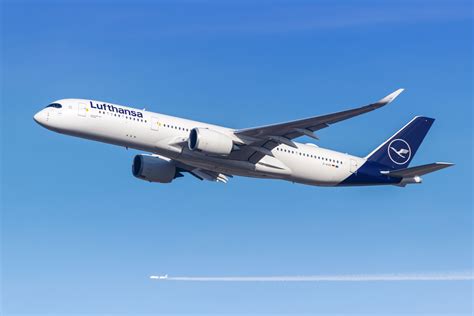
Beyond passenger traffic, cargo plays a major role on this route. High-value goods such as automotive components, pharmaceuticals, and electronics frequently travel between Germany and Brazil, making the A350’s cargo capacity particularly valuable.
The Longest U.S. Airbus A350 Route: Munich to San Diego
Among Lufthansa’s services to the United States, the route from Munich to San Diego International Airport stands out as the longest operated by the Airbus A350.
The flight spans 5,235 nautical miles (9,695 kilometers) and typically operates between three times per week and daily, depending on seasonal demand. San Diego is a particularly interesting destination because relatively few European airlines serve the airport directly.
In fact, only three European carriers operate flights to San Diego: Lufthansa, British Airways, and KLM. This limited competition allows Lufthansa to capture a strong share of the premium travel market between Southern California and Central Europe.
Additional Ultra-Long A350 Routes From Munich
Beyond San Diego, Lufthansa also deploys the Airbus A350 on several other major transatlantic routes. Two of the most significant are Munich to Los Angeles and Munich to San Francisco, both exceeding 5,100 nautical miles in distance.
These routes rank among the airline’s six longest A350 services, reflecting the immense demand for travel between Germany and California. Silicon Valley’s technology sector, Hollywood’s entertainment industry, and the region’s strong tourism market all contribute to high passenger volumes.
Interestingly, these North American flights are actually longer than several Asian routes operated by Lufthansa’s A350 fleet, highlighting how geography and routing patterns shape airline networks.
Africa Routes: Seasonal and Year-Round Connections
While Asia and the Americas dominate Lufthansa’s longest A350 routes, the airline also deploys the aircraft on services to southern Africa.
One notable example is the seasonal route between Munich and Cape Town, covering 4,937 nautical miles (9,143 kilometers). The service operates primarily during the European winter, when travel demand to South Africa’s summer destinations peaks.
Flights from Munich to Cape Town typically last about 11 hours and 15 minutes, making it comparable in length to many of Lufthansa’s East Asian routes.
Another African destination served by the Airbus A350 is Johannesburg O.R. Tambo International Airport. Although shorter at 4,542 nautical miles (8,412 kilometers), this route presents unique operational challenges due to the airport’s high elevation, which affects aircraft performance.
How Lufthansa Configures Its Airbus A350 Fleet
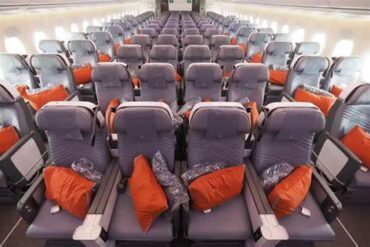
Passenger experience remains central to Lufthansa’s A350 strategy. Most aircraft in the fleet feature the airline’s previous-generation cabin layout, including the Collins Aerospace Diamond business class seat arranged in a six-abreast configuration.
A typical Airbus A350-900 in this configuration includes:
- 48 business class seats
- 21 premium economy seats
- 224 economy class seats
This layout provides a total capacity of 293 passengers, balancing premium seating with high-density economy cabins.
However, Lufthansa is gradually introducing its next-generation Allegris cabin concept on newer Airbus A350 aircraft. These upgraded jets feature an entirely redesigned interior, including a first-class cabin with four suites, improved business class seating from Stelia Aerospace, and enhanced premium economy products.
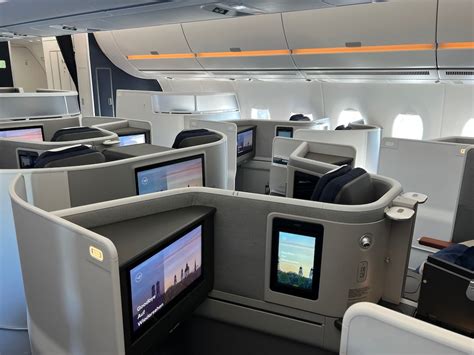
Aircraft equipped with Allegris carry 267 passengers, but the enhanced premium seating and upgraded onboard experience represent a major leap forward in Lufthansa’s long-haul product.
Why the Airbus A350 Has Become Lufthansa’s Flagship Long-Haul Aircraft
The Airbus A350’s dominance within Lufthansa’s fleet reflects broader trends in global aviation. Airlines increasingly favor fuel-efficient twin-engine widebody aircraft capable of flying long distances while consuming significantly less fuel than older four-engine models.
Compared with aircraft such as the Airbus A340-600, which the A350 gradually replaces, the newer jet offers dramatic improvements in efficiency, reliability, and passenger comfort. Its composite structure reduces weight, while advanced Rolls-Royce engines deliver exceptional performance on long-haul flights.
Another factor driving Lufthansa’s A350 expansion is the delay of the Boeing 777X program, which has forced the airline to rely more heavily on its existing widebody fleet. As a result, Lufthansa even transferred several A350 aircraft to Frankfurt in 2025 to fill capacity gaps caused by delayed aircraft deliveries.
By the end of the decade, Lufthansa’s A350 fleet will likely form the core of the airline’s long-haul network, connecting Europe with destinations across Asia, the Americas, and Africa. With its blend of range, efficiency, and passenger comfort, the aircraft perfectly aligns with Lufthansa’s strategy of operating long, high-demand intercontinental routes from Munich and Frankfurt.
The result is a global network where the Airbus A350 quietly handles some of the airline’s longest and most important flights—linking Germany with major economic centers thousands of miles away while redefining efficiency in modern aviation.