American Airlines operates one of the world’s largest airline networks, connecting passengers across North America, the Caribbean, Latin America, Europe, and beyond. While the carrier is well known for long-haul international services and major hub operations, some of its most interesting routes are among its shortest. These ultra-short international flights cross borders in less than an hour, proving that international aviation is not always about distance but about connectivity, tourism, and regional demand.
According to aviation analytics data from Cirium, American Airlines’ shortest international routes between August and December reveal a network heavily concentrated around Miami International Airport (MIA). The Florida hub acts as the airline’s primary gateway to the Bahamas and Caribbean, with nine of the carrier’s ten shortest international services departing from Miami.
The shortest route in the entire American Airlines international network is the remarkable Miami to Bimini flight, covering only 64 miles (102 kilometers). The service demonstrates how airlines can use small aircraft and frequent schedules to connect nearby islands and coastal communities efficiently.
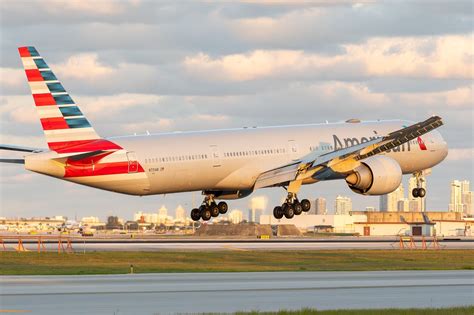
Miami to Bimini: American Airlines’ Shortest International Flight at Just 64 Miles
Launched on February 14, the American Airlines route between Miami and Bimini in the Bahamas became the airline’s shortest international service. The flight covers a distance of only 64 miles, with a gate-to-gate journey time of approximately 35 minutes in both directions.
Despite its short distance, the route plays an important role in regional transportation. Bimini is one of the closest Bahamian islands to Florida, making it attractive for weekend travelers, vacationers, and residents traveling between the United States and the Bahamas. For many passengers, this flight provides a faster alternative to longer ferry journeys while maintaining the convenience of air travel.
The route is operated as part of American Airlines’ broader Caribbean strategy, where short international connections help strengthen tourism links and support economic activity between neighboring countries. Although the flight is only slightly longer than many domestic regional services, it carries the distinction of being an international crossing, requiring border and customs procedures.
American Airlines’ Miami Hub Dominates the Shortest International Routes
Miami has long been one of American Airlines’ most important hubs, particularly for flights connecting the United States with Latin America and the Caribbean. Its geographic location makes it the natural launch point for short international flights to nearby island nations.
The second-shortest international route operated by American Airlines is Miami to Freeport, another Bahamas service covering just 112 miles (179 kilometers). Operated through the American Eagle brand, the route takes approximately 45 minutes each way and operates year-round.
Freeport, located on Grand Bahama Island, is a major tourism destination with connections to beaches, resorts, and business activities. American Airlines’ service provides an important link between South Florida and the Bahamas, where demand is driven by both leisure and regional travel.

The third-shortest route is Miami to Nassau, covering 183 miles (292 kilometers). Nassau is the capital and largest city of the Bahamas, and its airport is the country’s busiest aviation gateway. The flight takes around one hour, making it one of the most convenient international connections available from the United States.
Other short Miami-based international routes include flights to Varadero, Marsh Harbour, North Eleuthera, Santa Clara, Havana, and Governor’s Harbour. These services highlight American Airlines’ strong presence throughout the Caribbean region.
The Full List of American Airlines’ 11 Shortest International Flights
American Airlines’ shortest international routes show how the carrier uses regional connectivity to serve destinations where geography plays a major role. The airline’s Miami network dominates the ranking, while two routes from Phoenix connect the United States with Mexico.
The shortest routes include:
- Miami to Bimini, Bahamas — 64 miles (102 km)
- Miami to Freeport, Bahamas — 112 miles (179 km)
- Miami to Nassau, Bahamas — 183 miles (292 km)
- Miami to Varadero, Cuba — 194 miles (310 km)
- Miami to Marsh Harbour, Bahamas — 205 miles (328 km)
- Miami to North Eleuthera, Bahamas — 226 miles (361 km)
- Miami to Santa Clara, Cuba — 228 miles (364 km)
- Miami to Havana, Cuba — 235 miles (376 km)
- Miami to Governor’s Harbour, Bahamas — 249 miles (398 km)
- Phoenix to Tijuana, Mexico — 295 miles (472 km)
- Phoenix to Hermosillo, Mexico — 304 miles (486 km)
These routes may appear small compared with American Airlines’ long-distance operations, but they serve strategic purposes. Short international flights often create valuable connections between neighboring economies, support tourism industries, and provide alternatives to surface transportation.
Phoenix International Flights Connect American Airlines With Mexico
While Miami dominates the shortest-route ranking, American Airlines also operates two of its shortest international services from Phoenix Sky Harbor International Airport (PHX).
The shortest Phoenix international route is the service to Tijuana International Airport, located just across the US-Mexico border. The route covers 295 miles (472 kilometers) and takes around one hour and 15 minutes gate to gate.
The second Phoenix route is to Hermosillo, Mexico, covering 304 miles (486 kilometers) with a flight time of approximately one hour and 25 minutes. These routes support cross-border business, family travel, and tourism between Arizona and northern Mexico.
However, American Airlines is scheduled to end its Phoenix-Tijuana nonstop service in August 2026. Once discontinued, the airline’s shortest international route network will become even more concentrated around Miami and the Caribbean.

Why American Airlines’ Short International Routes Are Important
Although these flights are short, they represent important strategic connections for American Airlines. The carrier’s Miami operation depends heavily on regional international travel, especially between Florida and Caribbean destinations.
The Bahamas routes support a close economic relationship between the United States and the islands, driven by tourism, trade, and frequent personal travel. Millions of visitors travel between Florida and the Bahamas every year, making reliable air links essential.
The Mexico routes serve a different purpose. Flights to destinations such as Hermosillo support commercial relationships, cultural connections, and regional mobility between the United States and Mexico.
American Airlines’ shortest international flights show that distance is not always the most important factor in aviation. A 64-mile international flight can be just as strategically valuable as a much longer route when it connects communities, supports economies, and strengthens an airline’s regional network.